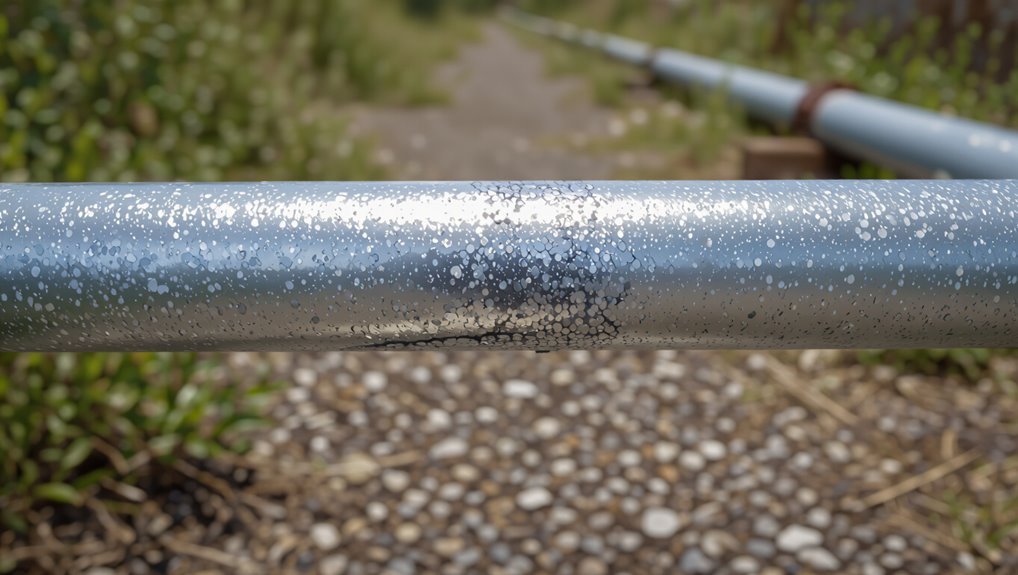
How Long Does Galvanized Pipe Last? Lifespan & Maintenance Tips
Galvanized steel pipes can last anywhere from 20 to 70 years, depending on their environment. Specifically, they typically last about 40–70 years indoors in optimal conditions and around 20–50 years outdoors or in harsher settings. Key factors influencing their lifespan include the thickness of the zinc coating, water chemistry, mechanical damage, and maintenance practices.
Key Takeaways:
- Indoor Lifespan: 40–70 years
- Outdoor Lifespan: 20–50 years
- Signs of Aging: Look for rust, reduced water flow, discolored water, and frequent leaks.
- Maintenance Tips: Regular inspections, water testing, and targeted repairs can extend the lifespan.
- Replacement Consideration: When multiple failure indicators arise, consider replacing the pipes.
The following sections will provide further details on inspection, testing, and planning for replacement.
What Search Intent Does This Article Satisfy?
Which queries lead readers to an article about galvanized pipe lifespan? The piece addresses informational and transactional intent: homeowners, plumbers, and property managers search for degradation timelines, maintenance needs, replacement indicators, and cost estimates.
Users also seek comparison with alternatives (copper, PEX) and regulatory or safety concerns like lead contamination.
Searchers may be planning renovations or diagnosing water issues, so queries blend problem-solving and purchase preparation.
Content should match intent by presenting clear expectations, actionable maintenance steps, decision criteria for replacement, and links to deeper resources.
Tone remains factual and directive to satisfy pragmatic, utility-focused queries.
Quick Answer: How Long Do Galvanized Pipes Last?
Typically, galvanized steel pipes last about 40 to 70 years in indoor, non-corrosive environments; lifespan varies with water chemistry, usage, and installation quality.
In aggressive water or outdoor settings, protective zinc wears faster, reducing service life to decades rather than half-century spans.
Corrosion, scale buildup, and joint degradation are primary failure modes influencing replacement timing.
Regular inspections and basic maintenance can extend functional life and delay leaks or contamination.
For planning, expect replacement or significant rehabilitation after roughly four to seven decades, but assess specific conditions—water pH, hardness, and historical performance—when scheduling upgrades or inspections.
What Is Galvanized Pipe and How Is It Made?
After discussing expected service life and failure modes, attention turns to what galvanized pipe actually is and how it’s produced.
Galvanized pipe is steel or iron tubing coated with zinc to resist corrosion. Production commonly uses hot-dip galvanizing, where cleaned steel is immersed in molten zinc, forming a metallurgical bond.
Threaded or welded pipe may be galvanized after fabrication; some types are fabricated from pre-galvanized sheet. Quality varies by coating thickness and preparation.
- Base material: steel or iron core.
- Surface preparation: pickling and fluxing.
- Coating method: hot-dip or electrogalvanizing.
- Post-treatment: inspection and finishing.
Why Zinc Coating Matters for Lifespan
The zinc layer forms a physical barrier that prevents water and oxygen from reaching the underlying steel.
It also provides electrochemical protection by corroding preferentially and thereby shielding exposed steel at scratches.
Thicker coatings extend service life by offering more sacrificial material and longer-lasting barrier performance.
Zinc Barrier Protection
By forming a continuous metallic layer around steel, zinc coating creates the primary defense against corrosion on galvanized pipe. It serves as a physical barrier, delays exposure of underlying steel, and reduces maintenance frequency.
The thickness and uniformity of the zinc layer directly influence service life; thicker, well-adhered coatings offer longer protection. Environmental conditions and mechanical wear determine when the barrier is compromised.
Proper handling, installation, and periodic inspections preserve the coating.
Key considerations include:
- Coating thickness and uniformity impact durability.
- Mechanical damage during installation exposes steel.
- Surface preparation affects coating adhesion.
- Maintenance intervals depend on exposure severity.
Corrosion Resistance Mechanism
Galvanic shielding and sacrificial action together define how zinc prolongs galvanized pipe life: zinc acts as a physical barrier that prevents oxygen and moisture from reaching steel, and when that barrier is breached the more electrochemically active zinc corrodes preferentially, protecting the underlying iron until the coating is consumed. This dual action slows rust formation, maintaining structural integrity and delaying failure. Environmental factors alter corrosion rates, but the mechanism remains predictable: barrier first, sacrificial protection second. The table summarizes key aspects.
| Feature | Effect |
|---|---|
| Barrier action | Blocks corrosion agents |
| Sacrificial action | Zinc corrodes instead |
| Predictability | Slows rust onset |
| Outcome | Extended service life |
Coating Thickness Importance
Several key variables determine how long a galvanized pipe will resist corrosion, but zinc coating thickness is among the most influential. A thicker zinc layer provides longer sacrificial protection, delays substrate exposure, and improves resistance to mechanical wear and environmental abrasion.
Coating uniformity and adhesion also affect performance; thin or patchy coatings accelerate localized corrosion. Measurement standards (e.g., ASTM) guide acceptable thickness for applications. Maintenance and environmental conditions interact with coating life, but initial thickness sets baseline longevity.
- Thicker zinc = longer sacrificial protection
- Uniformity prevents weak spots
- Standards guarantee minimum protection
- Thinning accelerates localized failure
Typical Indoor Lifespan for Galvanized Water Pipes
In typical indoor conditions, galvanized water pipes often provide reliable service for 40 to 70 years depending on installation quality and water chemistry.
Corrosive water, high mineral content, physical damage, and poor maintenance accelerate interior pitting and zinc depletion, shortening usable life.
Understanding these factors helps determine whether aging galvanized lines can continue in service or should be replaced.
Expected Service Life
Typically lasting between 20 and 50 years in indoor plumbing systems, galvanized water pipes’ service life varies with water chemistry, installation quality, and maintenance history.
Expected service life reflects average performance: many homes see reliable function for decades, while others reach the lower end of that range.
Predictable decline appears as reduced flow and increased mineral buildup; timely inspections extend useful life.
Replacement decisions balance repair costs, water quality concerns, and long-term reliability expectations.
Clear documentation of past maintenance improves forecasts and planning.
- Typical range: 20–50 years
- Common signs of aging
- Inspection frequency recommendations
- Replacement planning considerations
Factors That Shorten Lifespan
Although galvanized pipes can last decades, exposure to corrosive water, abrasive particulates, and improper installation accelerates deterioration. Typical indoor lifespans shorten when acidic or high-mineral-content water leaches zinc and iron, causing pitting and internal scale that restricts flow.
Mechanical stresses from freezing, vibration, or settling promote cracks and joint failure. Poor soldering, mismatched metals, and inadequate support lead to galvanic corrosion and stress points. Contaminant-laden supply lines and frequent pressure surges erode protective coatings. Neglected maintenance—missed inspections, unresolved leaks, and delayed replacement—compounds damage, often reducing useful indoor service from decades to only a few years.
Typical Outdoor Lifespan for Galvanized Pipes
Outdoor galvanized pipes generally last between 20 and 50 years, depending on factors such as coating quality, environmental exposure, and maintenance.
Service life tends to cluster: coastal or industrial sites see faster corrosion, while sheltered, dry locations preserve zinc longer.
Regular inspections and touch-up galvanizing extend usable years.
Replacement timing balances remaining coating, leak frequency, and water quality impacts rather than age alone.
- Coastal exposure: accelerates pitting and loss of protection.
- Urban/industrial exposure: chemical pollutants expedite corrosion.
- Protected installations: gutters, covered runs can approach upper lifespan.
- Maintenance: cleaning and localized repair slow degradation.
Lifespan Differences by Pipe Size and Thickness
Beyond environmental and maintenance factors, the physical dimensions of galvanized pipe—wall thickness and nominal diameter—have a measurable effect on service life. Thicker walls provide more zinc and steel substrate, delaying perforation and structural failure; schedule 40 or heavier sections typically outlast thinner schedule 20 equivalents under comparable conditions.
Larger diameters can dilute localized corrosion effects but may experience higher internal surface area exposure and mechanical stresses, altering wear patterns. Threaded joints and fittings on thin-walled pipes are more prone to galling and leaks.
Design choices should balance expected loading, accessibility for inspection, and replacement economics to maximize longevity.
How Water Chemistry Shortens Galvanized Pipe Life
Corrosion dynamics in galvanized piping accelerate when water chemistry favors zinc dissolution and steel exposure. Factors like low pH, high dissolved oxygen, and aggressive ions undermine the protective zinc layer, promoting pitting and uniform corrosion that reduce service life.
Mineral scaling can create differential aeration cells, worsening localized attack. Routine monitoring and treatment mitigate these effects.
- Low pH: acid accelerates zinc loss and base metal exposure.
- High dissolved oxygen: fuels oxidative corrosion reactions.
- Chlorides/sulfates: break down protective films, increasing pitting.
- Hardness/scaling: fosters differential corrosion beneath deposits.
How Soil Conditions Affect Buried Galvanized Pipe
Water chemistry influences galvanized pipe life aboveground, but once a line is buried the surrounding soil environment becomes the dominant factor determining how quickly the zinc coating and underlying steel degrade.
Soil pH, moisture, and oxygen availability control corrosion rates: acidic or alkaline soils accelerate coating breakdown, while wet, poorly drained soils increase electrochemical activity.
Chloride- or sulfate-rich soils promote localized attack and galvanic cells when dissimilar metals contact soil.
Organic matter and microbial activity can create aggressive microenvironments.
Soil resistivity measurements, proper bedding, protective wraps, and cathodic protection reduce risk.
Regular inspection and informed material selection extend service life underground.
Climate and Environmental Impacts on Longevity
Climatic and environmental factors play a significant role in the service life of galvanized pipe.
In coastal areas, salt-laden air accelerates corrosion by breaking down the zinc coating and promoting localized rust.
Similarly, acidic or highly alkaline soils alter corrosion rates through electrochemical reactions, making soil pH a key determinant of longevity.
Coastal Salt Exposure
Along shorelines where salt-laden air and spray are persistent, galvanized pipes face accelerated deterioration because chloride ions breach the zinc coating and promote localized metal loss. Exposure severity depends on distance from the coast, prevailing winds, and splash zones. Maintenance frequency should increase; inspections focus on pitting, undercut corrosion, and loss of galvanizing. Protective measures include barrier coatings, sacrificial anodes, or relocation of vulnerable runs indoors. Material selection may favor more corrosion-resistant alternatives for critical systems.
- Inspect annually for pitting and coating failure.
- Apply marine-grade coatings where feasible.
- Use sacrificial anodes in exposed installations.
- Prioritize replacement in splash zones.
Soil pH Effects
While coastal chloride attack highlights atmospheric drivers of zinc loss, subsurface chemistry governs corrosion where galvanized pipe contacts soil. Soil pH strongly influences zinc protective layer stability: acidic soils (pH<6) accelerate zinc dissolution and general corrosion, while alkaline soils (pH>8) can induce localized attack through differential aeration and deposition of calcareous scales that crack coatings.
Near-neutral soils (pH 6–8) are generally less aggressive but other factors—moisture, redox potential, chloride and sulfate concentrations, and microbial activity—modify risk. Evaluating local pH and chemistry guides material selection, cathodic protection, coatings, and periodic monitoring to extend service life.
Common Corrosion Types: Galvanic, Pitting, and Tuberculation
In evaluating galvanized pipe longevity, three corrosion mechanisms—galvanic, pitting, and tuberculation—account for most premature failures and performance decline. Each acts differently: galvanic corrosion occurs where dissimilar metals contact, pitting creates deep localized breaches in the zinc or steel, and tuberculation forms mineral and corrosion deposits that restrict flow and foster under-deposit corrosion.
- Galvanic: accelerated loss at metal junctions when electrolyte present.
- Pitting: small focal attacks that perforate walls despite limited overall loss.
- Tuberculation: buildup reduces capacity and hides active corrosion.
- Operational impact: reduced service life, increased leaks, maintenance burden.
How Galvanizing Quality Affects Lifespan
Galvanizing quality directly influences service life through measurable factors such as coating thickness, which determines barrier longevity.
Zinc purity affects corrosion resistance and the tendency to form protective patinas.
Consistent application and quality control prevent defects like thin spots, porosity, or poor adhesion that shorten useful life.
Coating Thickness Matters
Beneath the visible finish, coating thickness is the primary determinant of a galvanized pipe’s protective performance and service life. Thicker zinc layers delay bare-metal exposure, resist mechanical damage, and sustain sacrificial corrosion longer, directly extending functional lifespan. Uniformity matters: thin or patchy coats create weak points where rust initiates. Inspection and specification safeguard adequate thickness for environment and expected wear. Measured in microns or mils, targets vary by standard and application; selection balances cost against longevity and maintenance frequency.
- Specify minimum thickness for service conditions.
- Test coatings with non-destructive gauges.
- Require uniform application controls.
- Plan thicker coatings where abrasion occurs.
Zinc Purity Effects
Zinc purity strongly influences a galvanized pipe’s corrosion resistance and longevity. Higher-purity zinc yields a more uniform, adherent coating with fewer inclusions, reducing micro-galvanic sites and prolonging service life. Impurities like lead or iron accelerate localized corrosion and promote coating defects. Specification of zinc grade and monitoring alloying elements improve predictable performance over varying environments. Selection balances cost and durability: purer zinc costs more but extends maintenance intervals. The table below contrasts typical effects.
| Purity Level | Typical Defects | Lifespan Impact |
|---|---|---|
| High (>99.9%) | Few inclusions | Extended |
| Moderate | Minor inclusions | Moderate |
Application Quality Control
In evaluating application quality control, attention to surface preparation, bath composition, immersion time, and post-dip handling collectively determines coating adhesion and uniformity.
Proper cleaning removes oxides and oils; controlled bath chemistry and temperature yield consistent zinc layers; correct immersion and withdrawal rates prevent excessive buildup or bare spots; timely quenching and passivation minimize defects.
These process controls directly influence corrosion resistance and service life: poor technique accelerates pitting and delamination, while strict adherence extends decades.
- Cleanliness and surface profiling
- Bath composition and monitoring
- Immersion timing and handling
- Post-dip treatments and inspections
Signs a Galvanized Pipe Is Near Failure
Homeowners and inspectors can recognize several clear indicators that a galvanized pipe is approaching failure.
Visible rust or flaking on exterior surfaces, persistent reddish-brown staining at joints, and reduced water flow due to internal buildup signal advancing deterioration.
Frequent cloudy or discolored water, metallic taste, and increased sediment in fixtures suggest internal corrosion and scaling.
Recurrent leaks, especially at seams or fittings, and sudden pressure drops during normal use indicate structural compromise.
Unusual noises—clanking or banging—during flow changes can reflect weakened walls.
Observing multiple signs together increases urgency for repair or replacement planning.
How to Test If Your Galvanized Pipe Is Corroding
A homeowner can begin by visually inspecting exposed sections of galvanized pipe for flaking, pitting, or reddish-brown rust that indicate external corrosion.
Interior corrosion is suggested by discolored, cloudy, or metallic-tasting tap water, which can be confirmed with a basic water quality test for iron and pH.
Combining visual inspection with water testing gives a clearer picture of whether replacement or further professional assessment is needed.
Visual Inspection For Rust
Inspecting galvanized pipe for rust begins with a systematic visual check of accessible runs, fittings, and connections where corrosion most often appears.
The observer notes flaking zinc, orange-brown streaks, pitting, and discolored joints.
Attention focuses on low spots, hangers, and areas near threaded connections.
Exterior and basement lines receive careful lighting; inaccessible sections are documented for professional evaluation.
Record locations, severity, and progression over time to prioritize repairs or replacement.
Immediate leaks or structural weakening prompt swift action.
Follow-up monitoring should be scheduled after any remediation to confirm stability and slow further deterioration.
- Check for flaking or blistering
- Look for orange-brown staining
- Inspect joints and threaded fittings
- Document and photograph findings
Water Quality Testing
Begin by collecting water samples from multiple fixtures—cold taps at the kitchen sink, utility sinks, and the lowest and highest outlets—to capture variations in the system.
Label samples and test promptly for pH, iron, zinc, lead, and particulate content using a reliable home kit or laboratory service.
Elevated iron, metallic taste, brown staining, or low pH indicate galvanic corrosion or zinc depletion.
Flow-restricted or discolored output suggests internal scaling.
Compare results across locations and over time to identify progression.
Document findings and consult a certified plumber or water specialist for confirmation and recommendations, such as pipe replacement or water treatment.
When Galvanized Pipe Causes Discolored or Rusty Water
Frequently, homeowners notice brown, orange, or reddish water when galvanized pipes begin to corrode, because the zinc coating that once protected the iron has worn away and iron particles are released into the supply. Discolored water often appears after periods of stagnation, during high demand, or following local plumbing work that disturbs pipe scale.
Visual staining on fixtures and laundry is common; sediment may settle in tanks and aerators. Addressing the source preserves system function and aesthetics.
- Inspect exposed pipes for flaking or rust.
- Flush lines to clear loose scale.
- Clean aerators and screens regularly.
- Consult a plumber for evaluation and repair.
Health Concerns From Aging Galvanized Plumbing
Occasionally, aging galvanized plumbing can pose health risks because corroding pipes release iron oxides and, in some cases, trace metals like lead or copper into the water supply.
Chronic exposure to elevated metal levels may cause gastrointestinal distress, neurological effects in children, and increased long-term health risks.
Turbid or metallic-tasting water signals potential contamination; vulnerable groups—infants, pregnant people, the elderly, and those with compromised immunity—face greater risk.
Simple testing of tap water identifies contaminants; certified labs and home kits are options.
Where metal concentrations exceed guidelines, remediation includes point-of-use filters, replacement plumbing, and consultation with public health authorities.
How Flow Restriction Develops Over Time
Corrosion and mineral buildup that can release metals into drinking water also narrow the internal diameter of galvanized pipes, gradually restricting flow.
Over years, roughened surfaces trap additional scale and corrosion products, increasing hydraulic resistance and reducing peak and sustained delivery.
Flow reduction is often gradual, first affecting fixtures furthest from the supply and cold-water lines.
- Scale accumulation: mineral crystals adhere to inner walls, shrinking bore diameter.
- Tuberculation: localized corrosion creates nodules that block passages.
- Sediment entrapment: rust flakes and debris collect at low points.
- Pressure loss: head and flow decline as resistance rises.
Estimating Remaining Service Life: A Simple Calculation
To estimate remaining service life for a galvanized pipe, one can use a straightforward calculation that compares current wall thickness or flow capacity with known deterioration rates.
First, measure residual wall thickness with ultrasonic testing or infer equivalent loss from decreased flow rates versus baseline.
Second, determine average annual corrosion loss from historical data, inspection records, or published corrosion rates for similar environments.
Third, compute remaining years by dividing remaining thickness or allowable capacity margin by the annual loss rate.
Finally, apply a safety margin (for example 20–30%) to account for variability and uncertainties before planning replacement or closer monitoring.
Routine Maintenance to Extend Galvanized Pipe Lifespan
Having established a method to estimate remaining service life, attention turns to routine maintenance practices that slow degradation and preserve capacity.
Regular inspections identify corrosion, leaks, and pressure loss before failures occur. Water chemistry monitoring helps detect aggressive fluids that accelerate rust. Pressure regulation reduces stress on joints and fittings. Recordkeeping tracks trends, informing timely interventions.
- Inspect visible pipe runs and joints biannually for rust, pitting, and stains.
- Monitor water pH, hardness, and dissolved oxygen; adjust treatment as needed.
- Maintain stable pressure with regulators and surge protection.
- Keep detailed maintenance logs and replacement schedules.
How to Flush and Clean Galvanized Lines Safely
Flush galvanized lines methodically to remove loose rust, sediment, and mineral buildup while minimizing disturbance to system integrity.
Begin by shutting off water to affected sections, then open highest and lowest fixtures to create flow.
Use short, controlled bursts of high-velocity flushing from source to outlet, avoiding prolonged pressure spikes.
Collect and inspect discharge for particulate content.
For localized deposits, employ mechanical cleaning with nylon-bristled brushes or weighted flushing pigs sized to pipe ID; avoid aggressive abrasives that expose base metal.
Rinse thoroughly, restore valves, and monitor water clarity and pressure.
Document actions and schedule follow-up inspections for recurring issues.
How to Treat Water to Slow Corrosion
Treatment of water can slow corrosion in galvanized systems by reducing acidity and limiting dissolved oxygen.
Adjusting pH toward neutral and using corrosion inhibitors helps neutralize aggressive water.
Removing oxygen through degassing or airtight storage further decreases corrosion rates.
Reduce Water Acidity
When water in a plumbing system is acidic, it accelerates the corrosion of galvanized pipe by dissolving the protective zinc layer; consequently, adjusting pH and buffering capacity is a primary method for slowing deterioration.
Treatment focuses on raising pH toward neutral and increasing alkalinity to stabilize water chemistry. Common approaches include blended neutralizers, soda ash dosing, and calcite contactors.
Selection depends on source water characteristics, flow rates, and maintenance capacity. Monitoring verifies targets are met without causing scaling.
Cost, space, and regulatory limits guide choices; implementation often pairs with routine water testing and pipe inspections.
- Test source water regularly
- Use calcite or soda ash systems
- Install neutralizing filters
- Monitor pH and alkalinity
Minimize Dissolved Oxygen
Reducing dissolved oxygen in supply water slows corrosion by limiting the oxygen-driven electrochemical reactions that consume the zinc coating on galvanized pipe. Techniques include deaeration (vacuum or thermal), chemical oxygen scavengers (sulfite, hydrazine alternatives), and inert gas blanketing for storage tanks.
Treatment choice depends on system size, temperature, and regulatory limits; scavengers require monitoring to avoid byproducts. Continuous monitoring of dissolved oxygen, pH, and conductivity verifies effectiveness.
Combining oxygen control with filtration and corrosion inhibitors yields better protection. Properly implemented, minimizing dissolved oxygen markedly reduces corrosion rates and extends the service life of galvanized piping systems.
When to Use Corrosion Inhibitors
Evaluating the need for corrosion inhibitors depends on water chemistry, pipe condition, and service goals. Selection aligns with measured pH, conductivity, alkalinity, and presence of chlorides or sulfates. Inhibitors suit systems where replacement is impractical, where flow and temperature promote corrosion, or where regulatory limits restrict chemical adjustments. Application requires dosing control, monitoring for effectiveness, and compatibility checks with existing coatings and downstream processes. Unnecessary use can mask problems or create deposits. Decisions rely on baseline corrosion rates, cost-benefit analysis, and long-term maintenance planning.
- Assess water chemistry
- Measure baseline corrosion
- Confirm material compatibility
- Establish monitoring plan
How to Spot and Stop Leaks in Galvanized Systems
Signs of a leak in galvanized systems include visible corrosion, wet spots or drips, unexplained water stains, and reduced water pressure.
Initial responses often use temporary fixes like pipe clamps, epoxy putty, or rubber and hose-clamp patches to stop active leaking.
For long-term reliability, replace the affected section, rethread and seal joints, or consult a licensed plumber for full system remediation.
Common Leak Signs
Detecting leaks in galvanized pipe systems often relies on visual and sensory cues that indicate corrosion, joint failure, or pressure loss. Signs include rust-colored stains, persistent damp spots, drops in water pressure, and unusual noises. Timely identification prevents larger failures and contamination.
- Visible rust or white powdery buildup around fittings and seams.
- Persistent dampness, water stains, or mold on walls, ceilings, or floors.
- Noticeable reduction in water pressure or fluctuations during use.
- Hissing, dripping sounds, or metallic rattling when water runs.
Document observations and schedule professional inspection when multiple signs appear.
Quick Temporary Fixes
When a small leak appears in a galvanized pipe, a quick temporary fix can buy time until a qualified plumber makes permanent repairs. Inspect the drip source, dry the area, and shut off water if practical.
For pinholes, apply epoxy putty or a resin-based pipe repair compound per instructions; wrap cured putty with self-fusing silicone tape or neoprene repair tape for added sealing.
For hairline cracks use rubber patch plus hose clamp.
Tighten loose fittings gently with an adjustable wrench, avoiding overtightening.
Monitor the repair closely, note location, and arrange professional assessment promptly to prevent corrosion progression and system failure.
Permanent Repair Options
Temporary measures can prevent immediate water damage but are not long-term solutions for galvanized systems; permanent repair requires identifying the leak source, evaluating pipe condition, and selecting an appropriate method such as patch replacement, sectional re-piping, or full system replacement based on corrosion extent.
A professional inspects joints, fittings, and visible corrosion, uses pressure tests or camera inspection, and assesses water chemistry to decide repair scope.
Patch or clamp repairs suit small pinhole leaks on sound pipe; sectional re-piping replaces damaged runs; full replacement addresses widespread internal corrosion.
Prioritize material compatibility and permit compliance for lasting performance.
- Inspect and pressure-test
- Camera diagnostics
- Sectional re-piping
- Full system replacement
Temporary Repair Methods for Galvanized Pipe Leaks
Patchwork measures can slow or stop a galvanized pipe leak long enough to plan a permanent repair or replacement.
Common temporary fixes include applying epoxy putty, wrapping with silicone or rubber repair tape, and using clamp-style pipe repair kits.
Each method requires surface cleaning, drying, and removing loose corrosion for adhesion.
Pressure should be reduced before attempting repairs and monitored afterward for effectiveness.
Temporary seals suit small pinholes or hairline cracks but are not reliable for major corrosion, joint failures, or long-term use.
They serve as interim solutions to prevent water damage while arranging professional assessment or full replacement.
Permanent Repair and Replacement Options
The discussion turns to permanent solutions for aging galvanized lines, including replacement with copper or PEX, pipe relining, and full system re-piping.
Each option carries distinct cost, longevity, and disruption profiles that affect suitability for a given property.
Homeowners and contractors typically weigh material longevity, installation complexity, and long-term maintenance when choosing among these approaches.
Replace With Copper Or PEX
When a long-term fix is required, replacing galvanized pipe with copper or PEX offers durable, code-compliant solutions that eliminate common corrosion and flow issues. Both materials resist rust, restore full flow, and reduce contamination risk. Copper provides longevity and heat resistance; PEX offers flexibility, easier installation, and lower material cost. Selection depends on budget, local code, and water chemistry. Professional assessment guarantees proper sizing, fittings, and transition connections. Consider warranties and expected lifespan when choosing.
- Copper: durable, corrosion-resistant, higher upfront cost.
- PEX: flexible, cost-effective, simpler install.
- Hybrid systems: capitalize on strengths.
- Permit and inspection requirements.
Galvanized Pipe Relining
Rather than full replacement, relining galvanized pipes offers a permanent repair option that restores flow and prevents corrosion without extensive demolition. The process inserts a cured-in-place liner or applies epoxy coating to the pipe interior, sealing leaks and smoothing scale. It extends service life, reduces particulate and lead risks, and is faster and often cheaper than re-piping. Suitability depends on pipe condition, diameter, and fittings. Regular inspection and water testing makes certain integrity. Typical warranties vary.
| Method | Benefit |
|---|---|
| CIPP liner | Seamless, durable seal |
| Epoxy spray | Quick, cost-effective |
| Spot relining | Targets localized damage |
Full System Re-Piping
As a permanent solution, full system re-piping replaces aging galvanized lines with modern materials and restores reliable water quality and pressure throughout a building. It eliminates corrosion, reduces leaks, and supports higher flow rates.
Decisions hinge on material choice (copper, PEX, CPVC), layout complexity, and code compliance. Installation typically requires wall and ceiling access, professional permits, and phased shutdowns to minimize disruption.
Long-term benefits include lower maintenance costs and improved resale value, offset by upfront expense and downtime. Consider lifecycle cost, warranty coverage, and contractor reputation before committing to full replacement.
- Material selection impacts longevity and cost
- Permit and inspection requirements
- Access and demolition scope
- Warranty and contractor vetting
Repiping Options to Replace Galvanized: Copper vs PEX vs Galvanized
Choosing a replacement for aging galvanized water lines requires weighing durability, cost, installation complexity, and long-term performance; the most common options—copper, PEX, and new galvanized or steel—each present distinct advantages and trade-offs.
Copper offers proven longevity, high temperature tolerance, and resale appeal but involves higher material and labor demands and vulnerability to corrosive water.
PEX provides flexibility, easier installation, resistance to scale, and lower labor intensity, though it can be sensitive to UV and may have limited fitting types.
Replacing with new galvanized or steel reinstates familiar durability and strength but risks recurring corrosion and heavier installation constraints.
Cost Factors in Replacing Galvanized Plumbing
Evaluating the cost of replacing galvanized plumbing requires factoring material prices, labor rates, the extent of pipe replacement, and any necessary repairs to walls or fixtures; each variable can shift project totals markedly.
Contractors typically estimate per linear foot for materials and per hour for labor; access difficulty, fixture count, and local permit fees add to totals.
Corrosion may require extra remediation or partial demolition.
Homeowners should budget for contingency costs and obtain multiple bids to compare scope and warranties.
- Material choice (copper, PEX, CPVC)
- Labor complexity and regional rates
- Access and demolition needs
- Permits and remediation fees
How to Prioritize Sections for Replacement
When prioritizing sections for replacement, homeowners and contractors should first identify pipes with active leaks, severe corrosion, or reduced flow since addressing those segments delivers the greatest immediate benefit and reduces risk of water damage.
Next, focus on main supply lines and branches feeding critical fixtures (kitchens, bathrooms, water heaters) because failures there cause widespread disruption.
Consider pipe accessibility and replacement complexity to maximize impact per cost—prioritize easily reached, high-risk segments before extensive reroutes.
Finally, sequence work to prevent repeated disruptions: replace upstream sections before downstream runs, and document replaced areas for future maintenance and budgeting.
Hiring a Pro vs DIY for Galvanized Pipe Work
Deciding between professional help and DIY for galvanized pipe work depends on scope, local codes, and the homeowner’s skill level.
Major tasks—such as whole-house replacements, gas line connections, or work that affects structural elements—generally warrant a licensed plumber.
Smaller repairs can be attempted by experienced homeowners but carry risks like improper sealing, code violations, or unseen corrosion that may require later corrective work.
When To Hire Pro
Determine whether a professional is needed by weighing the scope of work, safety risks, code requirements, and the homeowner’s skill level.
A pro should be hired when tasks involve major system changes, concealed leaks, structural penetrations, or when local codes require licensed work.
Professionals offer diagnostic tools, permit handling, and warranties; they reduce disruption and long‑term risk.
For routine inspections or simple visible repairs, an experienced homeowner may proceed cautiously.
Cost, timeline, and insurance implications also guide the choice.
Clear documentation of condition and repaired sections helps future owners and inspectors.
- Complex replacements
- Hidden leaks
- Permit-required work
- Warranty needs
DIY Risks And Limits
Why attempt galvanized pipe repairs alone if the risks outweigh the savings?
DIY work can save money but introduces hazards: hidden corrosion, lead contamination, improper fittings and inadequate sealing.
Mistakes cause leaks, water damage, code violations and reduced system lifespan.
Specialized tools and knowledge are often required for safe removal, proper joint techniques and pressure testing.
Permits and inspection requirements may mandate professional involvement.
For minor maintenance like external cleaning or visual checks, DIY is reasonable; for replacements, buried lines, or mixed-material shifts, hiring a licensed plumber reduces liability, guarantees compliance and preserves long-term performance.
What to Expect During a Repipe Job
During a repipe job, homeowners can expect a coordinated sequence of steps carried out by a licensed plumbing crew: initial inspection and mapping of existing systems, targeted demolition to access old galvanized lines, installation of new piping with updated fittings and supports, pressure testing, and final restoration of any disturbed walls or floors.
The crew documents work, secures permits, and minimizes disruption by staging materials and protecting finishes.
Timelines vary by home size; small projects may finish in a day, full-house repipes take several days.
Costs reflect labor, materials, access complexity, and disposal of old piping.
- Timeline estimate
- Material selection
- Access and demolition scope
- Testing and cleanup
How to Document Pipe Condition for Resale or Inspection
After a repipe or targeted repairs, documenting the condition of remaining galvanized piping helps protect property value and informs buyers or inspectors.
A concise record should include date-stamped photographs of accessible sections, notes on visible corrosion, scale, leaks, and any repair work with dates and contractor details.
Include results from water testing (iron, turbidity) and inspection reports such as video camera findings or plumber assessments.
Preserve receipts, warranties, and scope-of-work documents.
Assemble materials in a single digital folder and printable packet.
Provide a one-page summary highlighting any known risks and recommended monitoring or replacement timelines for prospective buyers or inspectors.
Are Galvanized Pipes Still Allowed by Building Codes?
Typically, building codes no longer permit new potable-water installations using galvanized steel because of corrosion, reduced flow, and contamination concerns. Jurisdictions vary: some ban galvanized for drinking water, others restrict its use or require replacement by approved materials (copper, CPVC, PEX).
Existing galvanized systems often remain legal if safe, but inspectors may mandate evaluation or upgrades during renovations. Compliance depends on code editions and local amendments; professionals consult local authority having jurisdiction. Homeowners should obtain permit guidance and documented inspections before changes.
Common code-driven reasons include health risk mitigation, longevity, and reliable water pressure.
- Health hazards
- Flow reduction
- Material alternatives
- Inspection requirements
Historic Homes: Dealing With Original Galvanized Plumbing
When older homes still have their original galvanized plumbing, owners and contractors must weigh preservation goals against safety and performance concerns outlined by modern codes. Decisions prioritize health, water quality, and structural longevity. Inspections determine corrosion, flow restriction, and lead risk from fittings. Options include selective replacement, rerouting supply lines with modern materials, or full repiping. Cost, historic value, and disruption guide choices. Maintenance extends service life but cannot eliminate eventual failure. Documentation supports future owners and code compliance.
| Action | Benefit | Consideration |
|---|---|---|
| Inspect | Assess risk | Hidden corrosion |
| Partial replace | Less invasive | Compatibility |
| Full repipe | Long-term safety | Cost/disruption |
Commercial and Industrial Galvanized Pipe Lifespan Differences
Commercial and industrial settings exhibit different galvanized pipe lifespans due to variable corrosion rates driven by water chemistry and exposure conditions.
Routine maintenance and scheduled inspections in commercial systems can slow degradation, while industrial facilities often require more intensive monitoring.
Higher loads and sustained pressures in industrial applications also shorten service life compared with typical commercial use.
Corrosion Rate Variability
Varying corrosion rates drive the principal differences in galvanized pipe lifespan between commercial and industrial settings. Metal loss, zinc coating breakdown, and environmental aggressiveness combine to shorten service life in harsher industrial atmospheres compared with milder commercial interiors.
Exposure to chemicals, temperature swings, and abrasive particulates accelerates galvanic and uniform corrosion. Predicting longevity requires accounting for localized conditions rather than relying on generic ratings.
- Chemical exposure levels
- Ambient humidity and temperature cycles
- Presence of abrasive particulates or suspended solids
- Electrical or galvanic coupling risks
Quantitative assessment guides material selection and replacement planning.
Maintenance And Inspection
Balancing routine maintenance and targeted inspection regimes markedly affects galvanized pipe longevity across commercial and industrial settings. Scheduled visual checks, thickness measurements, and corrosion mapping identify early coating breakdown and localized pitting before failures occur.
Industrial systems require more frequent non‑destructive testing, cathodic protection assessments, and monitoring of chemical exposures; commercial systems benefit from periodic flushing, debris removal, and attention to joints and fittings.
Documentation of findings, trend analysis, and prompt remediation—recoating, localized replacement, or isolation—reduce risk and extend service life. Well-defined inspection intervals tied to environment and service conditions optimize maintenance budgets while preserving structural integrity and functionality.
Load And Pressure Factors
Under different service demands, mechanical loads and internal pressures become primary determinants of galvanized pipe lifespan in commercial versus industrial settings.
Commercial systems typically face steady, moderate pressures and occasional mechanical stress, so corrosion from flow-induced wear progresses slowly.
Industrial installations often endure higher, fluctuating pressures, cyclical loads, and abrasive media, accelerating coating fatigue and galvanic breakdown.
Design margins, joint quality, and pressure management protocols differ accordingly, affecting replacement intervals.
- Operating pressure ranges and spikes
- Cyclic loading and vibration exposure
- Flow velocity and particulate abrasion
- Safety factors, testing, and overpressure protection
How to Choose Fittings and Valves for Old Galvanized Systems
When replacing or repairing components in an older galvanized system, selecting compatible fittings and valves is critical to maintain function and prevent accelerated corrosion.
Prioritize materials that resist galvanic reaction: zinc-coated steel to steel, brass cautiously where dielectric unions isolate dissimilar metals, and stainless steel where corrosion resistance outweighs cost.
Match pipe threads and sizes precisely; avoid forced fits that stress joints.
Choose valves rated for operating pressure and temperature, with durable seats to limit debris-induced leakage.
Prefer serviceable designs for future maintenance.
Document materials and locations to aid inspections and minimize unexpected interactions during later repairs.
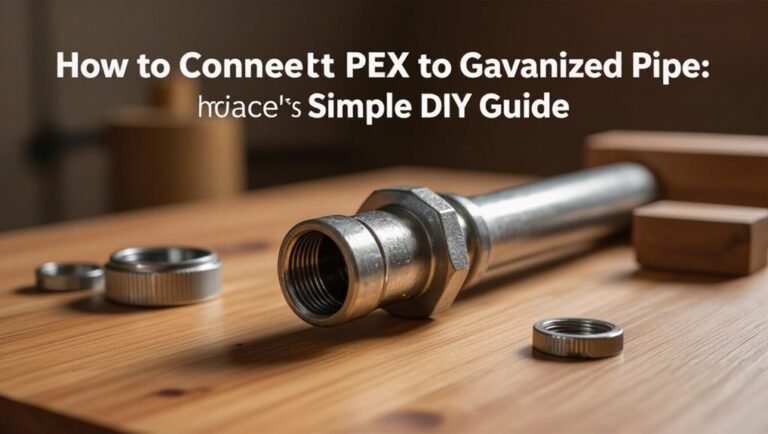
How to Connect New Copper or PEX to Old Galvanized Pipe
Connecting new copper or PEX to existing galvanized pipe requires attention to compatibility, corrosion control, and secure joints so the retrofit performs reliably without accelerating deterioration of either material.
Changeover requires isolating dissimilar metals—use dielectric fittings or brass adapters—to prevent galvanic corrosion.
Clean and inspect the galvanized threads or cut back to sound metal.
For PEX, employ compression or crimp fittings rated for galvanized interfaces; for copper, use threaded or soldered adapters only if the galvanized is clean and airtight.
Make certain proper support and minimal stress at the joint.
Pressure-test and monitor the new connection for leaks and early corrosion signs.
- Use dielectric fittings
- Clean and inspect joints
- Choose rated adapters
- Pressure-test after installation
How Regular Inspections Prevent Major Failures
Regular inspections markedly reduce the risk of catastrophic failures in galvanized piping by identifying early signs of corrosion, leaks, and mechanical stress before they worsen. Inspectors record thin-wall corrosion, pinhole leaks, joint movement, and mineral buildup, prioritizing repairs that prevent burst pipes and contamination. Scheduled checks extend service life, guide targeted replacements, and document trends for proactive maintenance budgeting. Visual exams, pressure tests, and moisture sensors provide complementary data. Timely intervention minimizes downtime and costly emergency repairs, preserving water quality and system integrity while informing decisions about phased upgrades or full replacement.
| Issue Detected | Recommended Action |
|---|---|
| Pitting corrosion | Local repair or replace |
| Loose joints | Tighten/replace fittings |
| Mineral buildup | Descale or replace |
| Damp areas | Trace leak source |
Common Myths About Galvanized Pipe Longevity
Why do many homeowners assume galvanized pipe lasts indefinitely? Observers conflate the metal’s initial durability with permanence, overlooking corrosion, interior scaling, and changing water chemistry. Common myths persist and can delay needed action.
- Galvanized is maintenance-free: protective zinc wears; unnoticed corrosion progresses.
- Visible exterior condition reflects interior state: internal rust and scale often differ.
- Older pipes are fine if they still carry water: flow can hide contamination and reduced capacity.
- Replacement is always urgent and costly: targeted repairs or partial re-piping can be effective and economical.
Checklist: Is Your Galvanized Pipe Due for Replacement?
Often overlooked, a clear checklist helps determine whether galvanized pipe should be replaced by focusing on measurable signs: age (typically over 40–50 years), reduced water pressure, brown or metallic-tasting water, frequent leaks, visible interior corrosion where accessible, elevated iron in water tests, and recurring clogs from scaling.
Additional checklist items include water staining on fixtures or ceilings, multiple patched joints, pressure fluctuations, low flow confined to older sections, and reports of discolored laundry.
If two or more indicators are present, replacement planning is advised. Prioritize sections with active leaks or structural failure and consult a licensed plumber for assessment and quotes.
FAQs: Maintenance for Galvanized Pipe
After identifying signs that replacement may be necessary, homeowners commonly ask practical maintenance questions about galvanized pipe care: what routine checks are useful, which cleaning or flushing methods help reduce interior scaling, how to respond to minor leaks, and when professional intervention is warranted.
Regular inspections for corrosion, drips, pressure changes, and water discoloration are recommended. Flushing with clean water and using gentle descalers can limit buildup; avoid harsh acids. Small pinhole leaks may be temporarily patched, but persistent deterioration requires replacement. Licensed plumbers should assess structural corrosion or frequent failures to guarantee safety and code compliance.
- Inspect quarterly for corrosion and flow issues
- Flush annually; use mild descalers as needed
- Patch temporarily; plan prompt replacement for recurring leaks
- Consult a plumber for structural or pressure problems
Conclusion
Galvanized pipe longevity often surprises homeowners: studies show about 70% of galvanized water lines installed before 1960 have significant corrosion or reduced flow today. Given that zinc coating wears over decades, many indoor galvanized systems last 40–70 years under ideal conditions but fail earlier with acidic or hard water. Regular inspections and targeted maintenance extend usable life, yet replacement becomes prudent once scale, leaks, or persistent low pressure appear.