Does Homeowners Insurance Cover Broken Pipes Under Foundation?
Key Takeaway: Homeowners insurance may cover broken pipes under the foundation if the damage is sudden and accidental. However, it typically excludes damage caused by wear, corrosion, or long-term issues like seepage.
Coverage specifics depend on the policy details and the cause of the break. Foundation movement and maintenance issues can also influence coverage. It’s important for policyholders to document the damage, contact a plumber and their insurer promptly, and review their policy endorsements for any specific exclusions or additional coverage options. Be mindful that deductibles, coverage limits, and the need for proof of timely repairs can affect the outcome of any claims submitted.
Quick Answer: Are Slab/Under-Foundation Pipes Covered?
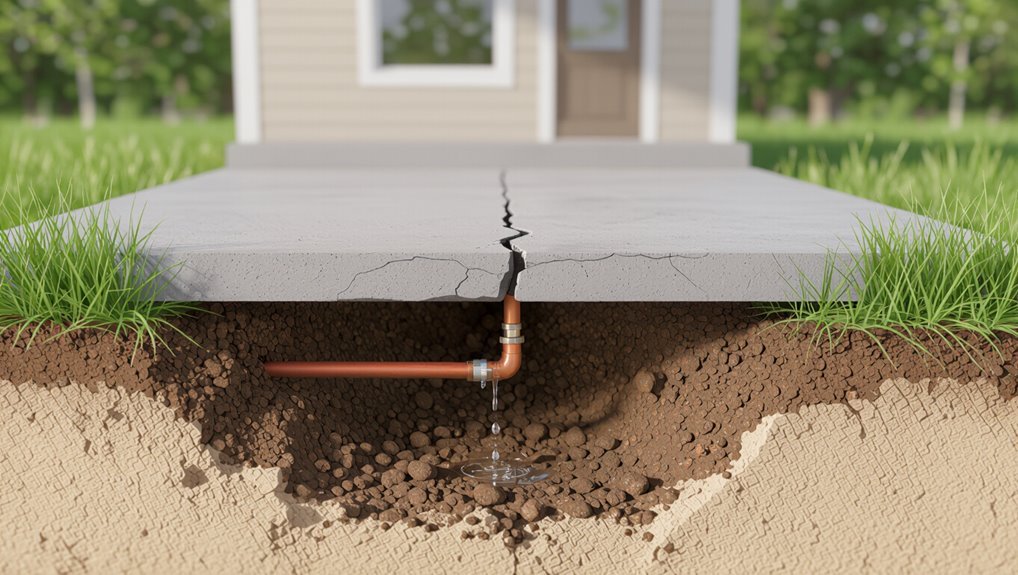
Generally, coverage for slab or under-foundation pipes depends on the policy terms and the cause of the damage: many standard homeowners policies exclude damage caused by wear, deterioration, or gradual seepage but cover sudden, accidental breaks and the resulting water damage if the insured’s policy includes dwelling and water-damage provisions or specific endorsements for slab leaks.
Insurers assess cause, policy language, and endorsements; sudden, accidental pipe bursts are more likely covered, whereas long-term leaks tied to neglect or aging are typically excluded.
Policyholders should verify exclusions, endorsements, limits, and deductibles to determine claim viability.
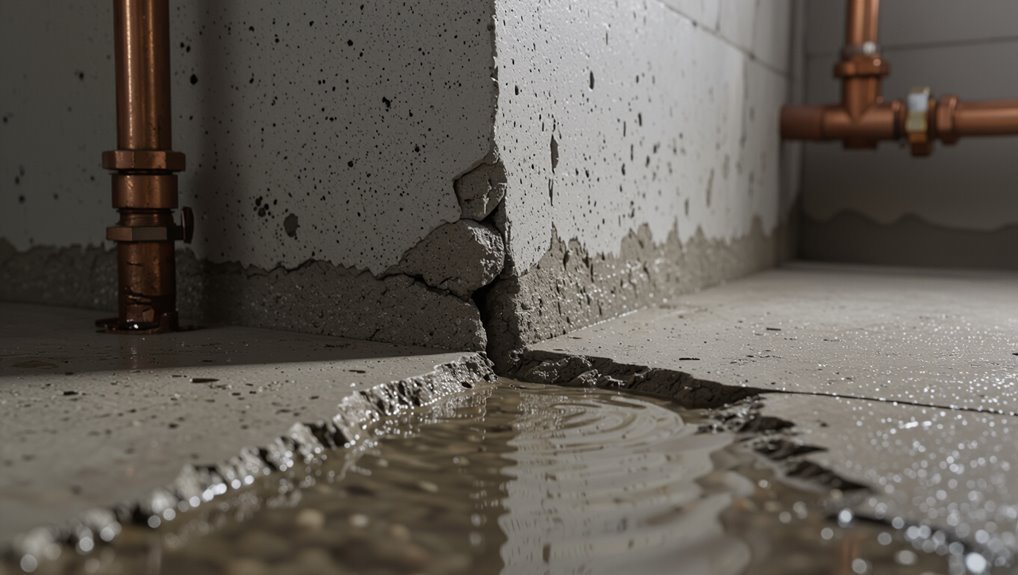
Immediate Steps to Take If You Discover a Slab Leak
Upon discovering signs of a slab leak, the homeowner should immediately shut off the main water supply to limit further damage.
Next, a licensed plumber should be contacted to assess the leak and recommend repair or temporary measures.
Prompt action preserves the home’s structure and supports any subsequent insurance claim.
Shut Off Water Supply
At the first sign of a slab leak, shut off the property’s main water supply immediately to stop additional flooding and limit structural damage.
The homeowner locates the main shutoff—often at the meter, garage, or exterior wall—and closes it fully.
After water is stopped, electricity to affected areas should be considered for safety, but primary focus remains on halting flow.
Document the condition with photos before further action.
Notify occupants and restrict access to flooded zones to prevent injury.
Keep communications clear and records of times and actions taken for recovery and insurance purposes.
- Close main shutoff valve
- Photograph damage
- Restrict access and record actions
Contact a Licensed Plumber
Contact a licensed plumber immediately to assess the slab leak, stop ongoing water loss, and prevent further structural damage. The professional inspects access points, locates the source with leak detection tools, estimates repair scope, and documents findings for insurance. Homeowners should obtain a written report, photos, and a clear repair plan before proceeding. Prompt, documented action reduces secondary damage and supports claims.
| Task | Purpose |
|---|---|
| Inspection | Locate leak source |
| Detection | Measure flow and pressure |
| Documentation | Support insurance claim |
| Repair Plan | Outline scope and cost |
Which Homeowners Policy Types Matter (Ho-3, HO-5, HO-6, Etc.)
Because homeowners policies differ in coverage scope and endorsements, the specific HO form—HO-3, HO-5, HO-6, etc.—directly affects how damage from broken pipes is handled, what perils are covered, and which exclusions may apply.
The discussion summarizes typical distinctions: HO-3 usually provides dwelling coverage on an open-peril basis with personal property named perils; HO-5 broadens personal property to open perils; HO-6 adapts to condo unit-owners and limits dwelling coverage to interior improvements.
Policy endorsements, building location, and whether plumbing is the owner’s responsibility further change outcomes; reviewing the actual policy language and exclusions is essential.
- HO-3: common single-family baseline
- HO-5: broader personal property
- HO-6: condo unit adaptations
Coverage Basics: Sudden and Accidental vs. Gradual Damage
Coverage for pipe-related losses often hinges on whether damage was sudden and accidental or the result of gradual wear and neglect.
Insurers typically cover sudden bursts but exclude losses from long-term deterioration, frozen pipes from inadequate heating, or unresolved maintenance issues.
Clear distinctions in policy language determine whether a claim is accepted or denied.
Sudden Vs. Gradual Damage
When a pipe bursts unexpectedly, insurers generally treat the resulting water damage differently than the slow seepage from a long-term leak; policies typically cover sudden and accidental events but exclude losses stemming from gradual deterioration or poor maintenance.
The distinction hinges on cause and timing: sudden failures often qualify for claim payments for repairs and related damage, while gradual issues point to homeowner responsibility. Documentation of prompt discovery and mitigation strengthens a claim.
Policy terms and inspection records determine outcomes; professional assessments can demonstrate suddenness or document preexisting problems.
- Evidence: photos, repair bills, inspection reports
- Timing: discovery date, duration of leak
- Mitigation: immediate measures, contractor notes
Policy Exclusions Clarified
Having distinguished sudden failures from long-term leaks, attention turns to the exclusions that commonly shape whether an insurer will pay for pipe-related losses. Policies typically cover sudden, accidental bursts but exclude damage from neglect, wear, or unresolved prior leaks. Mold, ground movement, and maintenance-related failures often fall outside coverage. Policyholders should review endorsements and loss mitigation duties to preserve claims rights.
| Covered Scenario | Typical Exclusion |
|---|---|
| Sudden burst pipe | Gradual deterioration |
| Accidental rupture | Lack of maintenance |
| Resulting water damage | Preexisting condition |
| Emergency repair cost | Ground movement/settling |
How Earth Movement and Foundation Problems Affect Coverage
Earth movement and foundation failures introduce a distinct risk category that insurers treat differently from typical pipe bursts. Coverage often hinges on whether damage stems from sudden, accidental collapse versus gradual soil shifting.
Insurers evaluate cause, policy language, inspection reports, and local geological history. Repair of the pipe may be covered while foundation stabilization or soil remediation is excluded.
- Cause determination: sudden event versus gradual movement affects claim acceptance.
- Split coverage: water damage remediation may be covered; structural repairs often excluded.
- Documentation: geotechnical reports and timelines strengthen or weaken coverage positions.
Common Exclusions for Slab-Pipe Claims
Following an assessment of whether soil movement caused a sudden collapse or gradual settlement, insurers typically turn to specific exclusions that commonly apply to slab-pipe claims.
Policies often exclude damage from long-term wear, corrosion, poor maintenance, and gradual seepage. Damage tied to earth movement, including settling, sinking, erosion, or subsidence, is frequently barred unless a separate endorsement exists.
Faulty workmanship or design and alterations performed without permits can void coverage. Sewer backups and flooding from external water sources are usually excluded unless optional riders are purchased.
Claimants must review policy language and endorsements to determine applicability.
When Water Damage From a Covered Slab Pipe Is Paid
Payment for water damage from a covered slab pipe depends first on whether the loss arises from a listed peril and not an excluded cause.
Insurers also distinguish sudden, accidental breaks from gradual leaks, which typically are not covered.
Finally, any recovery is limited by the policy’s coverage limits and subject to the deductible.
Covered Perils Only
When a slab pipe fails, insurer liability hinges on whether the resulting water damage stems from a peril specifically covered by the policy; only losses caused by named or broadly described covered perils will trigger payment for repairs and related remediation.
Coverage typically applies when the failure is caused by sudden perils the policy lists, such as accidental discharge from plumbing or impact-related damage.
Excluded causes — for example, long-term wear, maintenance neglect, corrosion, or earth movement if listed — usually bar coverage.
Policy language, endorsements, and exclusions determine outcomes; claimants should compare loss facts to covered peril definitions.
- Sudden accidental discharge
- Listed covered perils
- Exclusions and endorsements
Sudden Versus Gradual
Having established that coverage depends on whether a slab pipe failure stems from a listed or named peril, the next question is how insurers treat the timing and manner of the resulting water damage. Insurers commonly distinguish sudden, accidental breaks—more likely covered—from slow, progressive leaks, typically excluded as wear and tear. Claims adjusters examine evidence: sudden rupture, immediate seepage, or prolonged staining and mold. Policy wording and proof of prompt repair efforts influence outcomes. Documentation, expert inspection, and clear cause attribution increase chances of payment when a covered peril produced sudden damage.
| Scenario | Typical insurer view |
|---|---|
| Sudden rupture | Favored for coverage |
| Slow leak | Often denied |
| Immediate damage | Supported claim |
| Progressive deterioration | Usually excluded |
Policy Limits And Deductibles
If a covered slab-pipe failure causes water damage, the insurer’s obligation is capped by the policy’s limits and subject to the stated deductible; these figures determine the maximum recoverable amount for repairs, replacement of damaged property, and any additional living expenses that qualify under the policy.
Coverage limits specify total payouts per category and may be expressed as sublimits for flooring, foundation repairs, or contents. The deductible is the insured’s initial outlay before insurer payment.
Policyholders should compare limits to estimated repair costs and consider endorsements or higher limits for slab-related risks to avoid large out‑of‑pocket expenses.
- Compare limits vs. estimated repair costs
- Verify sublimits and exclusions
- Consider endorsements or increased limits
When Repair of the Slab Pipe Itself Is Typically Excluded
Although policies often cover water damage resulting from a sudden pipe failure, many exclude costs to access, repair, or replace the slab pipe itself; insurers typically treat the buried pipe as part of the home’s foundation or as maintenance responsibility rather than a covered component.
Exclusions commonly apply when damage stems from wear, corrosion, gradual leaks, root intrusion, or soil movement. Coverage may also be denied for repairs that require excavation or structural work.
Policy language, endorsements, and warranty requirements determine limits. Homeowners seeking slab-pipe coverage should review exclusions, consider endorsements or separate policies, and document maintenance to support future claims.
How Insurers Define “Sudden and Accidental” Pipe Failure
After noting that many policies exclude repairs to slab pipes as part of a home’s foundation or maintenance, insurers next focus on whether a pipe failure meets the policy’s requirement that damage be “sudden and accidental.”
Insurers generally define “sudden and accidental” to mean an unexpected, observable event that occurs at a specific time and causes immediate water discharge—such as an abrupt burst or blowout—rather than a slow leak, progressive deterioration, or a condition that develops over time.
- Proof: claimant must show clear timing and abruptness of the event.
- Evidence: photos, repair records, and professional statements matter.
- Exclusions: wear, corrosion, and gradual leaks typically negate coverage.
Examples of Covered Slab-Pipe Scenarios
When a slab pipe failure presents as an abrupt, observable event with clear evidence of timing, insurers are more likely to treat resulting water damage as covered; typical examples include a sudden blowout from an intact section of pipe caused by a pressure surge, a clean rupture following an identifiable external impact (e.g., excavation damage), or a pipe that catastrophically fails at a joint without prior signs of leakage, each supported by contemporaneous photos, plumber reports, and repair invoices documenting the immediate nature of the loss. Examples:
| Scenario | Evidence | Typical Outcome |
|---|---|---|
| Pressure surge blowout | Photos, pressure logs | Covered water damage remediation |
| Excavation strike | Contractor statement | Coverage for repair and cleanup |
| Joint catastrophic failure | Plumber report | Structural and water removal covered |
| Appliance-induced sudden burst | Timestamped video | Repair and contents coverage |
| Thermal shock rupture | Lab analysis | Coverage if sudden, not gradual |
Examples of Denied Slab-Pipe Claims
The article next presents specific denied slab-pipe claims to illustrate typical outcomes.
It highlights common denial reasons such as lack of timely maintenance, excluded wear-and-tear, and failure to mitigate damage.
These examples clarify how policy language and claimant actions influence coverage determinations.
Denied Claims Examples
Although homeowners often expect insurance to cover slab-pipe failures, insurers frequently deny claims on specific grounds such as wear and tear, lack of maintenance, gradual leaks, or preexisting conditions; the following examples illustrate typical denial reasons and the evidence insurers cite to support them.
Insurer letters, adjuster reports, and contractor assessments often appear in denials.
Three representative scenarios follow:
- Policyholder submitted a claim after foundation moisture; adjuster cited long-term corrosion and missing maintenance records, denying sudden-cause coverage.
- Owner reported repeated basement dampness; insurer pointed to chronic seepage excluded as wear.
- Pipe rupture found under slab; carrier noted prior repairs and labeled damage preexisting, refusing payout.
Common Denial Reasons
Moving from specific denial examples to broader patterns, insurers commonly rely on a set of recurring legal and factual bases to refuse slab-pipe claims.
Denials often cite wear-and-tear or gradual maintenance neglect as exclusions, asserting the damage developed over time. Policy language invoking flooding, earth movement, or inadequate maintenance can be applied to deny coverage.
Late notice, failure to mitigate damage, or use of unapproved repairs provide procedural grounds for refusal. Preexisting conditions, inconsistent claimant statements, and lack of supporting documentation (photos, invoices, inspections) further justify denials.
Independent expert opinions frequently tip disputes in the insurer’s favor.
Freeze Damage to Slab Pipes: Coverage Rules
When temperatures plunge and water in slab-level pipes freezes, homeowners face a distinct set of coverage questions because slab systems are treated differently under many policies.
Insurers often distinguish between sudden accidental freezing and damage resulting from neglect or inadequate heating. Coverage depends on policy language, maintenance history, and whether the dwelling was vacant. Claim approval may require proof of reasonable precautions.
- Verification: documented maintenance and thermostat settings can support a claim.
- Exclusions: many policies exclude damage from prolonged vacancy or lack of heat.
- Repair vs. replacement: policies may cover repair of the break but not underlying slab replacement.
Corrosion and Rust Failures: How Insurers Treat Them
Insurers distinguish corrosion and rust—gradual deterioration tied to age or environment—from sudden mechanical wear when evaluating broken pipe claims.
Many policies exclude losses from long-term corrosion but may cover damage that results directly from an otherwise covered sudden event, and exclusions are often detailed in the fine print.
Carriers sometimes offer premium credits or higher limits for documented preventive maintenance that slows corrosion, so policyholders should keep records of inspections and repairs.
Corrosion Versus Wear
Although both processes gradually degrade plumbing, corrosion and wear represent distinct failure mechanisms with different implications for coverage and risk assessment.
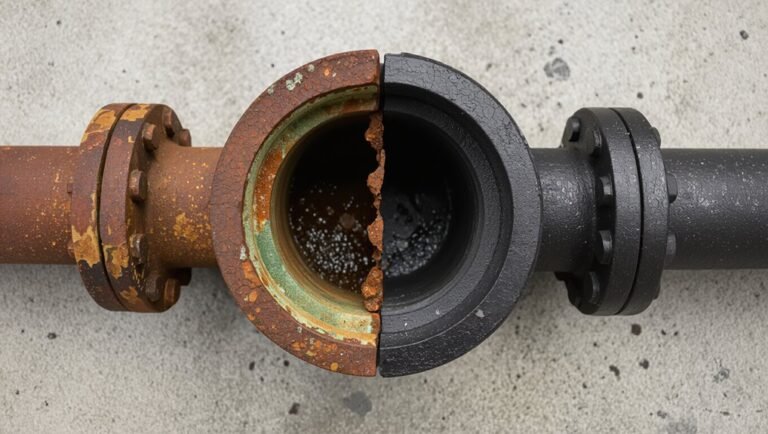
Corrosion is chemical, often progressive and detectable by discoloration, pitting, or thinning; insurers may view it as foreseeable maintenance.
Wear is mechanical, caused by abrasion, vibration, or pressure cycles, producing cracks or fractures that can appear suddenly.
Distinguishing causes helps determine whether loss is sudden and accidental or due to neglect.
- Corrosion: chemical reaction, slow deterioration, maintenance concern.
- Wear: mechanical fatigue, repetitive stress, potential sudden failure.
- Inspection evidence: patterns, residue, and metallurgical signs guide claim decisions.
Policy Exclusions Explained
Because corrosion and rust develop gradually and often reflect long-term neglect, most homeowner policies carve out or limit coverage for damage arising from these deterioration processes.
Insurers typically classify corrosion-related failures as maintenance issues, excluding routine wear, gradual deterioration, and latent defects. Coverage may apply only when corrosion directly causes a sudden, accidental event—subject to specific policy language, exclusions, and proof standards.
Policyholders often face denied or reduced claims if inspections, upkeep, or known deterioration were neglected. Documentation, timelines, and professional assessments become decisive in claim disputes, and endorsements or endorsements exceptions vary by carrier and jurisdiction.
Preventive Maintenance Credits
When homeowners can document regular corrosion-prevention measures—such as scheduled inspections, pipe replacements, protective coatings, and water-treatment treatments—many carriers will consider applying preventive maintenance credits that reduce premiums or deny fewer corrosion-related claims.
Insurers evaluate documented schedules, receipts, and professional reports to verify proactive care. Credits vary by carrier and often require ongoing compliance; failure to maintain records can void benefits.
Credits target risk reduction, encouraging timely intervention and extending pipe life. Homeowners should compare offers and understand conditions tied to credits, including inspection frequency, approved materials, and contractor qualifications.
- Documentation requirements
- Credit conditions
- Inspection frequency
Tree Root Intrusion Into Slab Pipes: Coverage Considerations
Tree roots penetrating slab pipes present a frequent and costly source of water damage and foundation issues, and whether homeowners insurance covers such losses depends on policy language and cause of loss.
Insurers often distinguish between sudden, accidental events and gradual damage; root intrusion developing over years is commonly excluded as wear and tear or maintenance-related.
Policies may cover resultant sudden pipe rupture and ensuing water damage but deny coverage for repeating clogging, slow leaks, or underlying tree removal.
Documentation of sudden failure, professional inspection, and policy endorsements for sewer or drain backups can influence claim outcomes.
How Homeowner Maintenance and Negligence Affect Claims
After establishing whether root intrusion was a sudden rupture or the result of long-term deterioration, attention turns to how homeowner upkeep and negligence shape claim outcomes.
Insurers assess maintenance records, visible neglect, and preventative measures when deciding coverage. Failure to address known leaks, ignore recommended repairs, or allow intrusive landscaping can shift a loss from sudden accidental to excluded wear and tear.
- Documented maintenance and timely repairs increase likelihood of covered claim determinations.
- Neglect, deferred fixes, or ignored warnings can lead to denial or reduced payment.
- Preventative steps—inspections, root barriers, prompt plumbing service—support policyholder position.
How to Document a Broken Pipe Under the Foundation for a Claim
When a pipe under the foundation fails, the homeowner should photograph all visible damage and the surrounding area from multiple angles to establish scope and progression.
They should keep receipts, contractor estimates, and any repair permits to document work performed and costs incurred.
Collecting names and written statements from neighbors, contractors, or household members can corroborate timelines and observations for the claim.
Photograph Damage Thoroughly
If a pipe beneath the foundation is suspected, homeowners should begin by creating a clear visual record of all affected areas before any repairs or cleanup alter the scene.
Photographs should capture wide-context shots showing the foundation, entry points, and nearby structures, then close-ups of cracks, standing water, stains, and exposed piping.
Use consistent lighting, include a dated scale or ruler in images, and record timestamps. Store originals unedited and make copies for the claim file.
Provide insurers with labeled image sets that map damage locations to the home’s layout for faster assessment and fewer follow-up requests.
- Context and wide shots
- Close-ups with scale and timestamps
- Organized, labeled image sets
Preserve Repair Documentation
Several concise records are essential for preserving repair documentation after discovering a broken pipe beneath the foundation: detailed contractor invoices, repair estimates, receipts for materials and temporary mitigation, dated photographs taken before and during repairs, and written statements from licensed professionals describing the cause and scope of damage. The claimant should organize files chronologically, note contacts and license numbers, and keep originals plus digital backups. Clear labels and a brief cover summary expedite insurer review. The table below lists key items and examples to include.
| Item | Example |
|---|---|
| Invoice | Licensed plumber invoice with labor hours |
| Photo log | Timestamped photos before/during/after repairs |
Record Witness Statements
After assembling repair invoices and photo logs, the claimant should collect witness statements to corroborate the sequence of events and cause of the break beneath the foundation.
Statements should be dated, signed, and include contact details to allow insurer follow-up. Witnesses might be neighbors, contractors, or household members who noticed sounds, water, or ground movement.
Encourage concise, factual accounts limited to observations and times. Avoid speculation about causes unless the witness is a qualified professional.
Store statements with other claim records and provide copies to the adjuster promptly to strengthen credibility and expedite resolution.
- Neighbor observations with timestamps
- Contractor inspection notes
- Household member eyewitness accounts
What to Expect During an Adjuster Inspection
What does an adjuster inspection entail when a homeowner reports damage from broken pipes?
An adjuster documents visible damage, photographs affected areas, measures moisture and documents water lines, and notes repairs already undertaken.
They review policy coverages, ask about timelines and prior leaks, and collect the claimant’s statements and any receipts.
The adjuster may test accessible fixtures and check for secondary damage such as mold or structural compromise.
Findings are recorded in a report that informs coverage determinations and settlement offers.
Homeowners should provide records, remain factual, and avoid speculation during the inspection to expedite resolution.
When Insurers Require Professional Diagnostics (Camera, Hydrostatic)
Insurers may require camera inspections or hydrostatic testing to pinpoint the location and cause of a suspected pipe failure.
These professional diagnostics produce objective evidence that influences coverage decisions and repair approvals.
Policyholders should expect documented reports and possibly further testing before a claim is settled.
When Insurers Demand Diagnostics
Many policies and claims adjusters now require professional diagnostics—such as camera inspections or hydrostatic testing—before approving coverage for pipe failures. Insurers cite accurate cause determination and cost estimation; claimants face requests for documented results and licensed contractor reports.
Delays can occur while appointments, testing, and report submission proceed. Policyholders should confirm authorized vendors, understand cost responsibilities, and keep records of communications.
Independent second opinions may be advisable if disputes arise. Clear, prompt compliance often expedites decisions, whereas refusal or incomplete diagnostics can lead to denial or reduced payouts.
- Confirm authorized testing providers and cost allocation
- Preserve communication and report documentation
- Seek independent review if findings are disputed
Camera And Hydrostatic Tests
When a claim involves suspected internal pipe failure, insurers frequently require camera inspections or hydrostatic tests to determine the failure’s location, mechanism, and extent.
Trained technicians insert video cameras into lines to visualize cracks, root intrusion, misalignments, or joint separations; recorded footage documents condition and failure points. Hydrostatic tests pressurize sections to reveal leaks, measure pressure loss, and recreate failure conditions without excavation.
Reports include timestamps, measurements, and professional opinions linking observed defects to causation standards insurers use. Policyholders should obtain copies, review scope and limitations, and consider independent verification if findings affect coverage or liability determinations.
Repair vs. Replacement: What Insurance Will Pay Under the Slab
Deciding whether a homeowner’s policy covers repair or full replacement of plumbing beneath a concrete slab hinges on policy language, cause of damage, and state law.
Coverage often distinguishes sudden, accidental events from gradual wear and maintenance issues. Policies may pay to access and repair the damaged section but exclude replacing entire runs or slab removal unless resultant water damage is covered.
Endorsements, plumbing code upgrades, and write-downs for depreciation affect payout. Claimants should document causation, obtain contractor estimates, and consult adjusters about limits and endorsements before work begins.
- Confirm peril: sudden vs. gradual
- Determine scope: targeted repair vs. full replacement
- Review endorsements, limits, and depreciation
Additional Living Expense Coverage If the Home Becomes Uninhabitable
How much assistance does a typical homeowners policy provide if a broken slab pipe leaves the house uninhabitable?
Coverage commonly labeled Additional Living Expenses (ALE) reimburses reasonable costs beyond normal living expenses while repairs render the dwelling unlivable.
ALE may pay for temporary lodging, meals, laundry, and transportation up to policy limits and for a defined period.
Insurers expect documentation: receipts, hotel bills, and explanations tying expenses to displacement.
Limits, sublimits, and deductible application vary; some policies cap daily amounts or total duration.
Policyholders should notify their carrier promptly and ask about preapproval and covered expense categories.
Mold and Secondary Damage Coverage After a Slab Leak
Although mold often follows a slab leak, coverage for resulting mold and other secondary damage depends on cause, timeliness of remediation, and policy language.
Insurers commonly cover sudden, accidental water damage from a covered peril; they may deny claims for long-term leaks or neglect.
Mold removal and repairs are sometimes limited by dollar caps or excluded unless endorsement purchased.
Prompt mitigation, documented professional drying, and timely claims reporting strengthen recovery prospects.
Policyholders should review exclusions, mold add-ons, and duty-to-mitigate clauses.
Legal and contractor documentation can support disputes over denials or limits.
- Cause and policy exclusions
- Timely mitigation and records
- Limits, endorsements, and disputes
How Flood Insurance Differs From Homeowners Insurance for Foundation Leaks
The distinction between flood insurance and standard homeowners policies is critical when foundation leaks involve rising groundwater rather than internal plumbing failures.
Flood policies typically cover damage from external surface water or groundwater intrusion but require specific purchase and come with different exclusions, limits, and waiting periods.
Policyholders should note when a flood policy applies, how mitigation requirements affect claims, and the separate coverage caps that may limit recovery.
Flood vs. Homeowners Coverage
When water intrudes through a home’s foundation, coverage can hinge on whether the source is a localized plumbing failure or widespread surface water. Homeowners policies typically cover sudden, accidental pipe leaks that back into a foundation, while flood insurance responds to rising surface water or groundwater that enters from outside.
Insurers assess cause, policy language, and exclusions. Homeowners coverage may include water damage mitigation and interior repairs for covered perils; flood policies address external inundation, structural and contents losses tied to rising water.
Owners should review both policies and document loss promptly to clarify which policy applies.
- Determine origin: internal pipe vs. external water
- Check policy exclusions and endorsements
- Document damage and notify insurers immediately
When Flood Policies Apply
Having determined whether water originated inside the home or from outside, attention turns to scenarios that trigger a flood policy.
Flood insurance applies when water rises from external sources—river overflow, heavy rain causing surface inundation, storm surge, or groundwater seepage—entering through foundations, basements, or crawlspaces.
Standard homeowners policies typically exclude such external water events. A flood policy covers structural damage and contents per its terms and limits, regardless of whether a pipe also failed, if the primary cause is rising water.
Policyholders must review federal or private flood definitions, maps, and waiting periods to confirm applicability before filing a claim.
Mitigation And Claim Limits
Different rules for mitigation and claim limits shape how foundation leaks are handled under flood versus homeowners insurance.
Insurers require prompt mitigation to reduce damage; failure can reduce payments. Flood policies often have separate deductibles, caps, and national program limits, while homeowners policies apply dwelling limits but exclude most flood-related seepage.
Coverage determinations depend on cause: sudden pipe failure versus gradual groundwater intrusion.
- Mitigation duties: immediate repairs, documentation, and professional remediation.
- Claim limits: flood policies have program caps; homeowners follow dwelling limits and endorsements.
- Proof of cause: critical for assigning liability and applicable policy.
How Sewer Backup Endorsements Interact With Slab-Pipe Claims
If a sewer backup endorsement is part of a homeowner’s policy, it can significantly change coverage outcomes for slab-pipe failures by distinguishing between direct pipe rupture and consequential sewage intrusion; the endorsement typically provides explicit coverage for sewage overflow or backup even when standard water-damage provisions exclude ground-level or slab-related water events. In practice, insurers evaluate cause, location, and policy language: endorsements often cover cleanup and interior damage from sewage but not underlying slab repair unless specified. Claim adjusters separate sewage remediation from structural repairs, and limits, deductibles, and exclusions determine recoverable costs.
| Issue | Typical Endorsement Response | Common Limitation |
|---|---|---|
| Sewage intrusion | Covered | Sub-limit applies |
| Direct slab leak | Often excluded | Structural exclusion |
| Cleanup costs | Covered | Deductible applies |
| Mold from sewage | Sometimes covered | Time/mitigation rules |
| Plumbing repair | Usually excluded | Policy wording governs |
Endorsements to Add: Slab-Leak, Sewer-Backup, and Water-Damage Options
Coverage options for slab leaks, sewer backups, and general water damage are commonly offered as endorsements or riders to standard homeowners policies.
Each endorsement has distinct triggers, limits, and exclusions: slab-leak coverage often addresses repair of the foundation-embedded pipes, sewer-backup extensions reimburse cleanup and restoration from sewer or sump failures, and water-damage riders can broaden protection for accidental discharge or gradual seepage.
Homeowners should compare scope, sublimits, and deductibles to determine which combinations best address their risk profile.
Slab-Leak Coverage Basics
When a slab leak occurs, standard homeowners policies often exclude or limit damage from water that originates beneath a concrete slab.
Therefore, policyholders must consider specific endorsements—slab-leak, sewer-backup, and broadened water-damage options—to fill those gaps and reduce out-of-pocket exposure.
Slab-leak endorsements typically cover repair of the slab, excavation, and plumbing repairs tied to leaks under concrete, and may pay for resulting interior damage.
Limits, deductibles, waiting periods, and inspection requirements vary by insurer.
Buyers should compare coverage caps and define covered causes to avoid surprises.
- Coverage scope and limits
- Repair and excavation costs
- Policy conditions and exclusions
Sewer-Backup Extension Benefits
Many homeowners overlook sewer-backup endorsements until damage appears, yet these extensions address losses from water or sewage that back up through drains, toilets, or sump systems—perils frequently excluded or narrowly defined in standard policies. The endorsement typically reimburses cleanup, repairs to finished surfaces, and damaged personal property, often with specified limits and separate deductibles. It complements slab-leak protections by covering external system failures and complements water-damage options by targeting backups specifically. Policyholders should compare limits, waiting periods, and exclusions when adding endorsements to guarantee coverage matches risk exposure.
| Benefit | Typical Details |
|---|---|
| Cleanup | Mold mitigation, debris removal |
| Repairs | Flooring, cabinetry, finishes |
| Personal property | Limited sublimits |
| Conditions | Separate deductible, exclusions |
Water-Damage Policy Riders
Because standard homeowners policies often limit or exclude water-related losses, adding specific riders—such as slab-leak, sewer-backup, and broader water-damage options—lets a homeowner tailor protection for distinct plumbing and external-system failures.
These endorsements define covered perils, limits, and deductible structures that standard forms omit. Policyholders should compare costs, waiting periods, and required mitigations. Insurers may require prompt repairs and documentation to validate claims.
Agents can explain interplay with dwelling, loss of use, and appliance coverage. Selection depends on local risk, foundation type, and sewer infrastructure.
- Slab-leak rider: covers leaks beneath concrete slabs and related repair.
- Sewer-backup endorsement: insures backup from public or private lines.
- Water-damage option: broadens perils to include accidental discharge and slow leaks.
Policy Limits, Sublimits, and Deductibles That Matter for Slab Losses
A homeowner’s recovery from slab-related water damage often hinges less on general coverage and more on the specific policy limits, sublimits, and deductible provisions that apply to foundation and slab losses.
Policy limits set the maximum insurer payout for covered losses; if slab repair exceeds that ceiling, the owner bears the remainder. Sublimits may cap coverage for earth movement, foundation repair, or water backup separately from the main dwelling limit.
Deductibles—flat or percentage-based—reduce claim payments and can be higher for foundation-related perils. Understanding these figures, comparing endorsements, and documenting estimates before filing helps clarify potential out-of-pocket exposure.
How Prior Damage and Pre-Existing Conditions Affect Claim Approval
When an insurer evaluates a slab-related water claim, evidence of prior damage or long-standing deterioration can be decisive: policies typically exclude losses that stem from pre-existing conditions, wear and tear, or maintenance neglect.
Homeowners must show the break was sudden and accidental rather than the result of unresolved, earlier issues. Insurers review maintenance records, past repair invoices, inspection reports, and photographic timelines.
Clear documentation of recent normal condition, unexpected failure mode, and prompt mitigation supports approval; gaps, ignored leaks, or deferred repairs invite denial or downgraded coverage.
- Document maintenance and recent inspections
- Preserve repair invoices and photos
- Report and mitigate promptly
When Structural Foundation Repair Is Covered Versus Excluded
If the structural repair stems directly from a covered peril—such as sudden pipe rupture that undermines the slab—insurance policies may pay for stabilization and necessary foundation work; conversely, costs tied to gradual settlement, pre-existing defects, poor original construction, or routine maintenance are typically excluded.
Coverage often depends on policy language, endorsements, and documented sudden damage versus long-term deterioration. Policyholders must show prompt discovery, mitigation, and evidence that the event caused structural compromise.
Exclusions commonly cited include wear and tear, design flaws, and earth movement unless a specific endorsement applies. Adjuster inspections and engineering reports usually determine whether repairs qualify for coverage.
Working With Contractors: What Insurers Expect for Slab Repairs
Following determination that slab repairs arise from a covered, sudden event rather than excluded deterioration, insurers shift focus to the contractor selection and documentation that will support a claim.
Carriers expect licensed, bonded contractors with experience in slab repair; insurer-appointed adjusters may require pre-repair inspections and written scope-of-work estimates.
Change orders, photos, receipts, and daily logs help substantiate costs and causal links. Homeowners should obtain multiple bids and verify contractor credentials before work begins to avoid disputes over reasonableness.
- Verify licenses, insurance, and references.
- Provide detailed bids, timelines, and material lists.
- Keep progress photos, invoices, and signed change orders.
Cost-Saving Strategies When Insurers Deny Pipe Repair Claims
When an insurer denies a pipe repair claim, homeowners can appeal the decision by gathering documentation and citing policy language.
They may also negotiate with contractors for estimates, phased work, or discounts to reduce out‑of‑pocket cost.
If those routes fail, exploring alternative coverage sources—such as emergency home repair loans, disaster assistance, or secondary policies—can provide needed funds.
Appeal The Denial
Homeowners frequently encounter claim denials for pipe repairs, but an organized, evidence-based appeal can overturn many decisions and recover necessary funds.
The homeowner should review the denial letter, policy terms, and exclusions; document all damage with dated photos and repair estimates; and obtain an independent plumber’s report stating cause and urgency.
Draft a concise appeal letter citing policy language, attaching evidence, and requesting reassessment or appraisal.
If denied again, escalate to the insurer’s ombudsman, state insurance department, or a public adjuster. Legal consultation is advised when policy interpretation or bad-faith practices occur.
- Gather documentation
- Submit concise appeal
- Escalate if needed
Negotiate With Contractors
Start by identifying several licensed contractors to compare bids and availability, emphasizing those who have experience with insurance-denied pipe repairs and can document cause and necessary work.
Obtain itemized estimates to spot unnecessary tasks and negotiate scope reductions, phased work, or use of cost-effective materials without sacrificing code compliance.
Request written warranties and ask if contractors will accept staged payments tied to milestones.
Leverage competing bids to lower prices and seek referrals for trusted subcontractors. Document all negotiations and agreements.
If contractors suggest permits or engineering, verify costs upfront to prevent surprise expenses and preserve leverage when insurers remain unwilling to pay.
Seek Alternative Coverage
If an insurer refuses to cover pipe repairs, policyholders should explore alternative coverage and cost-saving strategies to limit out-of-pocket expenses.
They can audit existing policies, check endorsements, and document denial reasons to identify gaps. Options include tapping secondary policies, negotiating payment plans with contractors, and seeking grant or low-interest loan programs.
Evaluating longer-term fixes that reduce future claims can be economical.
- Review secondary or umbrella policies and endorsements for applicable coverage.
- Request contractor payment plans, phased repairs, or discounts for prompt payment.
- Research local disaster relief, nonprofit grants, or low-interest home repair loans.
How to Dispute a Denied Claim for a Pipe Under the Foundation
When an insurer denies a claim for a pipe located beneath the foundation, a homeowner should promptly gather documentation, understand the denial reasons, and follow the insurer’s appeal procedures while preparing to escalate the dispute if necessary.
The homeowner compiles repair invoices, inspection reports, photographic evidence, policy language, and correspondence.
Next steps include submitting a clear, timely appeal letter referencing policy terms and supplying missing evidence. Maintain organized records and meet all deadlines.
If the insurer repeats the denial, pursue external review options such as state insurance department complaint processes or independent appraisal clauses included in the policy to seek resolution.
When to Hire an Independent Adjuster or an Attorney
How should a homeowner decide whether to hire an independent adjuster or retain an attorney after a disputed pipe claim?
A homeowner should weigh complexity, cost, and expertise. Independent adjusters can reassess damages, document loss, and negotiate with the insurer for a fee usually lower than legal counsel.
Attorneys are appropriate when coverage is contested, bad faith is suspected, or potential recovery exceeds legal costs.
Timelines, evidence strength, and policy ambiguity guide the choice. Consulting both for initial advice can clarify strategy.
Choose based on potential recovery, procedural demands, and the homeowner’s comfort with litigation.
- Complexity and potential recovery
- Evidence and documentation
- Cost versus expected outcome
Preventive Steps Homeowners Can Take to Reduce Slab-Pipe Risk
Because slab plumbing failures often develop gradually and can cause extensive under-slab damage, homeowners should adopt a proactive maintenance routine focused on early detection and mitigation.
Regularly monitoring water bills, watching for unexplained damp spots or musty odors, and noting changes in water pressure help reveal slow leaks.
Controlling soil moisture near the foundation by directing runoff away from the house, maintaining gutters and downspouts, and avoiding overwatering landscaping reduces ground movement and corrosion risk.
When renovating, choosing noncorrosive piping materials and placing heavy appliances thoughtfully lessens stress on slab plumbing.
Promptly addressing minor issues prevents escalation into major slab failures.
Best Maintenance Checks for Pipes Under Foundations
Although often out of sight, pipes beneath foundations require a focused maintenance checklist to catch deterioration before it becomes catastrophic. A routine inspection program, preferably annual, documents visible signs at slab edges, monitors moisture in crawlspaces, and records any shifts in floor or wall alignment that suggest plumbing movement.
Leak-detection audits using acoustic or pressure tests help identify small failures early. Maintain accessible records of repairs and water usage anomalies to spot gradual loss.
Prioritize professional evaluation when corrosion, recurring blockages, or unexplained dampness appears; timely intervention reduces structural harm and simplifies insurance claims.
- Annual visual and structural checks
- Leak-detection testing
- Usage and repair recordkeeping
Upgrades and Retrofits That Insurers Reward or Require
Once maintenance has documented recurring vulnerabilities beneath a foundation, homeowners should consider specific upgrades and retrofits that insurers either discount or make a condition of coverage.
Commonly rewarded measures include replacing corroded supply lines with PEX or copper, installing pressure-reducing valves, and adding automatic shutoff systems tied to leak detectors.
Required or heavily incentivized retrofits can include rerouting exposed piping away from shallow slab areas and adding accessible cleanouts.
Documented installation by licensed contractors and permits increases chances of premium reduction.
Insurers may demand proofs of ongoing monitoring and maintenance schedules as part of underwriting and claim acceptance.
How Location and Climate Change Affect Claim Risk for Slab Pipes
When siting and underwriting slab homes, insurers weigh geographic and climatic factors that influence pipe stress and failure rates. Regions with extreme temperature swings, high groundwater tables, coastal salt exposure, or frequent freeze-thaw cycles show higher frequencies of slab-related leaks and ruptures.
Location-driven risks alter underwriting, premiums, and required mitigations. Areas prone to drought-induced soil subsidence or persistent saturation increase movement and corrosion risks for embedded piping.
Climate change amplifies these trends through more intense storms, shifting groundwater patterns, and warmer winters that change freeze patterns, prompting insurers to adjust maps of acceptable risk and to demand resilience measures.
- Soil movement and subsidence
- Groundwater and flooding
- Salt corrosion and freeze-thaw
Typical Timelines: From Discovery to Claim Resolution
After outlining how location and climate drive slab-pipe failures, attention turns to the sequence of events that follows discovery of a leak and the typical timetable insurers and homeowners can expect.
Initially, immediate mitigation and documentation occur within 24–72 hours: shutoff, photos, and emergency repairs. Filing a claim typically follows within days; an adjuster inspection is usually scheduled within 3–14 days.
Estimate approval and contractor selection can take 1–4 weeks, depending on complexity and backlog. Repairs often require 2–8 weeks.
Final inspections, supplemental claims, and payment resolution may extend total closure to 1–4 months. Delays arise from weather, parts, or dispute resolution.
Real Claim Examples and Lessons Learned
Although each claim carries unique facts, several recurring patterns emerge from actual homeowner-insurer disputes over slab and hidden pipe failures: delayed discovery often compounds damage and reduces recoverable amounts, undocumented emergency repairs provoke coverage disagreements, and differences in interpreting deterioration versus sudden break lead to denials or limited payouts.
- A homeowner found months of hidden leakage; mold and structural harm exceeded policy limits, underscoring prompt inspection and mitigation.
- An insured paid a contractor before approval; the insurer contested necessity and itemized costs, reducing reimbursement.
- A claim denied as “wear and tear” highlighted the need for documented maintenance and professional diagnosis at discovery.
Questions to Ask Your Agent About Slab-Pipe Coverage
Why should a homeowner ask specific questions about slab and hidden-pipe coverage? Insurers vary on covered causes, exclusions, and required maintenance.
Ask whether damage from slab movement, corrosion, or age is covered; whether sudden rupture differs from gradual leaks; and if sewer backup or mold remediation is included.
Clarify deductibles, sublimits for underground or slab piping, and any mandatory endorsements. Request examples of covered versus denied claims and documentation needed to support causation.
Confirm whether inspections or preventative upgrades affect eligibility or premiums, and ask how claim settlements are calculated—repair cost, ACV, or replacement cost.
Checklist to Prepare Before Filing a Foundation-Pipe Claim
Before contacting an insurer, a homeowner should assemble a concise packet of facts and evidence to streamline a foundation-pipe claim: this packet should document the event, damage, and prior maintenance clearly and chronologically.
Include photos, repair estimates, inspection reports, and any temporary mitigation receipts. Note dates, times, and actions taken to prevent further harm. Keep copies of communications with contractors and neighbors.
Organize documents for quick retrieval and provide a concise summary page outlining key facts and losses.
- Photos, timestamps, and mitigation receipts
- Contractor estimates and inspection reports
- Communication log and summary page
Conclusion
When a broken pipe under a foundation is discovered, the path forward can feel like walking a tightrope between hope and expense. Coverage often hinges on whether damage was sudden and accidental, not gradual neglect, and on policy specifics. Homeowners are urged to act quickly, document thoroughly, and ask precise questions of their agent—because, in the end, preparedness can turn a potential disaster into a manageable repair, offering relief where worry once lived.