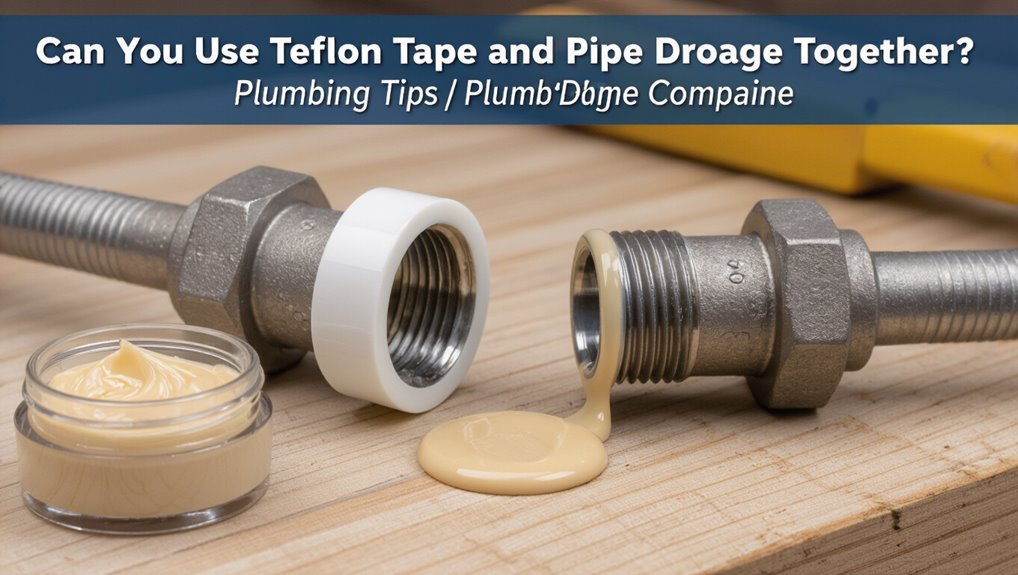
Can You Use Teflon Tape and Pipe Dope Together? Plumbing Tips Answered
Yes, you can use Teflon tape and pipe dope together on metal threaded fittings to enhance sealing.
Key Takeaway:
- Combination Use: Many plumbers combine PTFE (Teflon) tape and pipe dope for improved lubrication and a durable seal on metal threads.
- Application Method: Apply tape clockwise with two to three wraps, then add a light smear of dope.
- Caution: Do not mix these materials on PVC or compression fittings.
This method helps fill thread gaps, prevents galling, and ensures resistance to vibration and pressure surges.
Quick Answer: Use Tape and Pipe Dope Together?
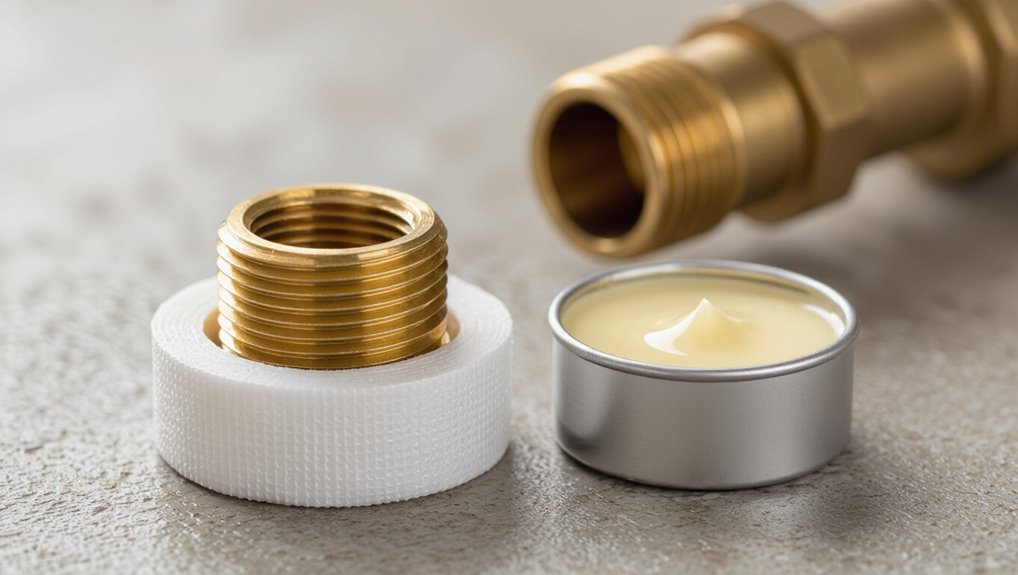
Often the question arises whether both PTFE tape and pipe dope should be used on the same threaded plumbing joint; the short, practical answer is yes—when applied correctly they complement each other: tape fills threads and provides lubrication while dope creates a durable seal and resists loosening.
Practitioners wrap tape clockwise on clean, dry male threads, typically two to three wraps, then apply a thin, even coat of dope over the tape. This sequence prevents bunching and guarantees proper cure.
Combined use suits metal fittings and high-pressure lines but is unnecessary for certain factory-sealed or compression connections.
Quick Decision Guide: Tape, Dope, or Both
A concise rule helps choose between tape and pipe dope based on thread type and application.
Use PTFE tape for most metal threads and quick repairs, and use pipe dope for plastic threads, high-pressure joints, or when chemical resistance is required.
In some cases a light layer of both provides extra sealing and lubrication, but selection should match materials and service conditions.
When To Use Tape
Many plumbers rely on tape for quick sealing on threaded fittings because it is fast, clean, and compatible with most metal and PVC threads; however, selecting tape versus pipe dope (or using both) depends on thread type, pressure, and joint orientation.
Use tape when threads are clean, undamaged, and require a dry, low-mess solution. Choose PTFE tape for water lines, compression fittings, and appliance connections where speed and reusability matter. Wrap two to three tight layers following thread direction.
Avoid tape on tapered threads under very high pressure or soft-plastic fittings without checking manufacturer recommendations. Tape suits maintenance and light-duty installations.
When To Use Dope
The decision between PTFE tape, pipe dope, or a combination hinges on thread type, pressure, joint orientation, and the materials involved.
Pipe dope is preferable for metal tapered threads, high-pressure systems, or when lubrication eases assembly. It bonds to irregularities and resists vibration loosening.
Consider dope when threads are old, damaged, or require corrosion protection.
- Use dope for NPT metal threads under high pressure.
- Prefer dope when repeated disassembly isn’t expected.
- Combine dope with tape on hard-to-seal or aged threads.
- Avoid oil-based dopes on plastic threads to prevent stress cracking.
Select by material compatibility and service conditions.
When PTFE (Teflon) Tape Alone Is Best
PTFE tape is recommended when creating a clean, reliable seal on standard threaded plumbing joints because it fills gaps and prevents leaks without altering thread fit.
It is particularly favored for gas line threading where a thin, pliable sealant allows proper engagement and can be removed or adjusted if needed.
Professionals emphasize using the correct tape density and wrapping technique to guarantee safety and compliance with codes.
Seal For Threaded Joints
When fittings are metal-to-metal and designed for pressure-tight threads, using only PTFE (Teflon) tape provides a clean, reliable seal without interfering with thread engagement. It prevents galling, fills minor thread imperfections, and avoids excess compound that can squeeze into passages.
Careful application—wrap clockwise, two to three wraps, smoothed into the threads—ensures consistent coverage.
- Ideal for potable water and standard plumbing joints
- Keeps assemblies reversible for maintenance
- Reduces risk of cross-contamination from paste-type sealants
- Minimizes mess and cleanup after tightening
Use tape where joints rely on thread contact rather than sealant adhesion.
Gas Line Threading
For gas line threading, using only PTFE (Teflon) tape is preferred in many metal-to-metal pressure-tight connections because it preserves thread engagement while providing a reliable seal.
Technicians apply tape sparingly, wrapping clockwise over male threads two to three times to avoid bunching or overfill. The tape resists gas permeation and allows metal faces to contact fully, maintaining mechanical strength.
Use of paste can contaminate regulators or create unreliable soft seals. Inspect fittings after pressure testing and replace compromised tape.
For fuel-gas systems, follow local codes and manufacturer instructions; when in doubt, consult a certified gas plumber.
When Pipe Dope Alone Is Best
Although some jobs call for multiple sealants, pipe dope alone is preferable where metal threads will be disassembled frequently, when thread tolerances are tight, or when high-temperature service would degrade tape or anaerobic compounds.
It provides consistent lubrication, fills minor irregularities, and resists creeping under vibration.
Preferred uses include:
- Valve stems and fittings needing repeat maintenance
- Fine-thread couplings where tape causes misalignment
- High-temperature connections in boilers or exhaust systems
- Applications requiring chemical resistance beyond PTFE limits
Technicians favor single-product application for predictability, ease of cleanup, and reduced chance of foreign-material contamination during assembly and future servicing.
When Combining Tape + Dope Makes Sense
Because some connections benefit from both the physical gap-filling of tape and the lubricating, vibration-resistant properties of dope, combining PTFE tape with pipe dope is a common practice for mixed-material or older threaded joints.
This approach makes sense when threads are slightly worn, irregular, or when assembly requires repeated disassembly: tape provides an initial seal while a thin coat of compatible dope improves tack, resists loosening under vibration, and fills microgaps.
Applicators should apply tape first, wrap neatly, then a light even layer of dope; avoid excess that can contaminate systems or impede future repairs.
Safe Fittings for Combining Sealants (Metals vs Plastics)
When joining metal and plastic pipe or fittings, compatibility of sealants is critical to prevent chemical damage, loosening, or leaks.
The choice of tape, dope, or both depends on materials: PTFE tape suits threaded metal-to-metal joints and many plastics if non-reactive; thread sealants labeled safe for plastics avoid stress cracking.
Use minimal sealant on tapered threads to prevent overfill. For dissimilar-metal unions, prefer a sealant that resists galvanic action and allows slight movement.
- Use PTFE on brass, copper, stainless steel threads
- Choose plastic-safe, non-solvent pipe dope for PVC/CPVC
- Avoid solvent-based sealants on plastics
- Match sealant ratings to pressure and temperature
Fittings to Never Combine Sealants On
If sealants are layered indiscriminately, certain fittings can fail quickly due to chemical incompatibility, trapped solvents, or excessive buildup that prevents proper tightening. Recommended avoidance includes soft plastics, press-fit fittings, and compression joints where combined tape and paste can crack, deform, or block seals. Metal-to-metal threaded joints may tolerate one proper sealant type, but mixing increases leak risk. Soft-seat valves and O-ring connections must remain free of particulate sealant. Always consult manufacturer guidance before applying any compound.
| Fitting type | Why avoid combining |
|---|---|
| PVC/CPVC threads | Solvent interaction, deformation |
| Compression fittings | Seal packing displacement |
| Soft-seat valves | O-ring contamination |
How PTFE Tape Seals Threads
After warning against mixing sealants on sensitive fittings, attention turns to how PTFE tape creates a reliable thread seal.
PTFE tape works by conforming to thread micro‑irregularities, reducing metal‑to‑metal contact and offering a low‑friction surface that eases tightening. It remains inert, resists many chemicals, and can be applied quickly for repeated service.
Proper layering and direction prevent unraveling; excess tape is avoided to maintain thread engagement.
- Wraps fill surface voids between male and female threads
- Compresses to form a thin, flexible barrier
- Minimizes galling during assembly
- Resists most common plumbing fluids
How Pipe Dope Seals and Fills Gaps
Pipe dope is a paste applied to threaded joints that fills microscopic irregularities and voids between mating surfaces.
Its viscous compounds compress under assembly to create a continuous, gap-sealing barrier that resists pressure and vibration.
Proper application guarantees the compound occupies thread roots and minor gaps that tape may not address.
How It Fills
A thin layer of thread sealant fills the microscopic valleys and irregularities between mating threads, creating a tight barrier that prevents fluid passage; its viscous matrix also cushions metal-to-metal contact, compensating for manufacturing tolerances and minor damage.
The compound conforms under torque, displacing air and small debris to form a continuous film. Over time it hardens slightly, maintaining elasticity while resisting washout. Proper application amount and even coverage determine effectiveness; excess is wiped away to avoid contamination.
Typical behaviors include:
- Flow into crevices between thread flanks
- Filling pits and scratches
- Bonding to metal surfaces
- Maintaining elasticity under pressure
Gap Sealing Action
Seals form as the compound creeps into voids between mating parts, where its thixotropic consistency displaces trapped air and conforms to uneven surfaces to create a continuous barrier.
The paste-like sealer bridges micro-gaps and surface imperfections that tape cannot reach, hardening or curing to resist pressure and vibration. It adheres to metal, plastic, and threaded fittings, preventing fluid paths by filling spiral and axial clearances.
Effective application requires even coating and moderate assembly torque to squeeze compound into joints without excess extrusion.
Properly selected pipe dope maintains elasticity and chemical compatibility, preserving the seal under thermal and mechanical stress.
How to Combine Tape and Dope Correctly
When joining threaded fittings, many plumbers apply PTFE tape first, then a thin layer of pipe dope, to gain both immediate thread filling and long-term sealing.
The technique requires clean threads, compatible materials, and even application to avoid traps for debris. Steps emphasize direction, overlap, and sparing paste. Benefits include improved seal reliability and easier future disassembly when done properly.
- Clean threads with a brush and solvent before any sealing product.
- Wrap tape snugly in the thread turning direction to prevent unraveling.
- Apply a light, even coat of dope over the tape; avoid globbing.
- Inspect and hand-tighten before final torque.
How Much Tape and How Much Paste to Use
Most fittings require two to three wraps of PTFE tape applied snugly along the male threads; this amount fills thread gaps without producing excess bulk that can prevent full engagement.
For tape, use consistent, even wraps in the thread direction, avoiding overlap past the end.
For paste, a thin, uniform coating on male threads suffices—enough to cover crests without filling thread roots. Excess paste can squeeze into the fluid path or impede threading.
When combining, apply tape first, then a light smear of dope over it; a thin layer complements the tape’s sealing without creating mess or weakening the joint.
Tools and Prep for PTFE Tape and Pipe Dope
A concise checklist of tools—wrenches, cutters, cleaning brushes, and PTFE tape dispenser—helps guarantee efficient application of tape and pipe dope.
Surfaces should be cleaned, dried, and inspected for burrs or old sealant before any sealing compound is applied.
Proper storage and PPE recommendations protect both the materials and the installer from contamination and harm.
Necessary Tools Checklist
Proper sealing of threaded fittings requires a small set of reliable tools and the right preparations: PTFE (Teflon) tape, pipe dope (thread sealant), a clean rag, a pair of adjustable wrenches, and a wire brush or brass brush for thread cleaning.
A compact checklist helps guarantee efficiency and reduces mistakes. Recommended items include tools for application, inspection, and safety.
- PTFE tape roll (20–60 micron, plumber’s grade)
- Tube of compatible pipe dope (non-hardening, appropriate for fluid type)
- Adjustable wrenches and backup hand tools
- Clean rags, gloves, and a small brush for threads
Each item supports consistent, reliable seals.
Surface Preparation Steps
Before applying PTFE tape or pipe dope, the metal threads must be clean, dry, and free of old sealant, oil, and debris; this guarantees intimate contact and prevents leaks.
Inspect threads for burrs, nicks, or corrosion; damaged threads require repair or replacement. Use a wire brush or nylon brush to remove rust and stubborn residue, then wipe with a lint-free cloth.
For oil or grease, apply a solvent like denatured alcohol sparingly and allow full evaporation. Confirm threads are dry before applying sealant.
Keep fittings supported to avoid cross-threading during assembly and verify alignment before tightening.
Safety And Storage
When handling PTFE tape and pipe dope, wear nitrile gloves and eye protection to prevent skin irritation and accidental splashes.
Make certain work takes place in a well-ventilated area to avoid inhaling fumes from solvent-based compounds. The practitioner stores materials away from heat and direct sunlight, seals containers after use, and labels tubs with purchase and expiry dates.
Keep incompatible chemicals apart and maintain a small spill kit nearby. Dispose of rags per local regulations. Tools are cleaned after each job to prevent cross-contamination and to extend product life.
- Keep products in cool, dry places
- Seal lids tightly after use
- Label with date and contents
- Store away from open flames
Common Mistakes When Mixing Sealants (And How to Avoid Them)
Many DIYers and professionals underestimate how small errors in measuring, mixing ratios, or curing conditions can compromise a sealant’s performance.
Common mistakes include over- or under-thinning, inadequate stirring, contaminant introduction, and using mismatched products. Incorrect tool choice or mixing in improper containers alters consistency and adhesion.
Failing to follow manufacturer timing — pot life and open time — leads to weak bonds or wasted material. To avoid problems, verify product compatibility, measure by weight or specified volume, mix thoroughly with recommended tools, keep surfaces and tools clean, and discard batches past pot life.
Recording batch details aids repeatable, reliable results.
Pressure, Temperature, and Chemical Limits to Know
Plumbing professionals must understand a fixture or sealant’s maximum working pressure to prevent failures under load.
They should also verify the temperature resistance range to guarantee materials remain reliable across expected hot and cold conditions.
Finally, checking chemical compatibility limits prevents rapid degradation from exposure to cleaners, fuel, or process fluids.
Maximum Working Pressure
Maximum working pressure defines the upper limit of pressure a piping system, fitting, or component can safely withstand at a specified temperature and chemical environment.
It guides sealant selection and joint methods: exceeding it risks leaks or catastrophic failure. Manufacturers specify ratings; installers must match system pressure plus transient spikes.
Chemical compatibility with Teflon tape or pipe dope affects long‑term integrity under pressure. Regular testing and proper installation practices preserve ratings.
- Verify component pressure rating before assembly.
- Account for pressure surges and hydraulic shock.
- Use compatible sealants for the conveyed fluid.
- Replace aged fittings showing deformation or creep.
Temperature Resistance Range
Temperature resistance range defines the envelope of temperatures within which a piping system, fitting, or sealant will maintain its pressure rating and chemical compatibility without accelerated degradation.
Manufacturers specify minimum and maximum service temperatures for tapes, thread compounds, and base materials; staying within those limits preserves elasticity, cure state, and seal integrity.
Temperature affects viscosity, hardening, and thermal expansion, altering joint stress and leak risk. Cold can embrittle some sealants; heat can soften or decompose others, reducing pressure capacity.
Selection should match expected operating and transient temperatures, including freeze, startup, and sustained high-heat scenarios, to guarantee long-term performance.
Chemical Compatibility Limits
Having established the operating temperature envelope, attention turns to how pressure and chemical exposure interact with material limits. Compatibility depends on sealant chemistry, substrate, pressure class, and fluid aggressiveness. Users must match specifications and avoid guesses.
Key considerations include:
- Maximum continuous pressure ratings for PTFE tape and pipe dope at designated temperature.
- Chemical resistance charts for solvents, acids, bases, and hydrocarbons.
- Degradation mechanisms: swelling, softening, embrittlement, and loss of adhesion under cyclic pressure.
- Manufacturer guidance and test data for mixed-use scenarios; when uncertain, choose products rated for worst-case conditions or consult technical support to prevent leaks and failures.
Compatibility Chart: Metals, Plastics, Gas, Water
A compatibility chart clarifies which metals and plastics can safely join in gas and water systems, identifying corrosion risks, chemical reactions, and pressure or temperature limits that affect longevity and safety.
It lists common pairings: copper with copper or brass for water, stainless steel with many plastics, and brass fittings for both water and some gas lines.
Avoid aluminum with copper in moist environments.
PVC and CPVC suit cold and hot water respectively but require appropriate solvent cement and temperature limits.
Natural gas favors black iron or CSST; do not use PVC for gas.
The chart guides correct material selection and joint methods.
Will Combining Void Warranties or Break Codes?
When different piping materials are combined in a single system, will manufacturers’ warranties be voided or building codes violated depends on the specific products, their listed approvals, and how connections are made.
Manufacturers may restrict mixed-material use or require approved coupling fittings; failure to follow instructions can risk warranty claims.
Codes often require listed assemblies and proper joining methods; inspectors look for approved materials and correct installation.
Liability and insurance could be affected if unapproved combinations cause failures.
Practical points to contemplate:
- Check product instructions before mixing materials.
- Use listed coupling fittings where required.
- Document installations for inspections.
- Consult local code officials when unsure.
Choosing Products: Labels, Specs, and Certifications
Because plumbing performance and code compliance hinge on more than brand names, choosing products requires close attention to labels, specifications, and third‑party certifications. A careful review confirms materials compatibility (PTFE tape vs solvent‑based dope), temperature and pressure ratings, and approval for potable water. Look for NSF/ANSI, UPC, or local authority listings; read cure times and application notes. Manufacturers’ technical data sheets clarify suitable pipe types and joint preparations. Keep documentation for inspections and warranty claims. Compare VOC content and thread‑seal torque guidance. Use certified products to reduce failure risk and guarantee code conformity.
| Feature | What to check | Why it matters |
|---|---|---|
| Certification | NSF, UPC, ISO | Guarantees standards compliance |
| Specs | Temp/pressure ratings | Matches system demands |
| Compatibility | Pipe/material listing | Prevents chemical incompatibility |
| Instructions | Cure time, torque | Guarantees proper installation |
Troubleshooting Leaks After Using Tape and Dope
Following careful product selection and attention to labels and specs, the next common challenge is diagnosing leaks that appear after applying thread seal tape or pipe dope.
The inspector first checks for visible gaps, torn tape, or excess compound that prevented proper thread engagement. Threads are cleaned and retested without sealant to isolate mechanical fit issues.
If leakage persists, consider replacement fittings or different sealant compatibility.
- Inspect thread engagement and seating depth
- Remove and reapply tape/compound correctly, avoiding overlap
- Verify chemical compatibility with pipe material
- Pressure-test after curing to confirm the seal
Pro Plumber Tips DIYers Miss
Although novices often focus on visible fixes, seasoned plumbers rely on a set of small habits and checks that prevent common failures. They clean threads thoroughly, inspect for damage, and choose tape thickness matched to thread size.
Torque is controlled; fittings are neither under- nor over-tightened. Compatibility is verified: PTFE for metal threads, dope formulas checked for material and temperature.
Plumbers apply tape in the correct direction, overlap consistently, and use dope sparingly where needed. They test assemblies under pressure before concealing work and document materials used for future reference, reducing callbacks and hidden leak risks.
Maintenance and How Combining Affects Future Repairs
When routine maintenance is scheduled and records are kept, the long-term serviceability of plumbing systems improves and subsequent repairs are simpler to diagnose.
Technicians note whether tape, compound, or both were used; layered sealants can complicate disassembly and hide thread damage. Clear records prevent redundant cleaning or solvent use that might harm fittings. Properly documented joints reduce time searching for causes of leaks and cut parts costs.
- Note product types and application dates.
- Photograph joints before concealment.
- Record torque or tightness details.
- Flag mixed-seal joints for future attention.
Conclusion
In plumbing practice, using PTFE tape and pipe dope together is treated like a precision tool: when applied appropriately they complement each other, but misused they complicate repairs. The professional evaluates thread type, material compatibility and pressure rating before choosing tape, dope, or both. When combined correctly, they form a bond as reassuring as a well-tuned lock; when combined poorly, they mask problems and make future maintenance harder, so careful selection and application are essential.