
How to Clean Bronze Faucet Fixtures Without Damaging the Finish
To clean bronze faucet fixtures without damaging the finish, start by identifying the type of finish: unsealed, oil-rubbed, lacquered, or waxed. Test a hidden area first. Use mild, pH-neutral soap and warm water with a soft cloth or nylon brush for patinated finishes. Avoid acids, abrasives, ammonia, and alcohol. For lacquered fixtures, choose nonabrasive cleaners and steer clear of solvents. If your bronze is unsealed, reapply wax or oil after cleaning. Follow these maintenance steps for optimal results.
What Kind of Bronze Is Used in Faucet Fixtures and Why It Matters
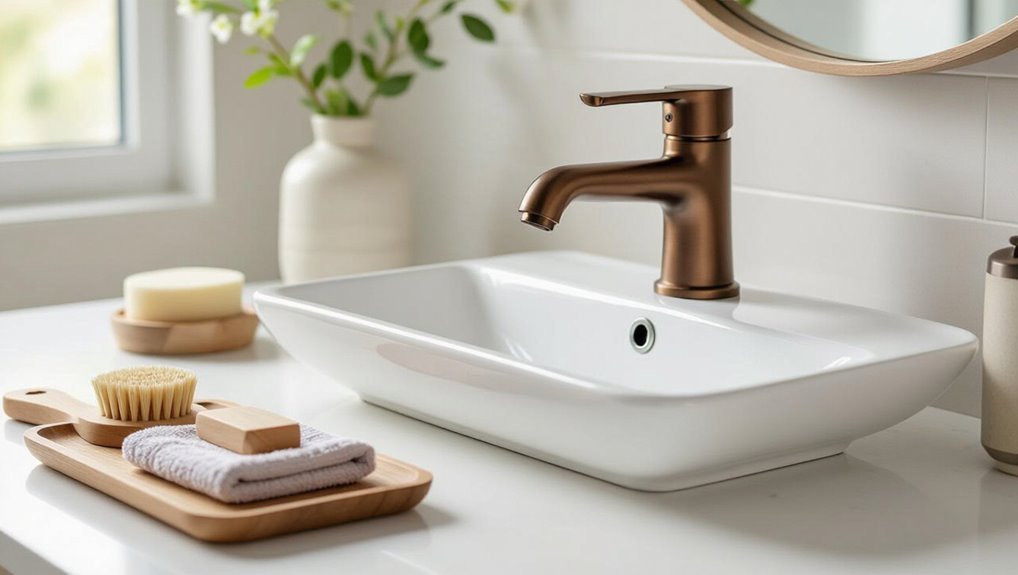
Fixture bronze commonly arrives in finishes such as unfinished, oil‑rubbed, lacquered, or waxed, each offering different appearances and protective layers.
Those finishes respond differently to cleaners and moisture—lacquer and wax can be damaged by harsh chemicals while unfinished and oil‑rubbed surfaces may patina or corrode if over‑cleaned.
Homeowners can usually identify the finish by observing sheen, touch (smooth sealed vs. porous feel), and testing a hidden spot with mild soap and water before choosing a cleaning method.
Common bronze finishes (unfinished bronze, oil-rubbed, lacquered, waxed)
Bronze faucets come in several common finishes—unfinished (raw), oil-rubbed, lacquered, and waxed—each affecting appearance, corrosion resistance, and maintenance needs.
Unfinished darkens naturally and needs protective care. Oil-rubbed shows patina and subtle shine. Lacquered offers sealed protection and easier cleaning. Waxed finishes require periodic reapplication.
Guidance on how to clean bronze faucet fixtures depends on identifying the finish first.
How different finishes react to cleaners and moisture
Having identified whether a faucet is unfinished, oil-rubbed, lacquered, or waxed, attention turns to how those finishes respond to cleaners and moisture.
Unfinished bronze tolerates gentle soap but oxidizes with harsh acids.
Oil-rubbed patinas fade with abrasive or alkaline cleaners.
Lacquered surfaces resist moisture but blister with solvents.
Waxed finishes repel water yet dissolve under alcohol or petroleum-based products, requiring mild maintenance.
Identifying your faucet’s finish without removing it
How can one tell a faucet’s finish without disassembly?
Visual inspection reveals color, patina, and sheen: oil-rubbed bronze is dark with copper highlights; antique or living finishes show deliberate wear; satin or brushed bronzes have muted, consistent tones.
Test discreetly with a damp cloth—if color transfers or dulls, the finish is likely unsealed.
Consult manufacturer markings or model numbers for confirmation.
Immediate Safety and Preparation Steps Before Cleaning
Before beginning, the reader should assemble all necessary tools and supplies, including mild cleaner, soft cloths, nylon brushes, microfiber towels, rubber gloves, and a small bowl for solutions.
Protective gear and nonabrasive materials are emphasized to prevent damage to the bronze and personal injury. Ensuring all items are within reach streamlines the cleaning process and reduces the chance of accidental contact with electrical fixtures or harsh chemicals.
Tools and supplies to gather
A small collection of basic tools and gentle cleaners is required to prepare for bronze faucet maintenance.
Gather soft microfiber cloths, a soft-bristled toothbrush, cotton swabs, a spray bottle, mild dish soap, distilled water, white vinegar (diluted), and a nonabrasive bronze-safe polish.
Include nitrile gloves and a towel to protect surrounding surfaces and prevent accidental scratches or chemical contact.
##
Before starting any cleaning on bronze faucet fixtures, the next focus is on protecting adjacent surfaces and verifying water supply control.
Recommended precautions include:
- Cover countertops and sinks with soft towels or plastic sheeting
- Turn off or cap water supply valves to prevent accidental flow
- Use painter’s tape on nearby finishes to avoid cleaner contact
- Test any cleaner on an inconspicuous spot and wait for reaction
A quick test patch confirms compatibility and helps prevent damage to the bronze or surrounding materials.
Protective measures for surrounding surfaces and water supply
Several simple precautions safeguard surrounding surfaces and the water supply when cleaning bronze faucet fixtures.
Cover countertops and sink edges with towels or plastic to catch drips and cleaners.
Turn off or isolate water supply if performing prolonged work.
Use low-abrasive, non-acidic products and avoid pouring concentrated solutions into drains.
Rinse thoroughly and dry to prevent residue and water intrusion.
How to test a cleaner on an inconspicuous area
With surrounding surfaces protected and water isolated, the next step is to verify that the chosen cleaner will not harm the bronze finish.
Apply a small amount to a hidden spot—underside, backplate, or inside trim—using a soft cloth.
Wait the manufacturer’s recommended dwell time, then rinse and dry.
Inspect for discoloration, dulling, or texture change before proceeding to full cleaning.
Step-by-Step Cleaning Process for Patinated or Unsealed Bronze Faucets
First, loose dirt and mineral buildup are brushed or wiped away to prevent scratching during cleaning.
Next, a mild soap-and-water solution is used for general cleaning, reserving a safe, non-acidic remover for stubborn mineral deposits.
Finally, the fixture is thoroughly dried and a protective wax or oil is reapplied to preserve the patina.
Removing loose dirt and mineral buildup
Begin by rinsing the faucet with warm water to loosen surface grime and soften mineral deposits; this makes subsequent gentle wiping and targeted cleaning more effective without risking abrasion to the patina.
Pat dried with a soft microfiber cloth, then use a soft-bristled toothbrush to dislodge crevice buildup.
Collect loosened particles with a damp cloth and repeat rinsing until debris is removed.
Gentle cleaning methods with mild soap and water
Mix a few drops of pH-neutral liquid soap into a bowl of warm water, then dampen a soft microfiber cloth (not dripping) to clean the bronze surface gently.
Wipe along fixtures’ contours, avoiding scrubbing. Rinse the cloth frequently, blot excess moisture, and immediately dry with a separate soft towel to prevent water spotting.
Repeat as needed for light soil; do not use abrasives.
Removing stubborn mineral deposits with safe, non-acidic solutions
Tackle stubborn mineral buildup on patinated or unsealed bronze faucets with gentle, non-acidic solutions that dissolve deposits without stripping the finish.
Mix equal parts distilled water and white vinegar substitute (citric acid solution or baking soda paste) applied with a soft cloth or toothbrush.
Let sit briefly, agitate gently, rinse thoroughly with water, and repeat as needed until deposits lift; avoid scrubbing abrasively.
Drying and reapplying protective wax or oil
After deposits have been lifted and the fixture rinsed thoroughly, the bronze must be dried completely before any protective product is applied to prevent trapped moisture from causing spotting or accelerated corrosion.
Use a lint-free cloth and low heat air or gentle fan to guarantee dryness.
Apply a thin, even layer of microcrystalline wax or mineral oil, buffing lightly to restore sheen and barrier protection.
Step-by-Step Cleaning Process for Lacquered or Sealed Bronze Faucets
For lacquered or sealed bronze faucets, the focus is on using nonabrasive, pH-neutral cleaners that will not strip the protective finish.
A gentle degreasing and spot-cleaning technique—soft cloth, mild soap or specific lacquer-safe cleaner, and light blotting—removes grime without abrading the coating.
If the lacquer is compromised, guidance on when to remove and how to safely reapply a matching protective lacquer should follow.
Best cleaners that won’t strip lacquer
Choosing the right cleaner is essential to protect the lacquer finish on sealed bronze faucets. Gentle, nonabrasive products with neutral pH and no ammonia, bleach, or strong solvents prevent film breakdown.
Preferred options include mild dish soap diluted in water, pH-neutral stone or metal cleaners labeled safe for lacquer, and special bronze polishes formulated for sealed surfaces.
Always test inconspicuously first.
Gentle degreasing and spot cleaning technique
With the right nonabrasive cleaner selected, attention shifts to removing grease and isolated deposits without harming the lacquer.
Apply cleaner sparingly to a soft microfiber cloth, not directly onto metal. Gently blot and lift grime, working outward from edges.
For stubborn spots, use a cotton swab dampened with cleaner. Rinse cloth frequently, then dry surface immediately to prevent streaks or residue.
When and how to remove and reapply lacquer safely
Start by determining whether the existing finish is lacquered: a lacquered surface will feel smooth and slightly plastic-like, often showing a uniform gloss and small chips at edges where the metal beneath is exposed.
If lacquer is failing, strip with a commercial lacquer remover in a ventilated area, neutralize residue, polish gently, then apply thin, even coats of spray lacquer or clear sealer, curing fully between coats.
Natural and DIY Cleaning Solutions That Are Safe for Bronze
Practical, skin- and finish-safe recipes for homemade bronze cleaners are presented with exact proportions to guarantee consistent results.
Simple mixtures—such as diluted mild soap, distilled white vinegar solutions at specified ratios, and gentle oil-based polishes—are described with measurements and contact times.
Each recipe includes usage instructions and safety notes to protect the bronze patina and any lacquered coating.
Recipes and exact proportions for homemade cleaners
A handful of simple, nonabrasive ingredients can be combined into effective homemade cleaners that safely remove grime and restore luster to bronze fixtures; below are precise recipes and proportions for gentle, tested solutions suitable for regular maintenance and light tarnish removal.
Mix 1 cup warm water, 1 teaspoon mild dish soap.
Vinegar-free polish: 2 tbsp olive oil, 1 tbsp lemon juice.
Baking soda paste: 1 tbsp baking soda + 1 tsp water.
##
When choosing homemade cleaners for bronze faucets, some common natural ingredients can still cause damage or discoloration.
The following list highlights substances to avoid and why they are risky for bronze finishes:
- Lemon or vinegar: acidic and can etch the patina
- Baking soda paste in excess: abrasive over time
- Salt with acidic agents: promotes corrosion
- Ammonia-based cleaners: strip protective coatings
Which natural ingredients to avoid
Although natural cleaners are often perceived as safe, several common ingredients can damage bronze finishes.
Acidic substances like lemon, vinegar, and citric extracts can etch patina. Abrasive powders, baking soda when scrubbed, and coarse salt cause scratches.
Chlorine-based bleach and peroxide alter coloration. Essential oils with strong solvents may degrade lacquered coatings.
Avoid these to preserve tone and protective layers.
Commercial Cleaners: What to Choose and What to Avoid
When selecting a commercial cleaner for bronze faucets, attention should be paid to ingredients—bleach, ammonia and strong acids must be avoided as they can strip patina and damage finishes.
Instead, choose products labeled safe for bronze or for the specific finish (oil-rubbed, lacquered, or unlacquered) and follow manufacturer recommendations.
A few reputable cleaners specify suitability by finish and provide clear usage instructions to minimize risk.
Ingredients to avoid (bleach, ammonia, strong acids)
Because bronze develops a protective patina and can react with harsh chemicals, cleaners containing bleach, ammonia, or strong acids should be avoided. These ingredients can strip finishes, cause discoloration, or etch the metal.
Additionally, avoid abrasive powders, hydrogen peroxide, and metal polishes formulated for brass or copper unless labeled safe for bronze. Test any product on an inconspicuous area first.
Recommended commercial products by finish type
Select commercial cleaners based on the faucet’s finish—oil-rubbed, lacquered, or unlacquered—since each requires different chemistries to clean without harm.
For lacquered bronze use mild, pH-neutral cleaners labeled safe for coated metals.
For unlacquered bronze choose gentle bronze or brass polishes with protective waxes.
For oil-rubbed finishes select non-abrasive, oil-based cleaners.
Avoid acidic, ammonia, or bleach-based products.
##
Reading product labels is essential to guarantee a cleaner is safe for bronze, as active ingredients and warnings indicate compatibility and risk. The table below summarizes label elements to check before use. Users should prioritize non-abrasive, pH-neutral formulations and heed manufacturer guidance.
| Label Section | What to Look For | Action |
|---|---|---|
| Ingredients | Avoid ammonia, bleach, strong acids | Reject if present |
| pH or Claims | “pH neutral” or “safe for metals” | Prefer these |
| Warnings & Directions | “Not for brass/bronze” or abrasive use | Follow or avoid product |
How to read product labels for compatibility
A few clear label elements determine whether a cleaning product is safe for bronze fixtures: look for explicit mentions of “safe on bronze,” “non-acidic,” or “for lacquered/brass/metal finishes,” and check for warnings about acids, bleach, or abrasives.
Read ingredient lists for ammonia, citric or hydrochloric acids. Prefer pH-neutral or mild surfactant formulas.
Follow manufacturer usage instructions and test in an inconspicuous spot first.
Removing Corrosion, Verdigris, and Stubborn Stains Without Damage
The discussion contrasts mechanical and chemical techniques, noting that gentle abrasion or brushing suits light deposits while mild acids or chelating cleaners address entrenched verdigris.
A clear stepwise procedure—test an inconspicuous spot, remove loose corrosion mechanically, then apply a mild chemical treatment and neutralize—minimizes risk to the bronze and its finish.
Guidance is provided on indicators for professional restoration, such as deep pitting, loss of patina, or structural weakening.
Mechanical vs chemical methods and when to use each
Decide whether to tackle corrosion and verdigris on bronze fixtures with mechanical or chemical methods based on the type and severity of the deposit:
Light surface tarnish often responds to gentle mechanical cleaning—soft cloths, nonabrasive pads, soft-bristle brushes—while entrenched corrosion or mineral buildup may require mild, pH-neutral chemical agents.
Avoid harsh abrasives or strong acids that risk finish damage; test discreetly first.
Stepwise approach to removing verdigris safely
Begin by evaluating the extent and type of verdigris and stains—distinguish loose green powder, hard mineral crusts, and colored surface tarnish—so the cleaning method matches the damage without harming the finish.
Next, dry-brush loose deposits, test a mild pH-neutral cleaner on an inconspicuous area, apply gently with a soft cloth, rinse thoroughly, and pat dry.
Repeat cautiously until resolved.
When professional restoration is needed
Recognize when wear or corrosion exceeds routine DIY care: persistent verdigris that reappears after cleaning, pitted or flaking metal, loss of protective coatings, or deep-set mineral stains often require professional restoration to prevent further damage.
A conservator evaluates alloy condition, determines safe chemical or mechanical treatment, and applies appropriate patina consolidation or recoating.
Seek specialists for valuable, antique, or extensively degraded fixtures.
Routine Maintenance Schedule to Keep Bronze Looking New
A simple routine keeps bronze faucets bright: daily gentle wipe-downs, weekly mild cleaning, and a monthly inspection for spots or wear.
In hard-water areas, using a water-softening strategy and promptly removing mineral deposits prevents buildup.
Resealing or refinishing should be scheduled when protective coatings show wear or after persistent staining is removed.
Daily, weekly, and monthly care tasks
Establishing a simple routine prevents buildup and preserves the finish of bronze faucet fixtures.
Daily: wipe dry after use with a soft microfiber cloth to remove water and fingerprints.
Weekly: gently clean with mild soap and water, then dry.
Monthly: inspect for wear, tighten loose fittings, and apply a thin layer of manufacturer-approved protective wax or polish following product instructions.
How to treat hard-water areas and prevent mineral buildup
Treat hard-water areas proactively to prevent mineral deposits from dulling bronze finishes.
Wipe fixtures dry after use, install a point-of-use water softener or aerator filters, and apply a thin protective wax monthly where appropriate.
Use gentle vinegar-free descalers on affected spots, soft cloths, and a soft-bristled brush for crevices.
Rinse thoroughly and buff dry to restore sheen.
When to reseal or refinish
When should a bronze fixture be resealed or refinished to maintain its appearance and protect it from wear?
Periodic inspection every 6–12 months identifies thinning sealant, scratches, or dulling.
Reseal when protective lacquer shows wear or water spots persist despite cleaning.
Refinish only if finish is deeply scratched, corroded, or uneven.
Prompt action prevents further damage and preserves value.
Common Mistakes That Damage Bronze Finishes
Many common cleaning errors can shorten the life of a bronze finish. Abrasive pads, harsh chemicals, and over-polishing that strips the patina all cause visible damage.
Storing strong cleaning agents near fixtures increases the risk of accidental exposure. Careful product choice and gentle techniques prevent these mistakes.
Using abrasive pads or harsh chemicals
Using abrasive pads or harsh chemical cleaners can quickly strip protective coatings and mar the subtle patina of bronze fixtures.
Such materials abrade finishes, expose base metal, and accelerate corrosion. Strong acids, bleaches, or solvents remove sealants and leave uneven discoloration.
Cleaning should rely on mild soaps, soft cloths, or manufacturer-approved solutions to preserve finish integrity and long-term appearance.
Over-polishing and stripping patina unintentionally
Over-polishing can remove the planned patina on bronze fixtures, leaving uneven bright spots and exposing softer base metal beneath protective coatings.
Excessive buffing or aggressive compounds gradually thin finishes, accelerating wear and promoting corrosion.
Professionals recommend minimal, gentle polishing only when necessary, testing in inconspicuous areas, and using products formulated for patinated bronze to preserve intentional coloration and long-term protection.
Improper storage of cleaning agents near fixtures
Store cleaning agents carelessly near bronze fixtures and they can cause staining, corrosion, or chemical damage from spills, fumes, or accidental contact.
Containers left on sinks, shelves, or beneath vanities may leak or off‑gas, dulling finishes and etching patina.
Proper storage in sealed, labeled containers away from plumbing, with secondary containment and regular inspections, prevents accidental exposure and preserves bronze integrity.
Troubleshooting Common Problems After Cleaning
After cleaning, the article outlines quick remedies for a cloudy or streaked finish and steps to restore uneven color or a spotty patina.
It also explains how to identify and address loose fittings or hidden plumbing issues revealed during maintenance.
Readers are guided to practical, safe fixes and when to consult a professional.
Cloudy or streaked finish fixes
When a bronze faucet develops a cloudy or streaked appearance following cleaning, it usually indicates residue from cleaners, hard water minerals, or uneven drying rather than damage to the finish.
Rinse thoroughly with distilled water, then gently wipe with a soft microfiber cloth.
For mineral films, apply a diluted vinegar rinse briefly, rinse again, and dry immediately to prevent repeat streaking.
Uneven color or spotty patina restoration steps
A cloudy finish or streaking can mask more subtle issues with a bronze faucet’s patina, so addressing uneven coloration follows once surface residues are removed.
Assess spots under consistent light, then test a mild patina restorer or diluted vinegar on an inconspicuous area.
Work gently with cotton swabs, blending edges to match surrounding tone.
Rinse, dry, and apply thin protective wax to even appearance.
Loose fittings or underlying plumbing issues discovered during cleaning
Tighten loose fittings promptly and inspect for hidden leaks or corrosion that cleaning may have revealed; addressing these issues early prevents water damage and preserves the faucet’s finish.
If connections remain loose, replace worn washers, O-rings, or mounting hardware. For persistent leaks or suspect supply-line damage, recommend a licensed plumber.
Document repairs and avoid aggressive cleaning until plumbing integrity is restored.
Tools and Supplies Checklist for Different Bronze Finishes
Because different bronze finishes react differently to abrasives and chemicals, selecting the right tools and supplies is essential to avoid damage and achieve a consistent clean.
Include:
- soft microfiber cloths
- nonabrasive sponges
- pH-neutral mild soap
- distilled water
- cotton swabs for crevices
- soft-bristled toothbrush
- small spray bottle
- gentle wax or manufacturer-recommended protectant
- nitrile gloves to prevent oils transferring to the finish.
##
A brief overview of specialty tools helps readers choose the right items for delicate bronze work and where to purchase them.
Recommended tools include:
- Microfiber polishing cloths — home improvement stores, online retailers
- Soft-bristle toothbrushes and cotton swabs — pharmacies, hardware shops
- Brass-safe polishing compounds — plumbing supply shops, reputable e-commerce sites
- Small rotary buffers with soft pads — specialty tool suppliers, tool rental centers
These sources balance price, quality, and suitability for various bronze finishes.
Recommended specialty tools and where to buy them
Gathering the right specialty tools simplifies safe, effective cleaning of bronze faucets and helps prevent damage from improper methods.
Recommended items include soft microfiber cloths, nonabrasive sponges, natural-bristle brushes, pH-neutral metal cleaners, and cotton swabs.
Purchase from hardware stores, plumbing suppliers, specialty kitchen showrooms, or reputable online retailers (e.g., Amazon, Home Depot, Restoration Hardware).
Choose products labeled safe for bronze finishes.
Visual Guide and Before-and-After Care Tips
Begin with clear, well-lit photos of the entire faucet and close-ups of problem areas—water spots, verdigris, scratches, and sealant lines—to document condition before any cleaning.
Capture the same angles after each step. Note products, contact time, and tools used.
Compare images to confirm finish preservation. Record any touch-ups, drying times, and final protective treatments for ongoing maintenance and warranty records.
##
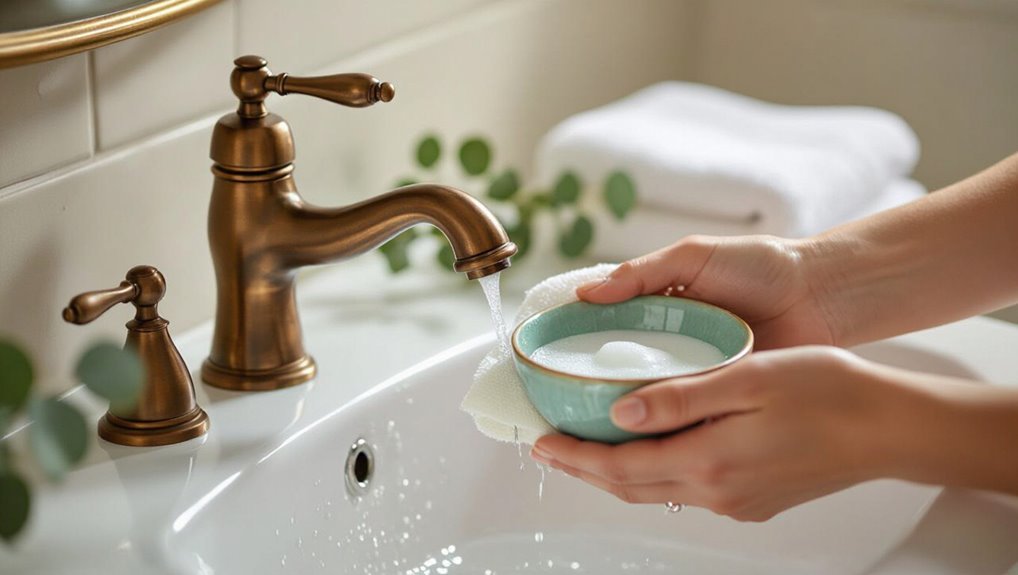
Before beginning cleaning, the article recommends photographing each bronze fixture from multiple angles to document current condition and spots of wear.
These reference images help track progress and guide targeted treatment.
It also outlines simple ongoing habits—wiping dry after use, avoiding abrasive cleaners, and using mild soap—that consistently extend the finish’s life.
How to photograph fixtures for reference before cleaning
Photograph the bronze fixtures from several angles and under consistent lighting to document their current condition and any patina, scratches, or mineral buildup.
Use a neutral background and steady camera or phone; include a ruler or coin for scale.
Capture close-ups of problem areas and overall shots for context.
Save images with date-stamped filenames to track changes and reference during and after cleaning.
Small ongoing habits that extend finish life
Maintain a few simple routines to keep bronze fixtures looking their best and to slow wear on the finish. Wipe dry after use to prevent water spots and mineral buildup.
Use a soft cloth and mild soap for regular cleaning. Avoid abrasive pads and harsh chemicals. Apply a thin protective wax occasionally.
Promptly address drips and loose fittings to reduce abrasion and corrosion.
Conclusion
Like the antique store owner who polished a family heirloom by hand and watched its soft patina reveal decades of use, caring for bronze faucets honors their history. Studies show gentle, correct cleaning can extend fixture life by years, not hours. Treat sealed and patinated bronze differently, use mild, nonabrasive methods, and avoid harsh chemicals. With patience and the right approach, a faucet’s finish can age gracefully rather than suffer needless loss.
