
How to Unclog Drain Tile Quickly: Proven DIY Methods That Work
To quickly unclog drain tile, start by removing any visible debris, such as hair and gunk, from the grate. Use a plunger to create suction, then employ a snake or auger to reach deeper blockages. Flush the drain with hot water to help clear any remaining debris. For organic buildup, try soaking the drain with a mixture of baking soda and vinegar or using an enzyme cleaner. Remember to wear gloves, ensure proper ventilation, and avoid mixing chemicals. If the clog persists or sewage returns, it’s advisable to consult a professional. Further preventive tips and steps will follow.
Fast Overview of How to Unclog Drain Tile Safely
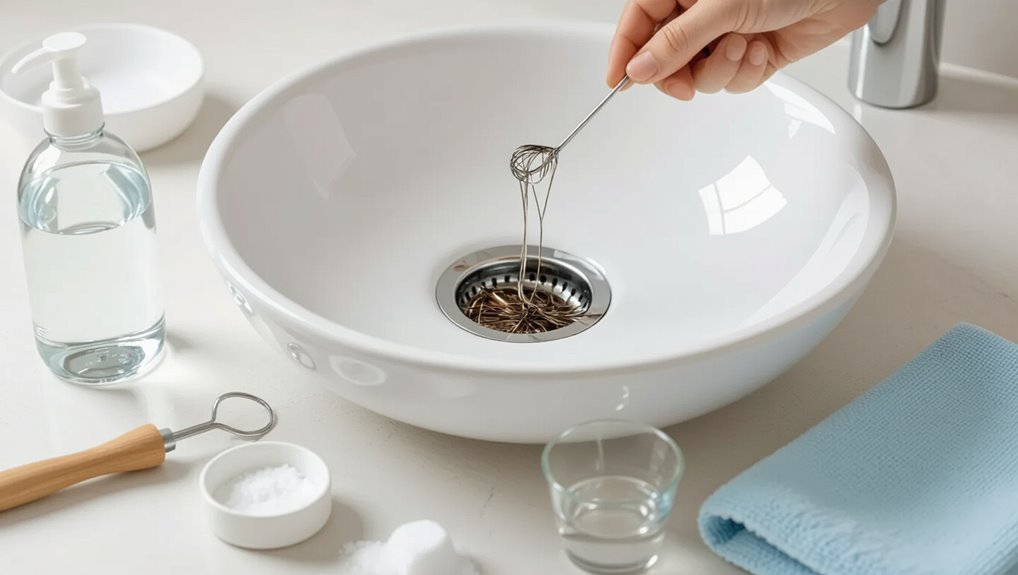
A concise assessment helps determine when a homeowner can safely address a clogged bathroom or floor tile drain and when to contact a professional.
Simple blockages from hair or soap scum and accessible shower or tub drains are often appropriate for DIY methods with basic tools and caution.
Suspected sewage backups, persistent slow drains despite attempts, or damage to tile or plumbing warrant prompt professional evaluation.
When to DIY and when to call a professional
When should a homeowner attempt a DIY unclog and when is it time to call a pro? A homeowner may try simple methods for how to unclog drain tile: plunging, drain snake, or enzyme cleaners for minor blockages.
Call a professional if drains remain blocked after basic attempts, multiple fixtures are affected, smells persist, water backup recurs, or signs of pipe damage appear.
Quick-risk assessment for bathroom and floor tile drains
After basic DIY attempts fail or multiple fixtures show problems, homeowners should run a quick risk assessment focused on bathroom and floor tile drains to decide safe next steps.
Evaluate water backup severity, foul odors, and slow drainage patterns. Check for DIY-accessible covers, visible blockages, and mold growth.
If structural damage, persistent backups, or sewer odors exist, hire a licensed plumber promptly.
Immediate, Quick-Action Methods to Unclog Tile Drains
The section outlines immediate, practical steps for clearing tile drains, starting with proper plunging technique to break surface blockages.
It then covers use of a drain snake or auger—both manual and powered—for deeper clogs, plus when a hot water flush can help soften and wash away buildup.
Finally, the baking soda and vinegar combination is presented as a quick, chemical-free alternative for minor obstructions.
Plunging technique for tile drains
Plunge firmly over the tile drain, creating a tight seal before delivering short, forceful thrusts to dislodge the obstruction.
Maintain steady pressure, test water flow, repeat as needed.
- Remove visible debris and guarantee overflow openings are covered.
- Use a cup-style plunger sized for tile drains.
- After success, flush with hot water and a mild cleaner to clear residue.
Using a drain snake or auger effectively (manual and powered)
Insert a drain snake or auger straight into the tile drain to reach and break up blockages, turning the handle steadily while feeling for resistance; manual snakes are best for hair and small clogs close to the drain, while powered augers clear deeper, tougher obstructions more quickly.
- Feed cable until resistance is met.
- Rotate to snag or break debris.
- Retract slowly, removing loosened material.
Hot water flush method and when it works
One common quick fix is a hot water flush, which uses boiling or very hot tap water poured in stages to dissolve soap residue, grease, and small organic buildups that cause slow draining.
It works best for mild clogs and grease films in straight runs.
Avoid using on PVC glue joints, plastic fixtures, or unknown chemical-treated pipes that heat may damage.
Baking soda and vinegar combo a fast chemical-free option
After trying a hot water flush, many homeowners turn to a baking soda and vinegar mix as a fast, chemical-free alternative for tile drain clogs.
It loosens soft debris and neutralizes odors.
Typical steps:
- Pour 1/2 cup baking soda into the drain.
- Add 1/2 cup vinegar; wait 10–15 minutes.
- Flush with hot water and repeat if needed.
Household Tools and Materials You Need Right Now
A concise list of essential tools and materials makes a fast tile drain unclog possible without a plumber.
Basic items like a plunger, drain snake, bucket, gloves, and a flashlight are usually sufficient for immediate action.
A few helpful extras—baking soda and vinegar, a wire coat hanger, and a pair of adjustable pliers—can speed the job and handle tougher blockages.
Essential tools for quick unclogging
Several basic tools and a few common materials make unclogging drain tile fast and effective. A concise kit speeds diagnosis and repair without extras.
- Plunger: creates suction to dislodge soft blockages.
- Drain snake (auger): reaches deeper clogs and pulls debris.
- Adjustable wrench and screwdriver set: remove covers, adjust fittings, and tighten seals during cleaning.
Helpful extras to speed up the job
Keep a small set of extras on hand to shave time off an unclogging job and prevent repeat visits.
Additional items streamline work and reduce mess:
- Rubber gloves, drain brush, and a small flashlight for inspection.
- Biodegradable enzyme cleaner and baking soda for maintenance.
- Compact wet/dry vacuum or a hand auger for stubborn clogs and quick cleanup.
Step-by-Step Guide: Unclogging a Shower or Floor Tile Drain
Before beginning, the area should be prepared and surrounding tile protected to prevent damage and contain mess.
Visible debris and hair traps are removed first using gloves and tools, then stubborn blockages are addressed with a plumbing snake or a straightened wire coat hanger.
The process concludes with a thorough flush and simple odor-control measures to guarantee the drain flows and smells clean.
Prepare the area and protect surrounding tile
Clear the immediate area and gather protective materials to prevent tile damage and contain debris. A tarp or old towels are placed around the drain, and painter’s tape secures edges to avoid water seepage.
Protective gloves, safety glasses, and a small container for removed parts are set aside. Nonabrasive pads cushion tools to prevent scratching nearby grout and tile.
Remove visible debris and hair traps (technique)
Begin by visually inspecting the drain area for any hair, soap scum, or visible debris and removing what can be reached by hand or with a pair of needle-nose pliers.
Then follow these steps:
- Lift grate or cover; set screws aside.
- Extract trapped hair and gunk, twisting as needed.
- Wipe chamber and replace cover, testing drainage flow.
Clear blockages with a snake or wire coat hanger
Reach for a drain snake or fashion a straightened wire coat hanger to probe deeper into the pipe where fingers and tweezers cannot reach.
Insert gently, twist and push until resistance indicates the clog. Hook or entangle debris, then withdraw slowly.
Repeat as needed, clearing accumulated material. Sanitize the tool afterward and dispose of removed waste responsibly to prevent recontamination.
Finish with flushing and odor control
Once the obstruction has been removed with the snake or hanger, the final step is to flush the line and neutralize lingering odors to guarantee the drain functions and the area smells clean.
Run hot water for several minutes, then pour a baking soda-vinegar mixture, wait, and rinse with boiling water.
Finish with a mild enzyme cleaner and ventilate until odors dissipate.
Removing Stubborn Clogs: Next-Level DIY Techniques
For persistent blockages, the discussion shifts to safer chemical options and mechanical approaches.
Comparisons between enzymatic and caustic cleaners help homeowners choose effective, tile-safe solutions, while a wet/dry vacuum can often extract softened debris without chemicals.
When hydro jetting is impractical, practical home alternatives and precautions are outlined to protect pipes and finishes.
Enzymatic drain cleaners vs. caustic cleaners safe choices
Which type of drain cleaner best balances effectiveness and safety depends on the clog and the plumbing material. Enzymatic cleaners digest organic build-up slowly and are pipe-safe; caustic cleaners act fast on grease and hair but risk damage and fumes. Choose enzymatic for regular maintenance, caustic for severe, non-PVC systems, and follow label precautions.
| Type | Action | Safety |
|---|---|---|
| Enzymatic | Slow digestion | High for pipes |
| Caustic | Rapid chemical break | Lower, corrosive |
| Mechanical | Physical removal | Very safe |
Using a wet/dry vacuum to extract clog material
A wet/dry vacuum can remove dense, lodged material that chemical or enzymatic cleaners cannot reach, offering a fast, nonchemical option for stubborn clogs.
Users should set the vacuum to liquid or wet mode, create a seal at the drain with a hose adapter or wet cloth, and alternate suction with brief water flushing.
Clean and sanitize the vacuum afterward.
Hydro jetting alternatives for homeowners
If a wet/dry vacuum cannot fully clear compacted debris or scale, homeowners can consider high-power alternatives to commercial hydro jetting that still fit DIY skill levels and budgets.
Options include electric drain augers with pressurized nozzle attachments, hand-held motorized water blasters with adjustable pressure, and biodegradable enzyme pretreatment combined with repeated flushing.
Safety goggles, gloves, and gradual pressure increases are essential to avoid pipe damage.
Tile and Drain Maintenance to Prevent Recurring Clogs
Routine upkeep combines simple weekly and monthly checks with targeted products and fixtures to keep tile drains flowing.
Installing grate screens, hair catchers, and tight seals reduces debris entry and the need for aggressive clearing.
Recommended practices include using mild enzymatic cleaners, periodic scrubbing of grout and drain openings, and promptly addressing any standing water.
Weekly and monthly maintenance routine
When maintained consistently, weekly and monthly care prevents buildup that leads to recurring clogs and tile damage.
- Weekly: remove visible debris, flush drains with hot water, wipe tile grout to stop residue.
- Monthly: inspect drain openings, use a nylon brush to clean accessible pipe inlets, check grout for cracks.
- Quarterly check: track slow drainage and schedule deeper cleaning before problems escalate.
Preventive fixtures: grate screens, hair catchers, and seals
Install and maintain simple preventive fixtures—grate screens, hair catchers, and tight seals—to greatly reduce debris entry and slow buildup in tiled drains.
Periodic inspection, cleaning, and replacement prevent tears or warping that invite leaks and blockages.
Choose corrosion-resistant materials sized to fit existing drains. Properly seated seals stop water seepage into grout and substrate, extending tile life and minimizing recurring clogs.
Best cleaning products and practices for tile drains
Although simple habits reduce most buildup, selecting the right cleaners and techniques guarantees tile drains stay clear without damaging grout or metal fittings.
Use pH-neutral tile cleaners for routine washing; enzymatic drain treatments digest organic matter safely. Avoid harsh acids or bleach on metal.
Periodic mechanical cleaning with a soft brush and hair catcher maintenance prevents recurrence. Rinse thoroughly and ventilate during use.
Common Problems and How to Troubleshoot Them
If a drain remains slow after basic DIY methods, the next steps are to check the trap, clean accessible pipe sections, and test for partial blockages farther down the line.
Persistent backups, sewage odors, or multiple slow drains indicate a larger plumbing issue that may require a professional inspection.
Care should also be taken because aggressive mechanical or chemical cleaning can chip tile grout or corrode older pipes, worsening the problem.
Drain still slow after DIY methods what to check next
What else should be checked when a drain remains sluggish after common DIY fixes?
Inspect the trap for hidden debris, verify the cleanout access and open it, examine the vent stack for obstructions, and test nearby drains to localize the issue.
Consider mineral buildup or hair deeper in the pipe and assess whether mechanical snaking or professional inspection (camera) is warranted before further DIY attempts.
Signs of bigger plumbing issues (backups, multiple drains affected)
Recognize larger plumbing problems by watching for recurring backups, slow flow in multiple fixtures, gurgling sounds, or sewage odors—these signs often indicate a blockage or failure beyond a single trap or fixture.
Persistent issues, water backing into tubs or toilets, or multiple drains affected suggest mainline clogs, tree root intrusion, or sewer line damage.
Prompt professional inspection prevents property damage and health risks.
When drain cleaning could damage tile or plumbing
After noting signs that point to larger plumbing failures, attention should turn to situations where common drain-cleaning methods can harm tile or plumbing components.
Harsh chemical cleaners, aggressive mechanical augers, and improper pressure washing can etch grout, crack tile, corrode pipes, or dislodge seals.
Recommend gentle alternatives, spot testing, protective barriers, and consulting a plumber when aging materials or sealed fixtures are present.
Safety Precautions and Environmental Considerations
Before attempting any unclogging method, recommendations emphasize wearing gloves, eye protection, and ensuring adequate ventilation.
Guidance also covers safe handling and proper disposal of chemical cleaners to prevent injury and environmental harm.
Alternatives such as enzyme-based products and mechanical methods are compared for effectiveness and lower ecological impact.
Personal protective equipment and ventilation
A few essential items of personal protective equipment (PPE) and proper ventilation greatly reduce health risks when unclogging drain tile.
Gloves, eye protection, and a mask guard against splashes and fumes. Long sleeves and waterproof footwear protect skin.
Open windows, use fans to exhaust air, and avoid confined spaces without ventilation.
Inspect respirator-fit and replace damaged PPE before work.
Safe handling and disposal of chemical cleaners
Proper PPE and good ventilation reduce immediate risks, but handling chemical drain cleaners demands its own precautions to prevent burns, toxic exposures, and environmental harm.
Users should follow label instructions, never mix products, measure carefully, and use spill trays.
Store chemicals upright in original containers away from children and pets.
Dispose at hazardous-waste facilities; never pour concentrated residues into storm drains or soil.
Eco-friendly alternatives and their effectiveness
How effective are eco-friendly methods compared with conventional chemical cleaners when balancing safety and environmental impact?
Eco-friendly options—baking soda and vinegar, enzyme-based drain cleaners, manual snaking—offer moderate, often slower clearing but greatly reduced toxicity and runoff.
They suit routine maintenance and small clogs; severe blockages may still require mechanical removal or professional intervention to avoid repeated treatments and prolonged flow disruption.
Cost, Time, and Effort Comparison of DIY vs Professional Service
A concise comparison helps decide whether a homeowner should attempt a DIY unclog or call a pro. Below is a simple cost/time snapshot for common clog scenarios and notes on when professional help can prevent greater expense or damage. If clogs are persistent, deep, or risk tile damage, professional intervention often saves time and money.
| Scenario | DIY vs Professional |
|---|---|
| Minor surface clog (hair/soap) | DIY: ~$0–10, 15–30 min; Pro: $75–150, 30–60 min |
| Moderate clog (partial pipe blockage) | DIY: $10–50, 30–90 min; Pro: $100–250, 45–90 min |
| Severe clog (main line or recurring) | DIY: often ineffective, hours; Pro: $200–600+, 1–3 hrs |
| Risk of tile/pipe damage or mold | DIY: risk of increased repair costs; Pro: prevents damage, higher upfront cost |
Typical costs and time estimates for common clog scenarios
Cost and time vary widely depending on the clog’s cause and location: simple hair or soap buildup in a shower drain can often be cleared by a homeowner in 15–45 minutes with a plunger, drain snake, or enzymatic cleaner, typically costing $5–$30 in materials.
Whereas grease- or scale-bound kitchen or mainline blockages may need 1–4 hours and advanced tools or chemicals, raising DIY expenses to $20–$100 and often yielding only temporary relief.
Hiring a plumber generally costs $100–$400 for straightforward residential clogs and $300–$1,000+ for complex or deep-system obstructions but delivers faster, longer-lasting results and includes diagnostic labor and warranty.
Short clogs: 15–60 minutes, $5–$50.
Moderate obstructions: 1–4 hours, $20–$200.
Severe/mainline: several hours to a day, $300–$1,500+.
When professional intervention saves money and avoids damage
Those time and price ranges help identify when a homeowner should proceed alone and when professional help will save money and prevent damage.
Professionals are advised for recurring clogs, deep blockages, damaged tile or plumbing, and complex access. Their tools, diagnostics, and warranties reduce repair risk and long-term expense.
DIY suits simple, shallow clogs when confidence and basic tools suffice.
Real-World Examples and Quick Case Scenarios
Three brief case scenarios illustrate common tile drain problems and practical responses.
One covers a hair-clogged shower drain and the fastest effective fixes.
Another outlines the recommended approach for grease or soap buildup in a floor tile drain.
A third describes next steps when clogs recur due to venting or pipe slope issues.
Each example focuses on quick, actionable measures and when to escalate to professional help.
Scenario: Hair-clogged shower drain fastest fix
In a typical household shower where slow drainage signals a hair clog, a quick clear often begins with removing the visible strainer.
Using needle-nose pliers or a hooked wire to extract hair, then flushing the drain with hot water to wash away remaining residue.
After extraction, a biodegradable enzyme drain cleaner can be applied overnight; test flow and repeat extraction if needed.
Scenario: Grease or soap buildup in floor tile drain recommended approach
Addressing grease or soap buildup in a floor tile drain typically begins with identifying the source—kitchen runoff, heavy soap use, or oily residues—and choosing a method that balances speed with pipe safety.
Start by removing the grate, skimming surface gunk, and flushing with hot water.
Apply an enzymatic or biodegradable degreaser, allow dwell time, then flush again.
Repeat or snake if persistent.
Scenario: Recurring clog due to venting or pipe slope next steps
Diagnose underlying venting or slope problems before attempting surface fixes, since recurring clogs often stem from trapped air or improper drainage pitch rather than mere blockages.
Inspect vent stacks for obstructions, check pipe pitch with a level, and trace low spots or sags.
Perform corrective actions: clear vents, regrade or replace misaligned sections, and consult a plumber if structural rerouting or roof access is required.
Conclusion
Like a skilled gardener coaxing roots through cracked pavement, the DIYer pries, plunges, and rinses until water resumes its quiet path. Practical tools and patient technique turn a clogged tile into a cleared channel, while tougher obstructions yield to measured escalation or a pro’s steady hand. With safety and the environment in mind, small victories wash away frustration—each repaired drain a rippling reminder that careful attention restores flow and order.