How to Keep a Heat Pump From Freezing: Proven Tips to Prevent Ice Build-Up
To prevent your heat pump from freezing, follow these essential steps: ensure proper airflow by clearing snow and debris, check and clean the coils, and regularly maintain filters. If ice forms, cut the power, thaw the unit with warm water, and inspect drainage. For long-term prevention, consider upgrades like crankcase heaters and backup heat sources, and schedule expert maintenance to address persistent issues. Implement these practices to keep your heat pump running efficiently and ice-free, even in cold conditions.
Why Heat Pumps Freeze and When It’s a Problem
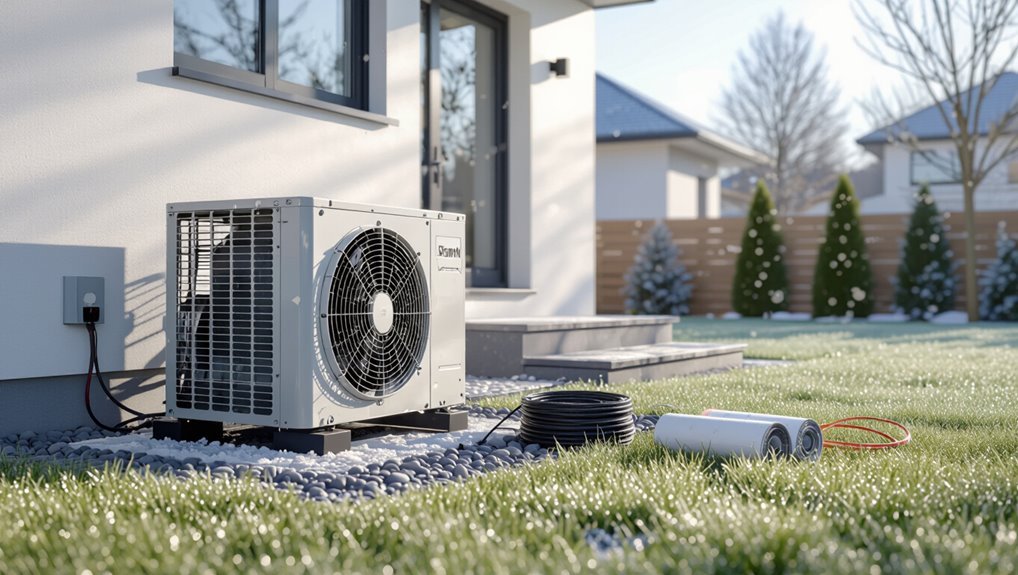
A heat pump extracts heat from outdoor air and transfers it indoors, a process that becomes slower as ambient temperatures fall and moisture condenses on coils.
Visible ice accumulation, reduced airflow, unusual noises, and frequent defrost cycles are common signs that freezing is occurring.
When ice persists it reduces efficiency, raises energy use, and can damage components or create safety hazards if left unaddressed.
How heat pumps work in cold weather
Heat pumps transfer heat between indoors and outdoors using refrigerant and a reversing valve. In cold weather, their outdoor coils can accumulate frost as warm, moist air meets the cold metal surfaces.
The system reverses to extract heat; capacity falls with lower outdoor temperatures. Proper defrost cycles, correct refrigerant charge, airflow, and routine maintenance determine effectiveness and inform how to keep the heat pump from freezing.
Common signs of freezing or ice build-up
Look for telltale signs that an outdoor unit is freezing: visible frost or thick ice on the coil and fan, reduced airflow from the registers, longer run cycles, and a drop in heating performance or indoor comfort.
Also note unusual sounds (gurgling or strain), frequent defrost cycles, ice accumulating on refrigerant lines, and moisture pooling around the base — all indicate developing ice build-up requiring inspection.
Safety and efficiency impacts of a frozen heat pump
Freezing compromises both safety and efficiency: ice on coils and fans restricts airflow and heat transfer, forcing the compressor and defrost system to run longer and increasing energy use and wear.
A frozen unit risks motor overheating, electrical faults, refrigerant pressure imbalance, and shortened component life.
Reduced capacity raises bills and can leave spaces underheated, creating safety hazards for occupants and vulnerable pipes.
Quick Actions to Take If Your Heat Pump Is Freezing Now
If the outdoor unit shows ice buildup, a quick visual inspection of airflow, drain lines, and power status can identify obvious issues without risking safety.
Visible ice can sometimes be gently melted with warm (not hot) water or cleared after shutting the unit off, but care must be taken not to damage coils or components.
If ice persists, the compressor cycles abnormally, or the homeowner is unsure, the system should be turned off and a qualified technician contacted.
Immediate checks you can do safely
Start by turning the unit off at the thermostat and outdoor disconnect to secure safety before approaching; this prevents the compressor from running while inspecting ice buildup.
Then visually assess airflow obstructions, clear nearby debris or snow, check condensate drain and nearby piping for obvious damage, and verify outdoor fan blades can move freely.
Note unusual sounds and document conditions for a technician.
Temporary fixes to remove visible ice
After the safety checks and basic inspection, the next priority is removing visible ice to restore airflow and prevent compressor damage.
Gently chip away large chunks with a plastic tool, never metal. Use warm (not hot) water poured slowly to melt remaining ice.
Clear surrounding drains and debris.
Restart the unit only after ice is gone and components appear dry and unobstructed.
When to shut off the system and call a professional
When visible ice persists after basic clearing or the unit shows signs of strain—loud cycling, unusual vibrations, burning smells, or the outdoor coil repeatedly icing within a short time—the system should be shut off and a qualified HVAC technician contacted immediately to prevent compressor damage and electrical hazards.
The homeowner should cut power at the breaker, document symptoms, avoid restarting, and wait for professional diagnosis and safe repairs.
Routine Maintenance to Prevent Ice Build-Up
Routine maintenance can considerably reduce ice formation by keeping filters and coils clean, ensuring proper refrigerant charge, and verifying fan and motor operation.
Technicians also inspect and lubricate moving parts and clear condensate drains and pans to prevent backups that promote freezing.
Regular scheduled checks prioritize these tasks to maintain efficient, ice-free operation.
Scheduled filter and coil cleaning
Schedule regular filter and coil cleanings to prevent reduced airflow and the ice buildup that follows.
Technicians and homeowners should inspect filters monthly during heavy use, replace or wash per manufacturer guidance, and clean coils to remove dust, pollen, and debris.
Clear airflow maintains heat exchange efficiency, reduces frost formation, and prolongs system life.
Document maintenance dates and findings for consistent care.
Refrigerant level checks and why they matter
Check refrigerant levels regularly because improper charge is a common cause of coil temperatures dropping below freezing, which leads to ice accumulation.
Technicians should verify pressures, compare readings to manufacturer specifications, and correct leaks promptly.
Low or overcharged refrigerant impairs heat transfer, causing prolonged cold spots and frost.
Timely refrigerant diagnostics prevent recurring icing and maintain efficient, reliable heat pump operation.
Fan and motor inspection and lubrication
After confirming proper refrigerant charge, attention should move to the outdoor unit’s fan and motor, since impaired airflow from a failing or poorly lubricated motor accelerates coil cooling and ice formation. Inspect blades for damage, verify motor mounts, clean debris, and apply manufacturer-recommended lubricant sparingly. Replace worn bearings promptly to restore airflow and prevent repetitive freeze cycles.
| Issue | Action |
|---|---|
| Bent blade | Straighten or replace |
| Worn bearing | Replace |
| Loose mount | Tighten |
| Dirt buildup | Clean |
| Dry motor | Lubricate |
Condensate drain and pan maintenance
Regular inspection of the condensate drain and pan reduces the risk of standing water freezing against cold coil surfaces and initiating ice buildup.
Technicians should clear clogs, flush lines with vinegar or bleach solution, and verify proper slope and drain connections.
Corrosion or cracks require prompt pan replacement.
Installing a float switch prevents overflow, while periodic checks guarantee reliable condensate removal and reduced freeze risk.
Weather-Proofing and Installation Best Practices
Proper placement and required clearances are essential to prevent wind-driven ice and guarantee adequate airflow around the unit.
Thoughtful use of windbreaks or partial shelters can reduce exposure while avoiding obstruction of intake and discharge paths.
Attention to elevation, a stable foundation, and selecting a model rated for cold climates further minimizes freeze risk and improves long-term performance.
Proper unit placement and clearance requirements
Location matters: situating a heat pump on a level, elevated pad with adequate airflow and clearances prevents snow buildup, ice formation, and restricted refrigerant airflow that can trigger frequent defrost cycles. Units require clearances on all sides, unobstructed intake/exit paths, and drainage. Regular inspection guarantees debris-free surroundings and proper slope for meltwater.
| Side | Minimum Gap | Purpose |
|---|---|---|
| Front | 36 in | Airflow |
| Sides | 12 in | Service access |
| Back | 12 in | Heat exchange |
Installing windbreaks and shelter without blocking airflow
After siting and clearing the unit, attention turns to shielding it from prevailing winds and drifting snow without impeding airflow.
Low, porous windbreaks—lattice panels, spaced fencing, or staggered shrub rows—redirect gusts while permitting circulation.
A simple roofed shelter with open sides prevents vertical snow loading but keeps exhaust and intake paths clear.
Materials should be non-corrosive and positioned for maintenance access and drainage.
Correct unit elevation and foundation considerations
A heat pump’s elevation and foundation directly affect drainage, airflow, and resistance to snow buildup; mounting the unit on a stable, level pad raised above expected snow depth and surface runoff prevents standing water and ice from accumulating beneath or around the compressor.
Concrete, composite, or galvanized stands anchored to frost-resistant footings guarantee stability, prevent settling, and maintain clear airflow; slope surroundings for positive drainage away from the unit.
Choosing the right heat pump model for cold climates
When selecting a heat pump for cold climates, homeowners should prioritize models designed and tested for low-temperature performance, such as those with enhanced compressors, variable-speed fans, and cold-climate ratings (HSPF/SEER optimized for winter operation). Manufacturers offer features and warranties suited to freezing conditions; installation should match specifications and include proper defrost controls.
| Feature | Benefit |
|---|---|
| Enhanced compressor | Sustains capacity |
| Variable-speed fan | Reduces icing |
| Cold-climate rating | Reliable heating |
| Heated basepan | Prevents buildup |
Controls, Defrost Cycles, and Smart Settings
The section explains how heat pump defrost cycles operate, common failure modes that allow ice to accumulate, and how to recognize them.
It then covers thermostat and control settings that reduce freeze risk, such as cycle timing, compressor lockouts, and fan control.
Finally, it outlines how smart thermostats and external sensors can detect icing early and adjust operation to prevent buildup.
How defrost cycles work and common issues
Understanding defrost cycles clarifies why heat pumps occasionally reverse operation to melt ice and how controls and smart settings regulate that process.
Defrost engages when sensors detect frost, temporarily reversing refrigerant flow or using electric heat to thaw coils.
Common issues include failed sensors, stuck valves, short cycles, or timer misconfiguration, leading to inefficient heating, excessive ice, or increased energy use.
Thermostat and control settings to minimize freezing
Many heat pump freeze issues can be prevented by correctly configuring thermostat and control settings, which govern defrost timing, sensor thresholds, and backup heat.
Proper settings adjust defrost frequency, allow sufficient run time before initiating defrost, and set sensible outdoor temperature cutoffs for auxiliary heat.
Regularly verify sensor calibration, enable adaptive defrost if available, and avoid overly aggressive setback schedules that reduce airflow and promote icing.
Using smart thermostats and sensors to detect ice
Building on proper thermostat and control tuning, smart thermostats and dedicated sensors can actively detect frost buildup and trigger targeted defrost cycles before performance degrades.
Remote monitoring, predictive algorithms, and combined temperature/humidity/pressure inputs reduce unnecessary defrosts while ensuring timely intervention.
Integration with HVAC controllers enables adaptive schedules, alerts for maintenance, and data logging to optimize efficiency and prevent prolonged icing-related damage.
Upgrades and Accessories That Reduce Freezing Risk
Consideration of targeted upgrades and accessories can greatly lower the risk of heat pump freezing. Options include backup electric or hydronic heat, heating strips, crankcase heaters, and trace heating to keep components above critical temperatures.
Protective covers, skirts, airflow grilles, and anti-icing coatings or coil treatments further reduce ice formation and help maintain reliable operation.
Electric or hydronic backup heat options
Backup heat systems provide a reliable safeguard when a heat pump struggles in extreme cold, activating automatically to prevent coil freeze and maintain indoor comfort.
Electric resistive or hydronic boilers deliver supplemental heat during defrost cycles or prolonged cold snaps.
Properly sized backups reduce runtime stress on the heat pump, improve defrost effectiveness, and protect refrigerant and compressor components from damage.
Heating strips, crankcase heaters, and trace heating
Heating strips, crankcase heaters, and trace heating are targeted accessories that prevent frost and oil migration in heat pump systems by applying controlled heat where cold causes operational issues.
Heating strips keep coils and housings above freezing; crankcase heaters maintain compressor oil viscosity during low loads and shutdowns.
Trace heating warms refrigerant lines and valves to prevent liquid slugging and guarantee reliable defrost cycles and startup.
Protective covers, skirts, and airflow grilles
Several simple physical additions—protective covers, skirts, and airflow grilles—can substantially reduce a heat pump’s exposure to wind-driven snow, drifting ice, and debris that promote coil and fan freezing.
Properly fitted winter skirts block low-level wind without restricting ventilation; removable top or side covers shield during idle periods; and airflow grilles prevent large debris while preserving required clearance and heat exchange efficiency.
Anti-icing coatings and coil treatments
Apply specialized anti-icing coatings and coil treatments to reduce ice adhesion and limit frost buildup on outdoor heat pump components.
These polymeric or hydrophobic treatments create slippery surfaces, improving defrost effectiveness and reducing manual maintenance.
Professional application guarantees compatibility with fins and refrigerant lines.
Reapplication intervals depend on exposure and product durability; periodic inspection verifies coating integrity and performance to maintain reliable winter operation.
Troubleshooting Specific Causes of Ice Build-Up
When ice forms on a heat pump, technicians systematically check likely mechanical and environmental causes.
Common culprits include low refrigerant or compressor faults, restricted airflow from clogged filters or external obstructions, malfunctioning defrost controls or miscalibrated thermostats, and excess moisture or poor drainage.
Identifying which of these is present directs the targeted repair or maintenance needed to restore proper operation.
Low refrigerant or compressor problems
Diagnose low refrigerant or compressor issues promptly, as both can reduce heat transfer and cause ice to form on the outdoor coil.
Technicians should check pressures, look for oil stains indicating leaks, and verify compressor amperage and temperature differentials.
Low refrigerant or a failing compressor decreases coil temperature, promoting frost.
Repairs include leak sealing, refrigerant recovery/recharge, or compressor replacement depending on diagnosis.
Restricted airflow from clogged filters or obstructions
Restricted airflow is a common and often overlooked cause of outdoor coil freezing: clogged return filters, blocked vents, or obstructions near the indoor or outdoor unit reduce the system’s air volume, lowering coil temperatures and allowing moisture to freeze on the coil.
Regularly inspect and replace filters, clear vents, and keep clearance around both units. Restoring proper airflow prevents ice accumulation and maintains heat pump efficiency.
Faulty defrost control or thermostat calibration
Although a working defrost cycle is essential for preventing ice buildup, a malfunctioning defrost control or miscalibrated thermostat will allow frost to accumulate on the outdoor coil until significant icing occurs.
Signs include infrequent or absent defrost cycles, incorrect cycle timing, or temperature readings that don’t match ambient conditions.
Calibration checks and replacing faulty control boards or sensors restore proper defrost operation and prevent recurring ice.
Excess moisture or drainage issues
Excess moisture and poor drainage around a heat pump create conditions that accelerate frost and ice accumulation on the outdoor coil, even when defrost controls function correctly.
Water pooling, clogged condensate drains, or saturated soil raise local humidity and freeze on cold surfaces.
Inspect grading, clear debris from drain pans and lines, install proper drainage or gravel pads, and redirect runoff to minimize persistent moisture.
Cost and Energy Considerations
Repeated defrost cycles increase energy use and can raise utility bills, especially if they occur frequently.
Comparing the long-term costs of repeated repairs with the upfront expense of preventative upgrades helps determine the most economical path.
In some cases, total operating and repair costs indicate that full replacement is more cost-effective than ongoing fixes.
Energy impact of repeated defrost cycles
Defrost cycles consume additional electricity and temporarily reduce a heat pump’s heating output.
So frequent or prolonged defrosting can noticeably raise operating costs and overall energy use. Increased cycle frequency shortens run-time efficiency, boosts compressor and fan energy draw, and may trigger auxiliary heat to maintain indoor temperature.
Monitoring defrost occurrences and addressing causes minimizes wasted energy and stabilizes seasonal consumption.
Cost comparisons: repairs vs preventative upgrades
Typically, owners weighing repairs against preventative upgrades should compare immediate repair costs and downtime to the longer-term savings from measures that reduce freeze-related failures. Preventative insulation, improved drainage, and controller updates often cost more upfront but lower service frequency and energy loss. Short-term fixes may be cheaper now yet increase long-term expenses and disruption.
| Option | Outcome |
|---|---|
| Repair | Immediate lower cost |
| Upgrade | Reduced recurring costs |
When replacement is more cost-effective than repair
Assess whether replacement yields lower lifetime cost when recurring freezes, frequent repairs, or poor efficiency drive energy bills and service calls above acceptable thresholds.
Quantify repair frequency, average outage duration, estimated efficiency loss, and projected energy costs.
Compare against replacement price, expected lifespan, warranty, and modern efficiency gains.
Prioritize replacement when cumulative repair and operating costs approach or exceed the net present cost of a new, reliable unit.
Seasonal Checklist to Keep Your Heat Pump Ice-Free
A concise seasonal checklist helps guarantee a heat pump stays ice-free through cold months.
Key actions cover pre-winter inspections, ongoing winter maintenance, and post-winter checks to catch wear or damage.
The following quick guide highlights essential tasks to schedule and perform:
- Inspect and clean outdoor unit before first freeze
- Verify and clear drainage and condensate lines
- Replace or clean filters and check refrigerant levels
- Remove nearby snow/ice and guarantee proper airflow during winter
- Perform post-winter inspection for corrosion, bends, or debris
Pre-winter inspection tasks
Several simple checks completed before the first hard freeze can prevent most wintertime ice problems with a heat pump.
Inspect outdoor unit for debris, guarantee clear airflow, and check fan blades for damage.
Verify condensate and drainage routes are unobstructed.
Confirm electrical connections are tight and controls respond.
Replace deteriorated insulation on refrigerant lines and schedule professional servicing if anomalies are found.
Winter maintenance checklist
Most homeowners should follow a concise seasonal checklist to keep a heat pump ice-free throughout winter: inspect coils, clear debris, and verify airflow. Perform weekly visual checks, monitor defrost cycles, and keep surrounding area clear of snow.
| Weekly | Monthly | As-needed |
|---|---|---|
| Clear snow | Check filters | Trim vegetation |
| Visual coils | Test defrost | Remove ice buildup |
Post-winter inspection tasks
Begin by inspecting the outdoor unit for damage or remaining ice, noting bent fins, loose panels, or accumulated debris that could hinder airflow. Documenting issues will guide repairs and maintenance priorities.
Then check refrigerant lines, condensate drains, electrical connections, and fan operation.
Replace filters, verify thermostat settings, lubricate moving parts as needed, and schedule professional service for identified defects or performance concerns.
When to Call a Professional and What to Expect
If persistent icing, unusual noises, reduced heating performance, or frequent defrost cycles occur, a certified HVAC technician should be contacted.
A professional will perform diagnostics such as refrigerant pressure checks, electrical inspections, airflow measurements, and coil cleaning or component replacement as needed.
Homeowners should ask about the specific tests performed, expected repairs and costs, and verify warranty or service-plan coverage before work begins.
Signs you need certified HVAC service
When should a homeowner call a certified HVAC technician?
Persistent or worsening ice buildup, unusual noises, reduced heating performance, frequent defrost cycles, visible refrigerant leaks, or error codes indicate professional attention.
Also call if DIY checks (filters, airflow, outdoor unit clearance) don’t resolve issues.
Expect trained assessment, safety-focused recommendations, and prioritized repairs to prevent system damage and recurring freezing problems.
Diagnostic tests and services a technician will perform
After a homeowner calls for professional help because DIY checks and basic troubleshooting haven’t resolved freezing or performance problems, a certified HVAC technician will run a set of diagnostic tests to identify root causes and determine appropriate repairs.
They inspect refrigerant levels and pressures, test airflow and blower operation, examine defrost controls and sensors, check electrical components, and assess coil condition, cleaning or replacing parts as needed.
Questions to ask and warranties to check
What should a homeowner ask and verify before signing off on repairs?
A homeowner should request a clear itemized estimate, confirmation of parts and labor warranty durations, technician certification, and a written description of preventive measures taken.
Verify warranty transferability, manufacturer exclusions, and required maintenance to keep coverage.
Ask about diagnostic fees, expected timelines, and a follow-up inspection or performance verification.
Real-World Examples and Quick Case Scenarios
The section presents concise case scenarios illustrating common causes and fixes for heat pump icing.
Examples include a unit restricted by airflow, a system freezing from low refrigerant, and a preventative upgrade that stopped recurring ice.
Each case notes the problem, diagnosis steps, and the corrective action taken.
Scenario: Unit freezing due to airflow blockage
When airflow becomes obstructed—by debris, snow accumulation, nearby vegetation, or clogged filters—a heat pump’s outdoor coil can rapidly ice over because insufficient air movement prevents proper heat exchange, reducing system efficiency and risking compressor damage. Technicians report blocked intake as a common culprit; clearing obstructions and replacing filters restores airflow and prevents repeat icing.
| Cause | Effect |
|---|---|
| Debris | Reduced airflow |
| Snow | Coil icing |
| Vegetation | Restricted intake |
| Clogged filter | Lower heat transfer |
| Fan blockage | Compressor strain |
Scenario: Freeze caused by low refrigerant
Diagnosing a freeze caused by low refrigerant often begins with technicians noticing persistent frost along the evaporator coil despite normal airflow, a telltale sign that insufficient refrigerant reduces pressure and temperature in the coil.
Technicians found a slow leak at a brazed joint, repaired it, evacuated and recharged to spec, then verified system pressures and cycling; ice cleared and normal heat delivery resumed.
Scenario: Preventative upgrade that solved persistent icing
Prevention often hinges on targeted equipment upgrades that remove recurring failure points before ice forms. A homeowner replaced an aging defrost control and enlarged drain lines; recurring icing stopped, heating stabilized, and service calls declined. The upgrade paid for itself in a season.
| Before | After |
|---|---|
| Ice every week | Clear coils |
| Frequent service | Rare calls |
| Poor heat | Stable warmth |
| Water backups | Drains clear |
| Higher bills | Savings achieved |
Summary of Top Preventive Measures
Several straightforward measures reliably reduce the risk of a heat pump freezing: regular filter and coil cleaning, ensuring proper airflow around the outdoor unit, keeping refrigerant at correct charge, maintaining the defrost system, and scheduling professional inspections.
- Clean or replace filters monthly
- Clear debris around outdoor unit
- Verify refrigerant levels annually
- Test defrost cycle functionality
- Arrange seasonal professional tune-ups
Conclusion
Like a vigilant shepherd guarding a flock against an encroaching frost, proper care keeps a heat pump humming through winter. Regular maintenance, smart defrost settings, good airflow, and weatherproof siting together form a protective ring that prevents ice buildup and preserves efficiency. When problems persist, a qualified technician can read the machine’s signs and restore balance. With these measures in place, the system weathers cold spells reliably, saving energy and extending lifespan.