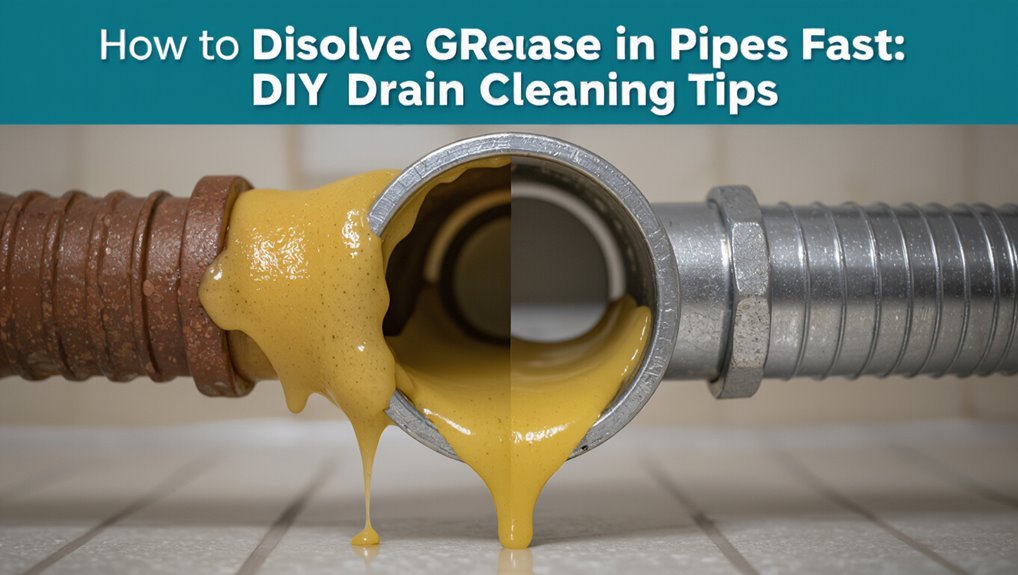
How to Dissolve Grease in Pipes Fast: DIY Drain Cleaning Tips
Key Takeaway: To quickly dissolve grease in pipes, follow these steps:
- Stop Water Flow: Begin by turning off the water supply and removing any standing water in the sink or drain.
- Use Hot Water and Soap: Run very hot water (near the temperature from your water heater) mixed with a few drops of dish soap. This helps emulsify the grease. Allow it to run for several minutes.
- Plunge if Needed: If the drain is still slow, use a plunger or a hand auger after applying baking soda followed by vinegar or an enzymatic cleaner according to the product’s instructions.
- Check the P-trap: If accessible, remove and clean the P-trap to eliminate any trapped grease.
- Safety First: Always wear gloves and eye protection during the process.
Follow these steps for effective DIY drain cleaning!
What to Do First for a Greasy Sink Clog
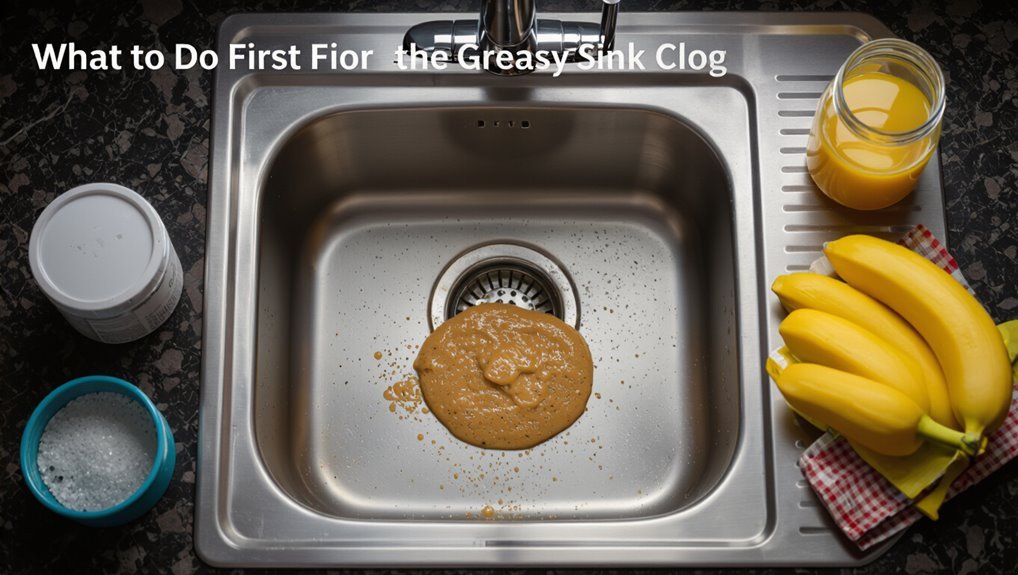
Begin by stopping any further water flow and removing standing water from the sink basin.
The person assesses access: clear the area under the sink, locate the P-trap, and place a bucket.
Wearing gloves and eye protection, they loosen slip nuts slowly to catch trapped grease and debris.
If access is limited, a plunger can be used on the sink or a hand auger introduced carefully to avoid pushing clogs deeper.
They avoid chemical additives at this stage.
After removing visible buildup, parts are inspected for damage, reassembled tightly, and the drain is tested with a small flow of hot water.
Why Grease Clogs Form in Kitchen Pipes
In kitchen drains, grease clogs form because fats, oils, and food particles that enter the plumbing cool and solidify, adhering to pipe walls and progressively narrowing the flow path.
Over time, successive deposits build layers that trap additional debris: coffee grounds, sauces, starches and small solids.
Warm water temporarily mobilizes fats, but cooling promotes accumulation at joints, bends and horizontal runs where flow slows.
Biodegradation is slow for many cooking fats, so bacterial action rarely removes buildup fast enough.
Reduced diameter increases backpressure and odor, and intermittent wetting creates sticky, semi-solid masses that resist simple flushing.
How Grease Dissolving Differs From Snaking a Clog
Having established how grease accumulates and hardens inside kitchen pipes, the discussion moves to contrasting chemical dissolution with mechanical snaking.
Chemical dissolvers soften and emulsify fatty deposits, penetrating residues along pipe walls and restoring flow without physically contacting all buildup.
Snaking uses a rotating or flexible auger to cut, break apart, and extract blockages, effective for solid masses and foreign objects but less able to remove thin, adherent grease films.
Chemicals can reach bends and porous surfaces; snakes provide immediate mechanical removal and inspection.
Choice depends on deposit type, pipe material, safety considerations and whether residual film removal or bulk clearance is required.
How to Tell a Clog Is Caused by Grease
Slow drainage accompanied by gurgling noises often signals a buildup of fatty deposits narrowing the pipe.
An oily sheen or sticky residue around drains and on wastewater, sometimes with a rancid odor, further points to grease as the culprit.
Noting both symptoms together helps distinguish a grease clog from hair or mineral blockages.
Slow Drainage And Gurgling
How can one distinguish a grease-related clog from other blockages? Slow drainage that progressively worsens, especially in kitchen sinks, often indicates accumulating fat, oil, and food particles congealing along pipe walls.
Intermittent gurgling or bubbling when water drains from nearby fixtures signals trapped air moving past viscous buildup. The sounds tend to occur after multiple uses rather than suddenly.
Flow may improve briefly after hot-water use, then decline again as grease resolidifies. These patterns—gradual slowdown, recurring gurgling, partial temporary relief with heat—point toward grease accumulation rather than a single solid obstruction or tree root intrusion.
Oily Residue And Odor
Coating pipe openings and sink basins with a slick film and emitting a faintly rancid smell, grease clogs often leave visible oily residue around drains and on nearby surfaces.
Signs include dark, sticky buildup under the stopper, smearable slickness on the drain lip, and greasy splatter on surrounding countertops or cabinet interiors.
Persistent sour or fatty odors that return after cleaning suggest trapped oils decomposing downstream.
Unlike soap scum, grease feels slippery and can solidify when cool.
Noting these cues helps distinguish fat-based blockages from hair or mineral deposits, guiding appropriate hot-water or enzymatic treatments.
Safety Checklist Before You Start Drain Cleaning
Before beginning drain cleaning, one should confirm basic safety measures: turn off nearby electrical appliances, ventilate the area, wear chemical-resistant gloves and eye protection, and keep a clear exit path.
Inspect for signs of corrosion, leaking joints, or unstable fixtures that could worsen with agitation. Read labels on any cleaning agents to note hazards and first-aid steps.
Make sure children and pets are kept away. Know emergency numbers and have a phone accessible.
Avoid mixing chemicals. Use adequate lighting and secure slippery floors with mats.
If unsure about a condition or severe backup, consult a professional plumber.
Tools and Supplies for Dissolving Grease Fast
Equipped with the right tools and supplies, a person can dissolve grease in pipes quickly and safely. Essential items include a plunger, plumber’s snake, and a bucket for removing standing water. Protective gear—gloves and safety glasses—prevents contact with hot water and residues. Measuring tools and a funnel aid controlled application of cleaning agents. Mechanical agitation plus heat speeds breakup of grease without harsh chemicals.
| Tool | Purpose |
|---|---|
| Plunger | Dislodge soft obstructions |
| Plumber’s snake | Break and extract clogs |
| Gloves & glasses | Personal protection |
Household Solvents That Safely Dissolve Kitchen Grease
Household liquids can soften and carry away kitchen grease without harsh chemicals.
A stream of very hot water combined with a few drops of dish soap breaks up oily films and flushes them through the pipes.
For tougher clogs, a baking soda rinse followed by vinegar creates fizzing action that helps dislodge residue before flushing with hot water.
Hot Water And Dish Soap
Hot water combined with liquid dish soap is a simple, effective method for breaking down and flushing away kitchen grease.
The soap contains surfactants that emulsify fats, allowing hot water to carry oily residues through pipes instead of letting them congeal.
For routine maintenance, pour several cups of very hot (but not boiling) water mixed with a few tablespoons of dish soap down the drain, wait, then follow with more hot water to rinse.
This approach is safe for most plumbing, inexpensive, and noncorrosive.
Repeat as needed; persistent, solidified blockages may require mechanical removal or professional service.
Baking Soda And Vinegar
As a common, low-cost pair for grease management, baking soda and vinegar create a simple chemical and physical action that can help loosen oily residues in drains.
The bicarbonate acts as a mild abrasive and base, while acetic acid produces effervescence that agitates clinging fats.
To use, pour a half cup of baking soda into the drain, follow with a cup of vinegar, wait 10–15 minutes, then flush with hot water.
This method dislodges soft grease and neutralizes odors but is less effective on heavy, solidified build-up.
Repeat occasionally; avoid combining with commercial cleaners or pouring continuously into PVC joints.
Make a Baking Soda + Hot Water Drain Cleaner
To tackle greasy clogs quickly and safely, combine a half cup of baking soda with a kettle of just-off-boil water poured slowly down the drain; the alkali loosens oils while the heat helps dissolve residues, reducing buildup without harsh chemicals.
Allow the mixture to sit 15–30 minutes so fizzing action and heat penetrate the pipe.
Flush with additional hot water to carry softened grease away.
Repeat weekly for preventive maintenance or after heavy cooking.
Avoid using with metal-sensitive fixtures immediately afterward; test on a small scale if uncertain.
This method is inexpensive, noncaustic, and suited for routine grease control.
Cut Grease With Dish Soap and Boiling Water
Combine a spoonful of grease-cutting dish soap with a kettle of boiling water and pour it slowly down the drain to break up and flush away oily residue. This simple method relies on soap’s surfactants to emulsify fats while hot water liquefies congealed grease, allowing it to travel through pipes.
For best results, run warm tap water briefly first, pour the soap, then add boiling water in stages, waiting between pours to avoid thermal shock to older pipes. Repeat weekly as preventive maintenance. Avoid using on PVC joints continually; use caution with very old or fragile plumbing to prevent damage.
Vinegar + Baking Soda: Myth vs. Practical Use
The vinegar-and-baking-soda reaction produces fizzing and carbon dioxide but does not generate the strong alkaline conditions needed to dissolve solidified grease.
Practical effectiveness is consequently limited to loosening light, recent residue and flushing small soft clogs rather than cutting through heavy, polymerized grease.
When used, it should be followed by hot water and repeated cautiously, avoiding sealed chemical mixtures and protecting pipes and fixtures from thermal shock.
Chemical Reaction Limits
Framed as a popular home remedy, the vinegar-and-baking-soda reaction produces an energetic fizz that is visually satisfying but chemically self-limiting: once the acetic acid and sodium bicarbonate neutralize into water, carbon dioxide, and sodium acetate, the reaction stops and cannot continue to dissolve trapped grease beyond the surfaces it contacts.
The fizz is gas evolution, not a sustained solvent action; without continuous acidic or surfactant input, emulsification of oil does not occur.
Reaction stoichiometry limits available acid and base; excess of one reagent prevents further CO2 release.
Temperature, concentration, and contact geometry dictate how much residue is exposed and briefly affected.
Practical Effectiveness Today
Practical tests and user reports show that the vinegar-and-baking-soda pairing rarely acts as an effective grease-dissolving system in modern plumbing. Its reaction produces fizz and temporary agitation but yields water, carbon dioxide, and sodium acetate — none of which emulsify hardened fats or break polymerized grease films.
In lightly soiled traps the combination can dislodge debris mechanically, yet it lacks surfactant strength and solvent action required for real grease removal. Contemporary grease buildup often demands alkaline cleaners, biological enzymes, or mechanical clearing.
Consequently vinegar plus baking soda functions more as a mild maintenance or odor-control measure than a reliable grease solvent.
Safe Usage Guidelines
Against the backdrop of popular DIY advice, clear safety guidelines help distinguish safe, occasional use of vinegar and baking soda from inappropriate expectations about grease removal.
The combination produces fizz but not a true solvent; it can dislodge light residues when followed by hot water but won’t clear heavy grease or hardened buildup.
Use small amounts to avoid pressure surges in clogged sections, avoid mixing with commercial cleaners or bleach, and never seal reactions in closed systems.
For persistent clogs or commercial grease traps, recommend professional mechanical cleaning or enzyme-based treatments designed for fat breakdown to prevent pipe damage and backups.
When Enzyme Drain Cleaners Beat Chemical Degreasers
Preferring biological action over caustic reactions, enzyme drain cleaners outperform chemical degreasers in situations where organic buildup, fragile pipes, or frequent maintenance needs are present.
They use specialized microbes and enzymes to digest fats, proteins, and starches slowly, reducing recurrence without harming older PVC, rubber seals, or metal joints.
Enzymes are safer for septic systems and risk fewer fumes or chemical residues, making them suitable for regular preventative use.
Performance is slower than harsh chemicals but sustainable.
Selection should match clog composition and temperature for peak activity.
- Targeted for organic clogs
- Pipe- and septic-friendly
- Low toxicity and fumes
- Best for routine maintenance
Use Commercial Degreasers Safely
When using commercial degreasers, the reader should select a product formulated for the pipe material and the type of grease present.
They must read and follow the manufacturer’s safety instructions, including ventilation, dilution, and contact times.
Protective measures for surrounding surfaces and plumbing—such as shielding fixtures and rinsing thoroughly—help prevent damage and residue buildup.
Choose The Right Product
Selecting an appropriate commercial degreaser requires matching product chemistry to the type of grease, pipe material, and environmental constraints; citrus- or solvent-based formulas work well for heavy, oily build-up, while enzyme or alkaline cleaners are safer for organic residues and PVC.
The choice should consider biodegradability, municipal disposal rules, and compatibility with seals and finishes. Concentration and required contact time determine effectiveness. A patch test on an inconspicuous section or short run is prudent. Prefer formulations labeled for plumbing use to avoid damage.
- Verify pipe material compatibility
- Match degreaser to grease type
- Check environmental and disposal labels
- Confirm required contact time
Read Safety Instructions
After choosing a product suited to the pipe material and grease type, the next step is to read and follow the manufacturer’s safety instructions before use. The label details required PPE, ventilation, mixing ratios, contact times and prohibited combinations with other cleaners.
Warnings identify corrosive agents, inhalation risks and first-aid steps for exposure. Disposal directions prevent sewer or environmental harm.
If instructions conflict with local regulations or pipe recommendations, defer to the more restrictive guidance. Never ignore pictograms or hazard statements; they summarize critical risks.
Keeping the product label until treatment is complete guarantees correct follow-up and emergency information.
Protect Pipes And Surfaces
To protect pipes and surrounding surfaces, the user should contain splashes, drips and runoff before applying commercial degreasers.
The person should test degreasers on hidden areas, avoid prolonged contact with vulnerable finishes, and use protective barriers like cloth or plastic.
Ventilation and brief contact times minimize damage.
Neutralize residues per product instructions and rinse thoroughly with water to prevent corrosion.
If piping is older or unknown material, choose milder formulations or consult a professional to prevent weakening joints or seals.
- Wear gloves and eye protection
- Patch nearby surfaces with plastic
- Follow label dilution guidelines
- Rinse and neutralize residues
Combine a Hand Auger or Plunger With Dissolvers
Pairing a hand auger or plunger with a chemical dissolver improves the chance of clearing grease clogs by combining mechanical break-up with chemical softening.
First, apply a dissolver per label instructions and allow dwell time to soften grease. Then use a plunger to dislodge loosened material or insert a hand auger to cut and retrieve stubborn deposits.
Work cautiously to avoid forcing debris deeper. Flush with hot water after mechanical action to carry residues away.
Wear gloves and eye protection; ventilate the area. Avoid mixing products and follow manufacturer guidance to protect pipes and prevent hazardous reactions.
Fast Routine: Dissolve a Greasy Kitchen Sink Clog
Begin by clearing standing water from the sink, then select a grease dissolver labeled safe for household drains and follow the package directions for quantity and dwell time.
A simple routine: remove visible debris, apply the dissolver, wait the recommended interval, then flush with hot water.
Use a sink strainer afterward to catch solids and avoid reaccumulation.
If flow remains slow, repeat once, or combine with mechanical plunging before reapplying.
Wear gloves and eye protection, ventilate the area, and never mix products.
Regular monthly treatment prevents buildup and keeps grease from forming stubborn clogs.
- Remove debris
- Apply dissolver
- Flush with hot water
- Use a strainer
How Long to Let Each Treatment Sit
Recommended wait times differ by method: immediate rinsing time covers a quick flush after greasy residue, chemical dwell period specifies how long a solvent or enzyme needs to work, and repeat treatment interval guides when to apply another dose.
The appropriate timing depends on product instructions and clog severity.
Clear examples and safety notes follow.
Immediate Rinsing Time
After application, allow each treatment to work only as long as its label or instructions indicate—typically between 5 and 30 minutes—before rinsing to prevent chemical buildup or pipe damage.
Immediate rinsing time balances efficacy and safety: too short reduces effectiveness; too long risks corrosion, seals damage, or residual odor.
Use hot water flow to flush loosened grease, running for at least one minute after recommended dwell time.
For enzymatic or biological products, follow manufacturer rinsing notes to preserve active organisms.
When in doubt, choose a shorter contact period and repeat treatment rather than extend exposure.
- Follow label times.
- Flush with hot water.
- Avoid overexposure.
- Repeat if needed.
Chemical Dwell Period
When determining chemical dwell period, match the product’s specified contact time to the type and severity of the grease deposit—light films often need only a few minutes, while heavy, baked-on accumulations may require the upper end of the label range or repeated applications.
The chosen dwell time should adhere to manufacturer instructions and safety warnings.
Monitor effectiveness visually where safe, and avoid extending beyond recommended maximums to prevent pipe or fixture damage.
After the dwell period, flush with hot water as advised.
Allow for adequate ventilation and protective gear during waiting intervals; document observed results to inform subsequent treatments.
Repeat Treatment Interval
Typically, the repeat treatment interval depends on the severity of the grease buildup and the product’s labeled maximum contact time.
The technician gauges progress after each dwell: light clogs may need one application, moderate buildup often two to three, and stubborn deposits require repeated cycles with inspection between.
Allow recommended rinse times and avoid exceeding label limits to protect pipes.
If improvement stalls, switch to mechanical cleaning or professional service.
Monitor odors and slow drainage as indicators to reapply, but do not exceed cumulative exposure warnings.
- Assess severity and follow label limits.
- Wait, inspect, then decide.
- Limit repeats to safety guidelines.
- Escalate if no progress.
How to Repeat or Combine Methods Without Pipe Damage
Revisiting or combining grease-removal techniques requires careful sequencing to prevent chemical reactions and mechanical stress that could damage pipes.
Professionals recommend allowing one method to finish and the system to rest before introducing another; for example, wait several hours after a biological enzyme treatment before using a mechanical auger.
Never mix chemical cleaners; residues can produce heat, toxic gas, or corrosive blends.
Use the mildest effective option first, escalate only if needed, and monitor pipe temperature and fittings for stress.
Record what was applied and when to guide safe follow-up and avoid cumulative chemical exposure that weakens materials.
Flush Pipes After Breaking Down Grease
After grease has been broken down, the pipe system should be flushed with hot water to carry remaining residue away.
Repeating short cycles of boiling water can help dissolve and push out lingering deposits without harsh chemicals.
Care should be taken to introduce the hot water gradually to avoid thermal shock in older pipes.
Flush With Hot Water
Once grease has been broken down, flushing the pipes with hot water helps carry the softened residue through the system; a steady stream at or near the water heater’s temperature is most effective.
This approach uses consistent heat to maintain grease in a liquid state while water flow sweeps loosened deposits downstream.
It is important to run hot water long enough to reach and clear affected traps and joints, but not so long as to waste energy.
Monitor flow and repeat after mechanical agitation if needed.
Use caution with PVC limits and avoid thermal shock to older plumbing.
- Increase faucet flow
- Maintain heater temperature
- Flush for several minutes
- Inspect downstream traps
Use Boiling Water Cycles
Having flushed with hot water to soften and carry away loosened grease, the next step is to run controlled boiling water cycles to force remaining residue through the system.
One liter at a time, poured slowly, prevents thermal shock to pipes and fittings while maintaining momentum to push softened grease toward the sewer line.
Pause between pours to allow flow recovery and inspect for leaks or slow drainage.
Repeat three to five cycles, monitoring progress. Avoid prolonged exposure on older PVC; use shorter bursts.
Finish with a final warm-water rinse and test fixtures to confirm improved flow and reduced odors.
Dealing With Stubborn Grease in the P‑Trap
How can stubborn grease be removed from a P‑trap without dismantling the entire assembly? A sequence of targeted treatments can loosen deposits and restore flow while avoiding full disassembly.
First, flush with repeated boiling water cycles to soften grease.
Next, apply a biodegradable enzymatic drain cleaner per label directions; enzymes break down fats over hours.
Then, use a hand‑held plumbing auger or flexible brush inserted into the trap arm to dislodge softened residue.
Finally, flush again with hot water and a mild detergent to carry away loosened material. Monitor for persistent odors or slow drainage indicating deeper blockage.
When to Remove and Clean the P‑Trap Yourself
When water drains slowly, emits foul odors, or gurgles, these are clear signs the P‑trap may be clogged and merits inspection.
The homeowner should gather basic tools—adjustable wrench, bucket, and gloves—before proceeding.
A concise, step‑by‑step removal and cleaning procedure follows to minimize mess and restore flow.
Signs It’s Clogged
Frequently, a clogged P‑trap announces itself through a few clear symptoms that indicate immediate attention is needed.
Slow drainage, recurring gurgling, and persistent odors point to trapped grease or debris.
Backups or water pooling in the sink after use signal reduced flow.
Visible residue at the trap’s access point confirms accumulation.
When these signs appear without improvement after routine flushing, removal and cleaning of the P‑trap is warranted to prevent leaks or sewer gas intrusion.
- Slow drainage
- Gurgling noises
- Foul odors
- Water backups
Tools You’ll Need
What tools are essential depends on the trap type and the job’s complexity.
A bucket and old towels catch water and debris.
Slip-joint pliers or an adjustable wrench loosen plastic or metal nuts; channel-lock pliers help with stubborn fittings.
A pair of disposable gloves and safety glasses protect from splashes.
A flashlight or headlamp improves visibility under sinks.
A small hand-held drain snake or coat hanger aids basic clearing without full removal.
A plastic putty knife or soft brush removes residue from the trap.
Optional: a basin wrench for tight spaces and small containers for holding removed parts.
Step‑By‑Step Removal
After gathering the tools, the homeowner can decide whether the P‑trap needs removal: visible gurgling, slow drainage that resists plunging, or persistent odors indicate a trapped clog.
The process is straightforward if simple: turn off water, place a bucket, loosen slip nuts, and inspect the trap. Gloves and eye protection are advised.
Clean residue with a brush and biodegradable degreaser, rinse parts, and reseal with new washers if worn.
Reassemble, test for leaks, and tighten slowly.
If corrosion, complex fittings, or continued backup appear, call a plumber to avoid damage or improper reassembly.
- Turn off water, set bucket
- Loosen slip nuts
- Clean trap, replace washers
- Reassemble, test for leaks
How to Protect Sink Finishes and Pipes From Cleaners
When treating grease in kitchen drains, homeowners should select cleaners and application methods that remove buildup without damaging sink finishes or pipe materials. They should read product labels for compatibility with stainless steel, enamel, chrome, PVC and metal alloys.
Test solvents on an inconspicuous area before full use. Use diluted solutions and follow dwell-time instructions to limit exposure. Rinse thoroughly after treatment and neutralize caustic residues with water and mild detergent.
Avoid mixing chemicals. Protect visible fixtures with barrier cloths and wear gloves. For older plumbing or unknown materials, consult a plumber before using harsh chemical drain cleaners.
Eco-Friendly Grease Prevention Options
In kitchens aiming to reduce chemical use and clogged drains, eco-friendly grease prevention emphasizes simple behavioral changes and non-toxic products that keep fats out of the plumbing.
It recommends intercepting grease before it enters pipes and using biodegradable cleaners sparingly when needed.
Alternatives focus on capture, composting suitable fats, and choosing plant-based degreasers for occasional residue.
Properly sized strainers and dedicated grease containers reduce downstream buildup.
Routine maintenance with hot water and minimal soap can help without harsh solvents.
- Use sink strainers to catch solids.
- Collect cooled grease in jars for disposal.
- Choose plant-based degreasers.
- Schedule occasional biodegradable enzyme treatments.
Daily Habits That Stop Grease Build-Up Long-Term
Regularly adopting a few simple kitchen routines prevents grease from accumulating in pipes over months and years.
Wipe pans and plates with paper towels into the trash before rinsing.
Scrape food into compost or bins rather than down the sink.
Use sink strainers to catch solids and clean them nightly.
Rinse greasy dishes with hot water and dish soap to emulsify oils before washing.
Limit pouring cooking oil down drains; store used oil for recycling.
Run hot tap water briefly after dishwashing to carry residual oils through the trap.
Consistent, small actions reduce clogs and prolong plumbing health.
Choosing Between DIY Methods and a Plumber
Maintaining the daily habits that prevent grease buildup reduces the frequency of serious blockages, but occasional stubborn clogs or recurring slow drains call for a choice between DIY fixes and professional help. Theyigh factors include severity, tools required, and confidence with plumbing.
Simple soft clogs suit enzymatic cleaners, hot water, or a plunger; persistent, recurrent, or deep blockages often need a plumber’s auger, inspection, or sewer services. Safety, warranty, and building codes also influence the decision. When in doubt, professionals prevent damage from improper methods and diagnose underlying issues beyond surface grease.
- Assess clog severity
- Evaluate personal skill
- Consider safety and permits
- Inspect recurrence risk
Cost & Time Comparison of Grease-Removal Methods
When comparing grease-removal options, cost and time become the decisive factors for homeowners and property managers weighing DIY approaches against professional services.
DIY reagents (baking soda, vinegar, enzyme cleaners) cost little and often clear slow-building clogs within hours to days but may require repeated treatments. Manual methods like plunging or drain snakes are inexpensive and deliver immediate results for accessible blockages. Chemical solvents act faster but add expense and risk to pipes. Professional hydro-jetting or snaking incurs higher upfront fees yet resolves severe or persistent grease rapidly, saving time long-term and reducing repeat interventions.
Signs You Should Call a Plumber Instead of DIY
If slow drains, persistent odors, or recurring backups occur despite repeated DIY attempts, it’s time to call a plumber.
A professional assessment prevents damage, locates deep clogs, and detects issues beyond surface grease. Signs that exceed DIY scope include sewage smell indicating vent or trap failure, water backing into multiple fixtures suggesting mainline blockages, recurring clogs after hydro-jetting attempts, or visible pipe corrosion and leaks.
Unsafe situations — active leaks, electrical proximity, or suspected sewer line collapse — require immediate expert intervention. Prompt professional service minimizes repair costs and health risks.
- Sewage odors persist
- Multiple fixtures back up
- Repeated clog recurrence
- Visible leaks or corrosion
Quick Maintenance Checklist After Grease Removal
After calling a plumber for persistent or complex grease problems, attention should turn to a concise post-cleanup checklist to keep drains clear and prevent recurrence.
Inspect vents and accessible trap fittings for leaks or residual buildup, and run hot water for several minutes to verify flow.
Flush drains weekly with a safe, plumber-approved degreasing rinse and avoid harsh chemicals that damage pipes.
Wipe greasy cookware before washing and schedule monthly fiber or nylon drain brushing for slow spots.
Note any recurring odors or slow drainage and log dates of maintenance; consult a professional promptly if patterns reappear.
Best Products and Tools to Keep on Hand for Grease Clogs
Stocking a compact kit of targeted products and tools makes routine prevention and quick responses to grease clogs straightforward. A concise collection reduces downtime and limits messy interventions. Recommended items prioritize safety, effectiveness, and reusability.
Keep gloves and eye protection, enzymatic or bio-based degreasers for regular use, a hand auger for mechanical clearing, and a flexible hose or bucket for flushes. Store labels and instructions together; rotate consumables. Use degreasers according to temperature guidance to increase performance. Inspect tools periodically and replace worn parts. Proper selection and maintenance minimize chemical reliance and prolong pipe health.
- Gloves and eye protection
- Enzymatic/bio degreaser
- Hand auger (plumber’s snake)
- Flexible hose or bucket
Conclusion
Like a slow-moving river finally relieved of tar, the kitchen pipe exhales as stubborn grease loosens and slips away. Small, steady measures — heat, elbow grease, sensible tools — act as the sun thawing morning ice: persistent, patient, inevitable. When DIY reaches its limits, a professional hand becomes the bridge spanning the current. With routine care and the right supplies, pipes stay clear, and the household’s plumbing flows on, bright and unobstructed.