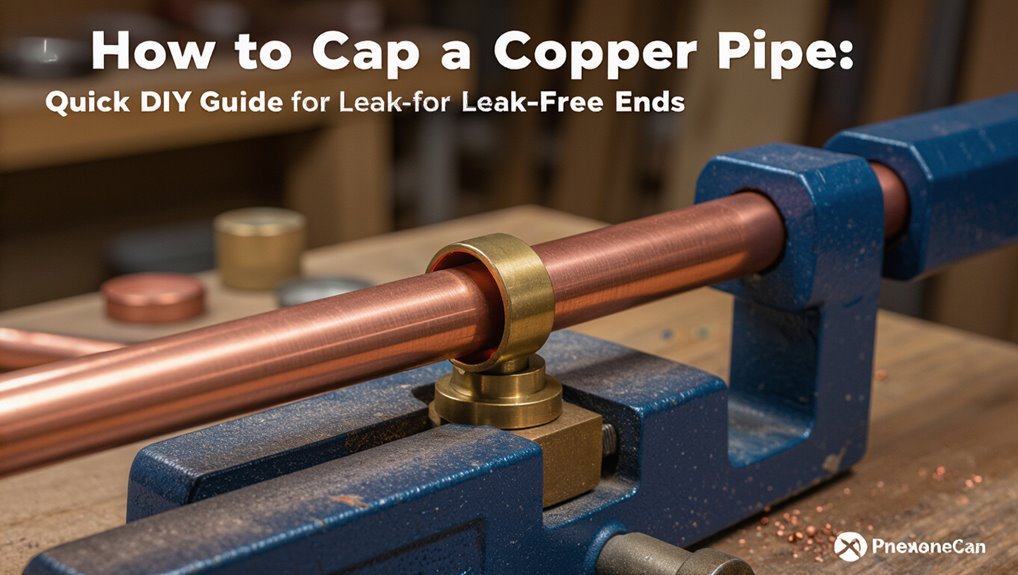
How to Cap a Copper Pipe: Quick DIY Guide for Leak-Free Ends
To effectively cap a copper pipe, the best method is to solder a clean, fluxed, and deburred cap onto a square-cut end for a permanent, leak-proof seal.
Key Takeaways:
- Preparation is Key: Cut the pipe square, deburr, and clean both the pipe and cap.
- Apply Flux: Evenly coat the surfaces with flux.
- Proper Seating: Fully seat the cap onto the pipe.
- Heating Technique: Heat the joint evenly and feed solder until it wicks around the connection.
For quick or temporary solutions, consider using compression or push-fit caps. Follow the steps outlined for a detailed technique, safety tips, and guidance on selecting the right method.
Quick Answer: Best Way to Cap a Copper Pipe
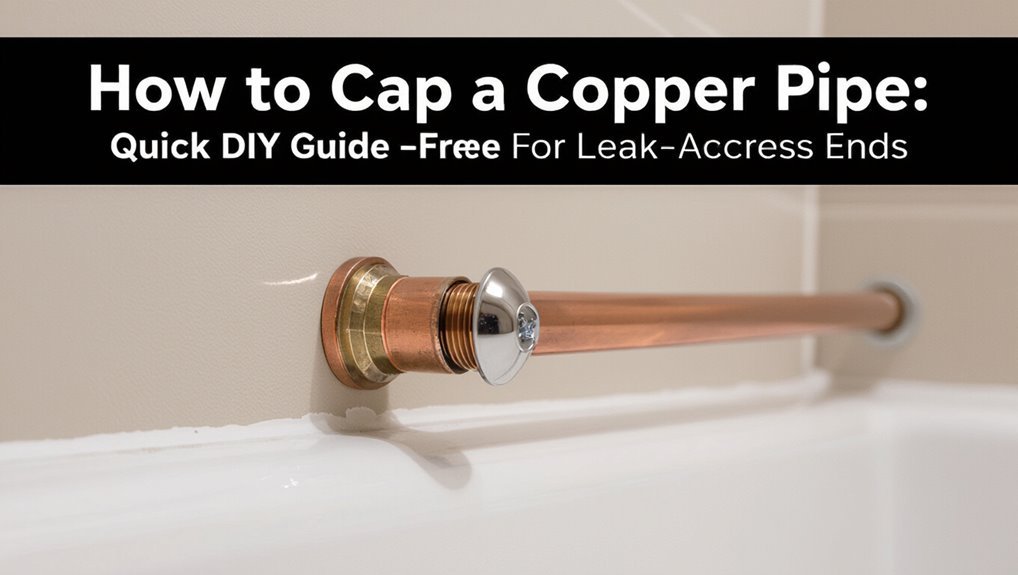
For a fast, reliable seal on a copper pipe, the preferred method is to solder a copper cap onto a clean, fluxed pipe end; it provides a permanent, leak-proof joint when done correctly.
The technique involves cutting square, deburring, cleaning both pipe and cap, applying flux, seating the cap, heating evenly, and feeding solder until it wicks around the joint.
Alternative options include compression caps and push-fit end caps for temporary or tool-free solutions; these sacrifice permanence or temperature resistance compared with soldered joints.
Proper preparation and correct heating guarantee durability and prevent future leaks in typical domestic plumbing applications.
Should You DIY or Hire a Plumber?
The decision to DIY or hire a plumber hinges on the homeowner’s soldering and pipe-fitting skill level and comfort with plumbing tools.
Upfront costs for a professional are higher, but DIY savings must be weighed against potential mistakes and repair expenses.
For long-term reliability, a licensed plumber typically offers more consistent results and warranties that DIY work does not.
Skill Level Needed
How difficult is capping a copper pipe depends largely on the method chosen and the person’s prior plumbing experience. A novice can handle push-fit caps or compression fittings with basic tools, while soldering requires steady hands and familiarity with flux, torch control, and proper joint preparation.
Skill assessment should weigh access, pipe condition, and required permanence. If uncertainty exists about leak risks or code compliance, professional intervention is prudent.
- Basic: push-fit cap, minimal tools
- Intermediate: compression fittings, careful measurement
- Advanced: soldering with torch and flux
- When to hire: confined spaces or corroded piping
Cost Comparison
Deciding whether to DIY or hire a plumber hinges on a straightforward cost-benefit analysis that balances material and tool expenses, time investment, expected longevity of the repair, and the potential cost of a faulty cap or leak.
DIY costs are primarily parts: compression caps, solder, flux, or push-fit caps, plus any tools not already owned; totals often range low for simple stops.
Hiring a plumber adds labor rates, call-out fees, and warranty value; typical service calls can exceed DIY parts by several times.
For minor, non-pressurized jobs with basic skills, DIY usually saves money; complex or inaccessible work favors professional hire.
Long-Term Reliability
When evaluating long-term reliability, homeowners should weigh the durability of the chosen capping method, the skill required to install it correctly, and the consequences of failure; a professionally soldered or properly crimped cap typically outlasts a hastily applied temporary solution, while push-fit or compression caps offer reliable performance if installed to manufacturer specs.
Decisions hinge on skill, access, and risk tolerance. A plumber guarantees correct technique, pressure testing, and warranty protection; DIY saves labor but increases liability if leaks occur. Consider complexity, visibility, and water shutoff options.
- Skill level required
- Failure consequences
- Warranty and guarantees
- Long-term maintenance
What Capping a Copper Pipe Actually Means
In plumbing, capping a copper pipe means permanently or temporarily sealing its open end to stop water flow, prevent debris entry, and close off unused lines.
The action isolates a section of piping, halts service to fixtures, and readies systems for alterations or winterization.
Methods include soldered caps, compression fittings, push-fit caps, and threaded mechanical closures; choice depends on permanence, pressure rating, and accessibility.
Properly sized caps matched to tubing type guarantee leak-free performance.
Effective capping prevents contamination, water damage, and pressure loss while enabling future reconnection or permanent abandonment of the line with minimal disruption.
Safety Checklist: Heat, Ventilation, and Protective Gear
Before beginning to cap a copper pipe, the installer confirms proper ventilation to disperse fumes and maintain breathable air.
The checklist also verifies flame-control measures, heat shields, and a clear workspace to prevent ignition of nearby materials.
Appropriate protective gear—gloves, eye protection, and flame-resistant clothing—is worn to reduce burn and inhalation risks.
Proper Ventilation Setup
With adequate airflow and careful control of heat, a safe workspace minimizes the risk of fire, toxic fume exposure, and accidental burns during copper pipe capping.
The installer should position work near open windows or use a window fan to pull fumes away, avoiding confined spaces.
Mechanical ventilation or a small exhaust fan helps when soldering indoors.
Continuous air exchange reduces inhalation risk from flux or soldering byproducts.
- Make certain cross-ventilation by opening opposing windows or doors
- Use a portable exhaust fan directed outdoors
- Avoid basements or enclosed crawlspaces without ventilation
- Monitor for lingering odors and ventilate longer if present
Flame And Heat Protection
When soldering or applying heat to cap a copper pipe, a strict flame-and-heat protection routine reduces the chance of fire and burns: flammable materials should be cleared from the area, a heat-resistant pad placed beneath the work, and a fire extinguisher or bucket of water kept immediately accessible.
The operator should wear heat-resistant gloves, safety goggles, and long sleeves.
Spark shields and flame guards protect surrounding surfaces; wet rags applied nearby keep combustibles cool.
Work should proceed only after gas supply is secured and pilot lights extinguished.
Continuous monitoring for smoldering and immediate suppression of stray sparks complete the protection checklist.
Tools You Must Have for a Leak‑Free Cap
For a secure, leak‑free cap on a copper pipe, a small set of purpose‑specific tools makes the job reliable and repeatable: a tube cutter for a clean square cut, a deburring tool or reamer to remove burrs, appropriate-size fittings or end caps, flux and lead‑free solder (or a compression cap), a propane or MAPP gas torch if soldering, adjustable pliers or a wrench for fittings, and a sewer-rated brush or cloth to clean surfaces.
- Clean surfaces: brush or cloth, emery cloth for oxidation
- Cut and prep: tube cutter, reamer/debur tool
- Seal options: solder and flux or compression cap
- Heat control: torch, heat shield, and safety gear
How to Identify Your Copper Pipe Type and Size
Identifying the type and size of a copper pipe begins by noting its appearance and measuring its diameter: soft copper (Type M, L, K) is slightly pliable and usually used for supply lines, while rigid (hard) copper shows a seam and is common in mains and exposed runs.
Next, determine whether size is nominal (copper tubing measured by outside diameter) or nominal pipe size (NPS).
Use calipers or a tape to measure outside diameter, then consult a conversion chart to match OD to nominal size.
Finally, confirm wall thickness visually or with a micrometer to distinguish types M, L, and K.
Materials Overview: Caps, Fittings, and Sealants
Having confirmed pipe type and size, attention turns to the materials used to cap and seal copper lines: caps and fittings, solder and flux, compression and push-fit connectors, and thread sealants.
The overview distinguishes permanent and removable options, necessary tools, and basic compatibility notes. Soldered caps require clean surfaces and proper flux; compression and push-fit allow tool-free or minimal-tool installation. Threaded adapters need compatible sealant. Safety and code adherence are emphasized when selecting methods.
- Soldered cap: permanent, requires torch and flux
- Compression cap: removable, wrench required
- Push-fit cap: quick, tool-optional
- Thread sealant: paste or tape
Choosing the Right Cap Material: Brass vs Copper vs Plastic
Selecting a cap material involves weighing durability and corrosion resistance, since brass, copper, and plastic perform differently in long-term exposure.
Compatibility with the existing pipe type and joining method affects whether a threaded, soldered, or push-fit cap is appropriate.
Cost and installation ease often determine the practical choice for a given project and budget.
Durability And Corrosion Resistance
When evaluating caps for copper piping, durability and corrosion resistance drive material choice because they determine longevity and maintenance needs.
Brass offers strong mechanical strength and good resistance to dezincification when specified appropriately.
Pure copper matches pipe metallurgy, minimizing galvanic drift but can tarnish.
Plastic (PVC/CPVC) resists corrosion and chemicals yet lacks impact strength and heat tolerance.
Consider environment, pressure, and expected service life.
- Brass: robust, durable, higher cost
- Copper: metallurgic compatibility, moderate corrosion
- Plastic: corrosion-proof, lightweight limitations
- Maintenance: inspect joints and seals periodically for degradation
Compatibility With Pipe Types
Material choice must also align with the specific pipe type to prevent galvanic corrosion, guarantee proper fit, and meet pressure and temperature requirements.
For copper piping, copper caps provide metallurgical compatibility and uniform thermal expansion, minimizing corrosion risk. Brass caps are compatible with copper but can introduce mild galvanic action in aggressive water chemistries; they remain common where higher strength or threaded connections are needed.
Plastic (PVC/CPVC) caps are unsuitable for direct joining to copper without approved connector fittings; they lack equivalent temperature/pressure ratings and can fail under soldering heat.
Selection should reflect pipe material, joint type, and service conditions to secure longevity and safety.
Cost And Installation Ease
For practical decisions about capping copper pipe, cost and installation ease often determine the preferred cap material. The choice balances price, durability, and required skills or tools.
Brass offers longevity and soldering compatibility but costs more and may need flux and a torch. Copper matches pipe expansion and solders cleanly at moderate cost. Plastic (PVC/CPVC) is cheapest and simple with solvent cement or push-fit, but may require adaptors and is less heat-resistant.
- Brass: durable, higher cost, solder or threaded
- Copper: good match, moderate cost, soldering
- Plastic: low cost, easy install, adaptor needed
- Push-fit: fastest, pricier than basic plastic
How to Measure and Buy the Correct Cap Size
To choose the correct cap size, identify the pipe’s outside diameter (OD) and confirm whether the cap is for slip-on (solder/press) or threaded connection; measure the OD with calipers or a tape at the pipe’s end and compare it to the cap’s listed OD or nominal size to guarantee a snug fit.
Verify material compatibility—copper caps or brass for soldering, threaded caps rated for potable water if required.
Check whether cap dimensions refer to copper tube size (CTS) or nominal pipe size (NPS).
Bring the pipe or a clear photo to the supplier and confirm pressure ratings and standards before purchase.
How to Turn Off Water Before Capping a Pipe
After confirming the correct cap size and type, the next step is shutting off the water supply to prevent leaks and guarantee a safe capping job.
The person locates the nearest shutoff valve—individual fixture valves first, then the main if needed—and closes it fully.
They verify closure by turning the fixture on; no flow indicates success.
If valves are stuck, gentle penetrating oil and careful force may help; call a pro if resistance persists.
Finally, they note valve condition and location for future reference.
- Locate nearest shutoff
- Close valve fully
- Test by running fixture
- Seek professional help if stuck
How to Drain and Dry the Copper Pipe Safely
After the water supply has been shut off, any remaining water must be drained from the copper pipe to prevent pressure or freezing issues.
The interior should be cleared of debris and moisture using a rag, compressed air, or gravity flushing.
Making sure the pipe is fully dry before capping reduces corrosion and assures a secure seal.
Shut Off Water Supply
How should the water be stopped and the pipe emptied before capping? The person locates and closes the appropriate shutoff valve, then relieves line pressure and drains remaining water. Steps emphasize safety and readiness for capping.
- Turn off the main or local shutoff slowly to avoid pressure spikes.
- Open nearby faucets and the target pipe to let water escape.
- Use a bucket and rags to catch residual flow and protect surfaces.
- If needed, drain the system through a drain cock or lowest fixture.
Confirm no flow before proceeding; a momentary drip requires repeating steps until dry and depressurized.
Clear And Dry Interior
With the shutoff confirmed and visible drips stopped, the next step is to clear and dry the pipe interior to make certain trapped water from interfering with the cap.
The technician tilts the pipe end downward and taps gently to encourage drainage. A wet-dry vacuum or compressed air (brief, low-pressure bursts) removes remaining water; if using air, vent elsewhere to avoid pressure buildup. Paper towels or lint-free cloths swab the interior until dry.
Allow a few minutes for evaporation, or use a hair dryer on low heat if accessible. Confirm dryness visually and by feel before fitting the cap to make certain a secure, leak-free seal.
How to Cut a Copper Pipe Cleanly and Square
Begin by measuring and marking the pipe precisely at the planned cut point, then secure it to prevent movement during cutting. A clean, square cut prevents leaks and eases capping. Use a tubular cutter or fine-tooth saw, rotate or cut steadily, and avoid crushing the tube. Deburr and remove burs from inside and outside immediately after cutting.
- Choose the right tool: pipe cutter or hacksaw with guide.
- Keep the cutter perpendicular; tighten gradually.
- Rotate pipe or tool for even cutting.
- Inspect the end for roundness and cleanliness before proceeding.
Preparing the Pipe for a Compression Cap
Before installing a compression cap, confirm the pipe end is clean, square, and free of burrs so the ferrule seats evenly and the cap seals properly.
Inspect for dents, corrosion, or irregularities; replace damaged sections.
Deburr the inside and outside with a reamer or file, removing metal shards that prevent a tight seal.
Clean the exterior with emery cloth to remove oxidation and oil; wipe with a lint-free cloth.
Measure insertion depth and mark the pipe to guarantee consistent seating.
Select the correct ferrule and cap size for the pipe OD.
Keep components dry and handle parts to avoid contamination.
Step‑by‑Step: Installing a Compression Cap
Position the compression nut and ferrule onto the prepared copper pipe, sliding the nut on first (threads outward) followed by the ferrule, ensuring the pipe is marked at the correct insertion depth.
Insert the pipe end fully into the cap body until the mark aligns with the cap inlet.
Hand-tighten the nut onto the cap, then use two wrenches: one to hold the cap and one to turn the nut.
Tighten until snug, typically a quarter to half turn past hand-tight.
Check alignment and test for leaks.
- Confirm insertion depth
- Hand-tighten first
- Use two wrenches
- Inspect and test for leaks
When to Use a Slip‑On Compression Cap
When a temporary or permanent shutoff is needed on a smooth, accessible copper line without soldering, a slip-on compression cap is appropriate; it works well for service branches, ending stub-outs, or isolating fixtures during repairs because it installs quickly, requires no heat, and can be removed or retightened later if adjustments are necessary.
It suits accessible, straight runs with sufficient pipe length for the ferrule and nut. It is ideal when a quick, low-skill solution is preferred and when pressure and temperature remain within the cap’s rating. Avoid using it where code mandates soldered or threaded terminations or for permanently buried lines.
Preparing the Pipe for a Threaded Cap
Before installing a threaded cap, the pipe end must be cleaned and deburred to guarantee a tight seal and prevent damage to threads.
Accurate measurement and proper threading technique are required so the cap engages fully without cross‑threading.
These preparatory steps reduce leaks and make installation faster.
Clean And Deburr Pipe
To make certain a reliable seal for a threaded cap, the cut end of the copper pipe must be cleaned and deburred so threads seat evenly and joint integrity is maintained. Remove burrs with a reamer or deburring tool, working clockwise until edges feel smooth. Wipe away filings and oil with a clean cloth, then use emery cloth or a wire brush to remove oxidation for bright, clean metal. Avoid deforming the pipe edge. Inspect visually and by touch; a uniform, round profile guarantees proper thread engagement.
- Use a proper reamer for safety
- Clean filings thoroughly
- Remove corrosion for metal-to-metal contact
- Verify smooth, round edge
Measure And Thread Properly
With a clean, deburred pipe end, precise measurement and correct threading prepare the copper for a secure threaded cap.
The technician measures exposed pipe length to match cap depth, marking the cut line and allowing thread engagement plus sealant.
A pipe threader with the appropriate die size for the pipe gauge is aligned squarely; lubrication prevents galling.
Threads are formed with steady pressure and full rotations, backing off periodically to clear chips.
After threading, debris is removed and threads inspected for uniformity and complete peaks.
Proper thread fit guarantees even contact, enabling a reliable seal when the cap is installed.
Step‑By‑Step: Installing a Threaded Cap With Pipe Tape
When preparing a capped end on a threaded copper pipe, gather the cap, appropriate-size pipe tape (PTFE), a pipe wrench, and a clean rag; these tools guarantee a secure, leak-resistant connection.
Clean threads, inspect for damage, and start tape at the thread’s end, wrapping clockwise three to five tight layers. Press tape into crevices, then hand-thread the cap until snug.
Finish with the wrench, turning a quarter to half turn—avoid over-tightening. Wipe away residue and test under low pressure for leaks.
- Make certain tape overlaps neatly
- Align cap squarely to threads
- Use steady wrench pressure
- Recheck after pressure test
When to Use a Threaded Cap on Copper
A threaded cap is appropriate when a temporary shutoff is needed, allowing easy removal for repairs or system changes.
It can also serve as a permanent end seal when matched to the pipe material and pressure requirements.
Compatibility with existing fittings and thread types determines whether a threaded cap is the correct choice.
Temporary Shutoff Needs
Temporary shutoff situations commonly arise during repairs, renovations, or seasonal winterization, and a threaded copper cap provides a quick, reliable seal for pressurized lines. It suits short-term isolation when valves are unavailable or when testing downstream work. Use caps to prevent water damage, allow safe fixture replacement, or winterize exterior runs. Inspect threads and apply appropriate tape or compound for a leak-free temporary stop. Remove caps when restoring service and confirm integrity.
- Isolating a fixture during replacement
- Winterizing exposed outdoor piping
- Pressure-testing modified sections
- Emergency leak containment during repairs
Permanent End Sealing
For long-term or permanent closures of copper lines, a threaded cap can provide a reliable, serviceable seal when applied correctly and suited to the installation.
Use a cap when the line will remain idle but may require future access, when pressure ratings match the system, and when vibration or temperature cycles are moderate.
Make certain threads are clean, use appropriate sealant (PTFE tape or pipe dope rated for potable water), and tighten to manufacturer torque to avoid distortion.
For buried or concealed lines, protect the cap from corrosion.
Verify local code permits threaded termination for permanent sealing before finalizing the installation.
Compatibility With Fittings
When a threaded cap is chosen for a copper line, compatibility with the existing fittings and system materials determines whether it will perform reliably.
A threaded brass or copper cap suits existing male-threaded adapters or sweat-to-thread adaptor; avoid mixed metals without dielectric fittings to prevent galvanic corrosion.
Confirm thread standard (NPT vs BSP) and size match, and ensure press or compression fittings are not forced into threaded caps.
Use suitable sealant (PTFE tape or pipe dope) rated for potable water when required.
- Match metal type to avoid corrosion
- Verify thread standard and size
- Use dielectric fittings if needed
- Choose approved sealant
Preparing the Pipe for Sweating (Soldering) a Cap
Before soldering a cap, the pipe end must be clean, square, and free of burrs so the joint seals properly.
The installer cuts with a tubing cutter, rotates smoothly, and removes the scrap.
Deburring the inside and outside prevents misalignment and impedes cap seating.
Surfaces receive abrasive cleaning: emery cloth or a tubing brush removes oxidation to bright copper for solder flow.
Flux is applied sparingly to cleaned surfaces to promote wetting and prevent voids.
Fit is checked dry to verify full engagement.
Work area is ventilated, and nearby combustibles are cleared before proceeding to the soldering stage.
Step‑by‑Step: Sweating a Copper Cap Safely
With the pipe prepared—clean, square, and fluxed—the installer proceeds to sweat the cap using a methodical sequence that prioritizes safety and a solid joint.
Position the cap squarely, heat the joint evenly with a torch until flux liquefies and solder flows, then apply solder to the opposite side from the flame so it is drawn into the seam.
Cool and wipe excess flux, then inspect the bead for continuity.
- Wear eye protection and heat-resistant gloves.
- Keep a wet rag or fire extinguisher nearby.
- Heat evenly; avoid overheating nearby fittings.
- Allow full cooling before pressure testing.
When to Sweat (Solder) a Copper Cap
At the point that the system is drained, cleaned, and verified free of debris and residual pressure, the installer should only sweat a copper cap after confirming the surrounding materials and conditions are safe for open flame. Sweating is preferred when a permanent, pressure-rated seal is required, when access allows torch use, and when fittings match copper sizing. It is avoided near combustible materials, plastic components, or where permits or inspections mandate alternative methods. Consider ventilation, fire watch, and isolation of nearby piping. Match flux and solder type to water or gas service. Choose sweating when longevity and mechanical reliability are priorities.
| Condition | Use Sweat? | Reason |
|---|---|---|
| Permanent seal needed | Yes | Durable, pressure-rated |
| Nearby combustibles | No | Fire risk |
| Tight space/accessible | Yes | Torch feasible |
| Plastic components present | No | Heat damage |
| Temporary or rental | No | Quick alternatives |
Preparing and Installing a Push‑Fit (SharkBite) Cap
For a push‑fit (SharkBite) cap, the technician first measures and marks the pipe to make sure the fitting will be fully seated.
The pipe end is then cleaned and deburred to remove oxidation and sharp edges that could prevent a secure seal.
Finally, the cap is pushed on firmly until it clicks and is checked for proper retention.
Measure And Mark
Before cutting or fitting the cap, the pipe must be measured and clearly marked to guarantee the push-fit cap seats fully and the pipe end is square. The technician measures the insertion depth shown on the cap packaging, adds allowance for a square cut, and marks the pipe with a visible line. A second mark indicates orientation if required. Measurements are confirmed twice before cutting.
- Measure insertion depth from manufacturer instructions.
- Mark insertion line with permanent marker or scribe.
- Add a second reference mark for orientation.
- Recheck measurements to avoid miscuts and leaks.
Clean And Deburr
Clean and deburr the cut copper pipe to make certain the push‑fit cap seals properly and the O‑ring is not damaged. The technician removes burrs with a deburring tool or file, then wipes the end with a clean cloth. Inspect for sharp edges, distortion, or remaining copper shavings. Measure outer diameter to confirm fitment. Make sure the pipe is dry and free of corrosion before proceeding to the next step.
| Step | Tool | Check |
|---|---|---|
| 1 | Deburring tool | Smooth edge |
| 2 | File | Remove burrs |
| 3 | Cloth | Clean surface |
| 4 | Caliper | OD verify |
| 5 | Visual | No shards |
Push And Secure
With the pipe edge smoothed, dry, and verified for correct outer diameter, the technician readies the push‑fit cap for installation.
The cap is inspected for debris and the O‑ring seating; alignment is confirmed visually.
The cap is pushed straight onto the pipe with steady force until the shoulder meets the pipe end.
A slight twist verifies engagement and the connection is tested by light pull.
After installation the technician observes the joint during a pressure test for leaks.
- Confirm pipe marking for insertion depth
- Keep cap and pipe clean
- Push firmly and evenly
- Verify with pull test and pressure check
When a Push‑Fit Cap Is the Fastest Option
Why choose a push‑fit cap? A push‑fit cap offers immediate, tool‑free installation for copper pipe ends, ideal for temporary shutoffs or quick repairs.
Its rubber O‑ring seals around clean pipe to stop flow without soldering, flux, or drying time.
This method suits tight timelines, minimal skill levels, and situations where flame or hot work is undesirable.
Push‑fit caps fit standard copper sizes and can be removed for future access, making them practical for renovations or diagnostics.
Careful pipe preparation—cleaning and deburring—is still required to guarantee the seal seats properly and prevents accidental dislodgement.
How to Test a Newly Capped Copper Pipe for Leaks
A capped copper pipe should first receive a close visual inspection for drips, corrosion, or moisture around the joint.
Next, a pressure test — using water or air at the recommended pressure while monitoring a gauge — verifies the seal under load.
Finally, monitoring the cap and surrounding area over several hours or days catches slow leaks that initial tests might miss.
Visual Leak Inspection
How can one confirm that a newly capped copper pipe is watertight before restoring pressure to the system? A visual leak inspection offers a quick, noninvasive check. The inspector examines joints, cap seams, and nearby fittings for signs of moisture, solder gaps, or flux residue that might indicate weak seals.
Recommended steps include:
- Wipe the cap and joint area dry, then watch for new droplets.
- Use a dry paper towel to detect slow weeps over several minutes.
- Shine a flashlight along seams to reveal hairline gaps or pinholes.
- Inspect surrounding surfaces for staining or mineral deposits signaling past leaks.
Repeat observations before any pressure testing.
Pressure Test Procedure
Begin by isolating the capped section and connecting a calibrated pressure gauge and a low-pressure air or water source to the line; this allows a controlled, measurable test that reveals leaks not visible during a visual inspection.
Pressurize to the system’s recommended test pressure (typically 5–10 psi for low-pressure checks or as specified for the installation), then close the supply and observe the gauge for a steady reading.
Hold pressure for the manufacturer’s required duration, usually 15–30 minutes.
Inspect joints and cap with soapy water or leak detector for bubbles.
Depressurize slowly, record results, and address any drop in pressure immediately.
Monitor Over Time
Regularly monitoring a newly capped copper pipe guarantees early detection of slow leaks that initial pressure tests can miss.
The homeowner should inspect visually, feel for dampness, and recheck pressure over days. Temperature changes and vibration may reveal weaknesses. Recommended actions include:
- Check the cap and joint for corrosion, moisture, or mineral deposits daily for a week.
- Use a pressure gauge to confirm stable readings at 24, 72, and 168 hours.
- Apply a dry paper towel around the joint; inspect for wetness after 24 hours.
- Re-test after thermal cycles (hot and cold water usage) and after any nearby work.
Document findings and address issues promptly.
Fixing a Leaking Compression Cap
A leaking compression cap often shows as a steady drip at the nut or a faint stain on nearby fittings, indicating the ferrule or nut has failed to seal.
To fix it, first shut water supply and relieve pressure. Loosen and remove the compression nut and inspect the ferrule for deformation, corrosion, or scoring. Replace damaged ferrules with the correct size and orientation; use a new compression nut if threads are worn.
Reassemble hand-tight, then tighten a quarter to half turn with a wrench while holding the fitting steady. Test under pressure and re-tighten minimally if a slow leak persists.
Fixing a Leaking Soldered Cap
When a soldered cap begins to leak, the first step is to locate the exact source of the leak and shut off the water.
The affected area should be cleaned and prepared by removing old solder and corrosion until bright copper is exposed.
Finally, the cap is reheated and fresh solder applied to restore a reliable, watertight joint.
Locate The Leak
How can the exact source of a leak be determined on a soldered copper cap? A careful, methodical approach narrows the fault to joint, cap, or pipe. Visual inspection under good light identifies corrosion, pinholes, or solder gaps. If unclear, apply gentle pressure to reveal wetting. For small leaks, a dry cloth or paper towel traces seepage path; for intermittent leaks, run water and watch.
- Inspect the solder bead for voids or cracks.
- Check cap seating for misalignment or gaps.
- Wipe and observe where moisture first appears.
- Use a magnifier and bright light to confirm the origin.
Clean And Prepare
Before any repair work begins, the leaking cap and adjacent pipe must be thoroughly cleaned and prepared so the new solder or sealant can bond properly; this requires removing corrosion, old solder, and contaminants until bright, bare copper is revealed.
Use a wire brush or emery cloth to abrade surfaces, reaching inside the cap and around the pipe end. Apply flux only after cleaning; flux promotes wetting and prevents oxidation during heating.
Wipe away dust and oil with a clean rag or solvent, ensuring surfaces are dry. Secure the joint to prevent movement during subsequent heating or sealing steps.
Re-Solder The Cap
With the joint cleaned, fluxed, and secured, attention turns to re-soldering the cap to stop the leak.
The technician heats the joint evenly with a propane torch until flux sizzles, then applies solder to the opposite side so molten metal is drawn through the seam by capillary action.
After solder flows fully, heat is removed and the joint cools undisturbed.
Excess solder is wiped, and the area is inspected for voids.
If leaks persist, the cap is removed, surfaces re-cleaned, and the process repeated.
- Heat evenly, watch flux
- Feed solder, don’t overapply
- Let cool naturally
- Inspect for gaps
Fixing a Leaking Push‑Fit or Threaded Cap
What should be done when a push-fit or threaded cap keeps leaking? The person should first isolate water and drain the line.
For push-fit caps, remove, inspect the O‑ring and seating; clean debris or replace the ring if nicked, then firmly reseat the cap to the correct depth.
For threaded caps, unscrew, clean threads, apply fresh PTFE tape or pipe dope, and tighten to proper torque without over‑stressing the pipe.
After reinstallation, pressurize and observe for leaks.
If leaks persist, replace the cap with a new, correctly sized fitting or consult a professional to avoid pipe damage or concealed failure.
How to Remove an Old Cap Without Damaging the Pipe
If a cap continues to leak after reseating or replacement attempts, the next step is careful removal of the old cap to inspect the pipe and fitting surface.
The technician secures the area, shuts off water, and drains the line.
Heat‑sensitive fittings are noted before applying tools to avoid warping.
Gentle, controlled force prevents scoring or denting the copper.
- Use penetrating oil on threads or joints and let it sit.
- Hold the pipe steady with a pipe wrench on the flat section, not the tube.
- Apply heat with a soldering torch only if soldered; cool gradually.
- Tap lightly with a brass hammer to loosen stubborn caps.
How to Cap Copper Pipe That Carries Gas vs Water
The risks and code requirements differ markedly between copper pipes carrying natural gas and those carrying water, so capping approaches must reflect the medium.
Approved methods for gas lines typically require threaded fittings or factory-made gas caps and pressure-rated seals, whereas water lines often accept soldered caps, compression fittings, or push-fit plugs.
After capping, testing and inspection—pressure testing for gas and leak checks for water—are essential to verify a safe, code-compliant seal.
Gas Versus Water Safety
When working with copper pipes, distinguishing between gas and water lines is essential because each requires different safety measures and capping methods. Gas lines demand leak-free seals, odor checks, and professional involvement; water lines require corrosion awareness and pressure testing.
Before capping, verify line type, shut off supply, and ventilate enclosed spaces for gas. Consider permitting and code differences.
- Confirm fuel type and labeling
- Shut off valves and relieve pressure
- Use gas detectors or soapy-water checks for gas
- Inspect for corrosion, contamination, and proper drainage for water
Approved Capping Methods
For gas and water service, approved capping methods differ in materials, joint types, and testing requirements to guarantee a durable, code-compliant seal.
For natural gas, fittings must be listed for gas use: threaded brass/steel caps, flared or compression fittings where allowed, or solderless mechanical caps; joints often use pipe thread sealant rated for gas.
For potable water, copper sweat (solder) caps, compression caps with copper-compatible ferrules, or lead-free threaded caps are typical.
Isolation valves may be placed before capping for maintenance.
All selections follow local code and manufacturer listings to make certain compatibility and long-term integrity.
Testing And Inspection
Typically, inspection and testing protocols differ between gas and water lines and must prove a leak-free seal before service restoration.
The technician verifies joints visually, then uses appropriate tests: a gas line requires pressure testing with inert gas or manometer checks; a water line uses hydrostatic pressure or isolation and observation for drops.
Documentation records test method, duration, and results.
If any leak appears, the cap is removed and the joint redone.
Final approval follows local code and may require an inspector’s signoff.
- Use soap solution for quick gas bubble checks
- Maintain test pressure per code
- Observe duration fully
- Record readings precisely
Temporary vs Permanent Capping: Pros and Cons
In evaluating copper pipe capping options, the choice between temporary and permanent solutions hinges on anticipated duration, future access needs, and system pressure requirements. Temporary caps (rubber, compression) offer speed, low cost, and easy removal but lower long-term reliability. Permanent caps (soldered, brazed, threaded) provide durable, pressure-rated seals suited for final installations though they require skill and more time. Selection should match project timeline, expected reuse, and code/regulatory demands.
| Type | Advantage | Limitation |
|---|---|---|
| Temporary | Fast install | Not long-term |
| Permanent | Durable seal | Harder to remove |
| Temporary | Low cost | Lower pressure rating |
| Permanent | Code-compliant | Requires tools and skill |
When to Cap vs When to Cap and Reconnect Later
When is a cap meant to be permanent and when is it merely a pause in a plumbing run? A decision hinges on intent, access, and future plans. Permanent caps suit closed loops, eliminated fixtures, or long-term changes. Temporary caps serve renovation pauses, pressure tests, or awaiting parts; they prioritize ease of removal and reliable short-term sealing. Consider durability, corrosion, and code.
- Cap permanently when demolition is final or line is abandoned.
- Cap temporarily when reconnection is planned within months.
- Use removable fittings or soldered caps based on removal needs.
- Label temporary caps and document locations for future work.
How to Cut and Cap in Tight or Awkward Spaces
When access is limited, cutting copper requires tools designed for confined spaces and steady, controlled motion.
The installer selects a compact tube cutter or mini hacksaw and makes certain a square, burr-free cut before fitting a cap.
Installing a cap in a tight area often means using low-profile fittings or a push-fit cap to complete the job without extensive maneuvering.
Tight Space Cutting
Working within cramped or awkward spaces demands alternate cutting and capping techniques that prioritize access, control, and safety.
The practitioner assesses reach, light, and pipe orientation, choosing compact tools: swivel-head tubing cutters, mini hacksaws, or oscillating multi-tools with metal blades.
Support the pipe, score carefully, and rotate steadily to avoid deformation.
Deburr with a compact reamer or file.
Use low-profile fittings or cap choices suited for confined access, and verify clearances before soldering or applying compression seals.
Maintain ventilation and eye protection; work slowly to prevent slips and damage.
- Use right-angle or swivel cutters
- Stabilize pipe before cutting
- Deburr with small reamer
- Guarantee ventilation and PPE
Compact Cap Installation
Compact-cap installation in confined areas demands precise orientation, steady support, and tool selection that minimizes profile without sacrificing control. The technician assesses access, marks cut points, and secures the pipe with minimal grip. Use mini tubing cutters, compact deburrers, and low-profile caps. Flux and solder or press fittings designed for tight work reduce repeat maneuvers. Maintain clear sightlines with a mirror or inspection camera. Test the joint under low pressure before restoring full service.
| Tool | Benefit | Tip |
|---|---|---|
| Mini cutter | Low clearance | Rotate smoothly |
| Deburrer | Clean edge | Short strokes |
| Low-profile cap | Compact seal | Align precisely |
How to Cap Buried or Concealed Copper Lines
Buried or concealed copper lines require a different approach than exposed piping: access, protection against corrosion, and ensuring a reliable seal are the primary concerns. The technician locates the run, exposes enough pipe for a proper connection, and chooses a cap suited for buried service (sweat, compression with corrosion-resistant materials, or mechanical sealing plugs).
Prepare surfaces, apply compatible flux or thread sealant, and test under pressure before backfilling. Protect with wrap or dielectric coating and provide a warning tape above the line.
- Locate and expose sufficient length
- Use corrosion-resistant caps
- Pressure-test before backfill
- Wrap and mark the line
How to Cap Multiple Parallel Pipes Cleanly
When multiple parallel copper pipes require termination in the same area, a tidy, reliable finish depends on consistent alignment, correct cap selection, and coordinated sealing technique.
The installer measures spacing, cuts squarely, and deburrs each tube to guarantee uniform end faces.
Choose matching cap types—compression, solder, or push-fit—so thermal and mechanical properties align.
Apply flux and solder or thread tape as appropriate, capping sequentially while supporting adjacent pipes to prevent stress.
Maintain equal cap orientation for aesthetics.
Finally, pressure-test the group and insulate or secure the bundle to prevent movement, vibration, and future joint strain.
How to Cap and Label Pipes for Future Use
After capping a group of parallel pipes, attention turns to labeling and documenting any lines retained for future use. The worker confirms cap integrity, notes pipe purpose, and records location before concealing the run. Clear, durable labels and a simple map prevent confusion during later projects.
Suggested actions include:
- Mark each capped pipe with a waterproof tag indicating zone and function.
- Create a sketch or photo with numbered labels and store digitally.
- Log installation date, cap type, and installer initials for maintenance history.
- Securely fasten tags to avoid loss and verify legibility periodically.
Corrosion Signs That Mean You Should Replace the Pipe End
A greenish-blue patina on copper can indicate active corrosion rather than simple aging and warrants closer inspection.
Visible pitting, flaking, or surface loss suggests the metal has weakened and may not seal reliably.
Any bulging or soft sections are signs of internal deterioration and mean the pipe end should be replaced.
Greenish Blue Patina
Greenish-blue patina on copper pipe ends signals active corrosion that weakens metal and compromises seals.
Observation of this discoloration indicates chemical reaction with moisture or contaminants; replacement of the affected end prevents leaks and failed caps.
Inspect visually and by touch, avoiding sanding or scraping that can hide damage.
- If patina is widespread, assume structural weakening.
- Small isolated spots still warrant closer inspection.
- Presence near joints or fittings raises urgency.
- Patina combined with moisture suggests ongoing corrosion.
Prioritize replacement of the pipe end before capping to guarantee a reliable, leak-free seal.
Pitting And Flaking
Showing as small pits or loose flakes, pitting and flaking indicate localized metal loss where corrosion has progressed beyond surface discoloration. These features often concentrate at joints, bends, or low-flow areas and signal weakened wall thickness that compromises sealing and structural integrity.
Inspection should note pit depth, circumferential spread, and any loose particulate staining downstream. Small superficial flakes can be brushed away, but true pitting cannot be reliably repaired by capping alone; the remaining metal may fail under pressure or during soldering.
Replace pipe ends showing notable pitting or flaky detachment to guarantee a durable, leak-free termination.
Bulging Or Soft Sections
When does a copper pipe end demand replacement rather than a simple cap? Bulging or soft sections indicate internal corrosion or thinning that compromises integrity and risks failure. Such deterioration cannot be safely contained by a cap; replacement of the affected end or stub is required.
Signs prompting replacement include:
- Visible bulges or deformities along the tube wall
- Areas that indent when pressed or feel spongy
- Discoloration paired with softness (advanced corrosion)
- Recurrent leaks at the same location despite caps
A qualified assessment confirms extent; replace the damaged segment to restore pressure safety and prevent hidden leaks.
Local Code Considerations When Capping Supply Lines
In many jurisdictions, local plumbing codes determine acceptable methods and materials for capping copper supply lines, so installers must confirm requirements before beginning work. Codes specify approved cap types, soldering versus compression, and pressure-testing procedures.
Some areas require dielectric fittings or specific alloys to prevent corrosion where dissimilar metals connect. Permits and inspection may be mandated for modifications to supply systems; documentation of backflow prevention or isolation valves can be necessary. Adherence guarantees safety, avoids fines, and preserves insurance coverage.
Installers should consult current code books or local authorities and retain records of approvals and inspection results.
When You Legally Must Hire a Licensed Plumber
Under many jurisdictions’ statutes and municipal ordinances, certain plumbing tasks—particularly those that alter a building’s water supply, drainage, or backflow protection—are restricted to licensed plumbers; these legal requirements typically apply to work that affects public health, involves permitable alterations, or could impact neighboring properties.
Licensed professionals are required when work includes:
- Modifying or extending potable water mains or risers.
- Altering sewer, trap, or drainage systems tied to municipal lines.
- Installing, removing, or testing backflow prevention assemblies.
- Any job requiring permits, inspections, or that affects common/shared systems.
Homeowners should verify local rules before attempting caps.
Cost Comparison: Compression vs Solder vs Push‑Fit Caps
After confirming whether a permit or licensed professional is required, the next consideration is cost: compression, solder (sweat), and push‑fit caps each have different material, tool, and labor implications.
Compression caps are inexpensive per piece; modest tools (wrenches, cutter) suffice, reducing upfront expense for occasional DIYers.
Solder caps require flux, solder, and a torch plus safety gear; material cost is low but tool investment and skill raise effective cost.
Push‑fit caps cost more per fitting but eliminate specialized tools and reduce labor risk.
For larger projects, cumulative per‑piece price and existing tool ownership determine the most economical choice.
Time Comparison: Fastest Methods for a Weekend Fix
For a weekend fix, homeowners typically prioritize methods that minimize setup and cure time while still ensuring a reliable seal; push‑fit caps and compression caps are the quickest options, often completed in under 30 minutes, whereas soldered caps require more prep, skill and cooling time and commonly take an hour or more.
- Push‑fit caps: assemble and seal instantly, minimal skill required.
- Compression caps: quick tightening, useful where access is limited.
- Soldered caps: durable but needs torch, flux, and cooling time.
- Epoxy or silicone temporary plugs: fast application, best as short‑term solutions.
Tools to Rent vs Tools to Buy for One‑Off Capping Jobs
Deciding whether to rent or buy tools for a one‑off copper pipe capping job hinges on cost, frequency of future use, and the specific technique chosen: inexpensive items like pipe cutters and deburring tools are usually worth purchasing, while specialized gear—such as a propane torch, brazing kit, or an expensive tubing bender—can be rented to avoid a large one‑time outlay.
For soldering, renting a torch and safety gear minimizes expense; for compression or push‑fit caps, buying a good cutter, reamer and adjustable wrench pays off.
Consider rental availability, deposit costs, and transportation effort before deciding.
How to Avoid Common Capping Mistakes Beginners Make
Selecting the right tools is only part of a successful capping job; beginners also need to steer clear of common mistakes that cause leaks, damage, or extra work. Proper technique, preparation, and patience reduce failures. Common pitfalls include poor deburring, insufficient flux or solder, overtightening threaded caps, and neglecting pressure testing.
- Skipping deburring: sharp edges prevent seals and cause leaks.
- Using too little flux or solder: weak joints fail under pressure.
- Overtightening fittings: deforms threads or cracks caps.
- Failing to pressure-test: undiscovered leaks lead to water damage.
Attention to these avoids rework and guarantees durable, leak-free ends.
How to Cap Copper Pipe Before Remodeling or Demolition
Before demolition or remodeling, temporarily capping copper pipes prevents water damage, contamination, and accidental pressurization while work is underway.
Contractors or homeowners should shut off water, drain lines, and verify pressure is zero before installing caps.
Use appropriate fittings—push-fit, threaded, or soldered—matching pipe size and project duration.
Secure caps and support nearby piping to avoid strain during demolition.
Label capped lines and document locations for future reconnection.
Recheck seals after vibration or impact.
If uncertainty exists about hidden supply mains or gas lines, consult a licensed plumber to confirm safety and code compliance.
Eco‑Friendly Disposal of Old Copper Caps and Scraps
Once caps and scrap copper are removed during remodeling, proper disposal reduces environmental impact and can recover value.
Materials should be sorted, cleaned of contaminants, and stored separately to maximize recycling returns. Local scrap yards accept copper and often pay by weight; municipal recycling centers may have drop-off programs.
Hazardous residues from solder or flux require special handling to avoid contamination. Consider donation of reusable fittings to community reuse stores or trade groups to extend life.
- Rinse and separate by type and purity
- Check municipal recycling rules
- Get multiple scrap quotes
- Donate usable parts when possible
Parts Checklist to Bring on a Capping Job
For a typical copper‑pipe capping job, a concise, well‑organized parts list guarantees the installer can complete the work efficiently and safely.
Required items include copper caps (various sizes), compression fittings, solder fittings, flux, and lead‑free solder.
Tools: tubing cutter, deburring tool, propane or MAP torch, adjustable wrench, and heat shield.
Consumables: emery cloth, sandpaper, plumber’s tape, and pipe dope.
Safety gear: gloves, goggles, and fire extinguisher.
Optional: push‑fit caps for quick stops, inspection mirror, and a small torch stand.
Packing spare seals and a selection of adapters reduces delays on site.
Decision Guide: Choose the Right Capping Method for Your Job
With the parts checklist assembled, the installer must next select the capping method that matches pipe condition, pressure requirements, permanence, and code constraints.
The decision balances inspection findings, required longevity, available tools, and local code. Corroded or deformed copper favors mechanical caps; high-pressure lines require soldered or brazed joints; temporary shutdowns suit push-fit or compression caps; and inspections or permits may mandate soldered caps.
Consider accessibility, skill level, and future removal.
Typical choices include:
- Push-fit cap for quick, temporary seals
- Compression cap for moderate pressure, tool-free work
- Soldered cap for permanent, high-pressure jobs
- Mechanical test cap for pressure testing
Conclusion
A capped copper pipe sits like a sealed seashell on the house’s shoreline, quietly promising no new leaks will flood memories. The act of closing the line becomes a small rite: tools set down like ships returned to harbor, heat and skill vanished as smoke. Whether DIY or handed to a pro, the finished cap is a weatherproof coin—humble, durable—marking the end of one flow and the safe beginning of another.