How Much Does a Pipe Welder Make? Pay, Benefits & Career Path
Key Takeaway: Pipe Welder Earnings Overview
A pipe welder typically earns between $18 and $40 per hour, translating to an annual salary range of approximately $38,000 to $72,000. Factors such as location, industry, and overtime can significantly influence earnings.
- Entry-Level Pay: Starting positions offer around $14 to $20 per hour.
- Experienced Welder Pay: Journeymen and specialized welders can earn $25 to $60+ per hour, especially with certifications.
- Pay Influencers: Compensation varies based on welding process (TIG, MIG, Stick), union affiliation, and job hazards like offshore or pipeline work.
- Additional Benefits: Total compensation can be enhanced by benefits, per-diems, and pensions.
For more detailed pay examples, certification paths, and career progression, continue reading.
Pipe Welder Average Hourly & Annual Pay
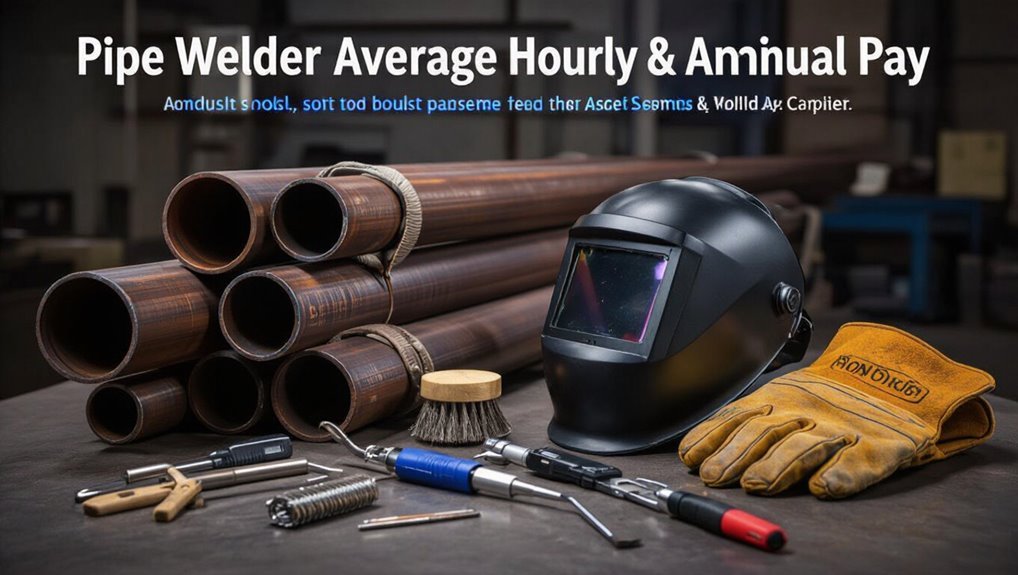
In the United States, pipe welders typically earn between $18 and $35 per hour, with national averages near $25–$28 per hour depending on experience, location, and certification; regional demand, project complexity, and industry sector (oil and gas, construction, utilities, shipbuilding) drive variations.
Annual pay ranges commonly span $38,000 to $72,000, with overtime, shift differentials, and union premiums increasing earnings. Certified specialists (e.g., ASME, API) and journeymen command higher rates. Employers may offer benefits—health, retirement, paid leave—that affect total compensation.
Compensation trends reflect economic cycles, infrastructure investment, and skilled labor shortages.
Entry‑Level Pipe Welder Salaries
At the start of a pipe welding career, pay typically sits at the lower end of the industry range—often between $14 and $20 per hour—reflecting limited experience and the need for supervised on-the-job training.
Entry-level wages vary by region, employer size, and sector; union apprenticeships may start slightly higher but include dues and training commitments. Compensation often increases with certifications (SMAW, GTAW basics) and demonstrated safety record.
Benefits such as health coverage, overtime eligibility, and tool allowances differ widely.
Initial earnings should be viewed alongside training opportunities and clear progression pathways that enable faster wage growth.
Journeyman & Senior Pipe Welder Rates
After gaining experience and certifications at the entry level, pipe welders typically move into journeyman roles where pay rises substantially—often ranging from about $25 to $40 per hour depending on trade, region, and industry demand. Journeymen handle complex piping systems, code welding, and supervision of apprentices, earning higher base wages plus overtime and site premiums.
Senior pipe welders, with specialized certifications and leadership experience, command top-tier rates, often $40 to $60+ per hour on high-demand projects or remote locations. Compensation packages may include health benefits, retirement plans, project completion bonuses, and employer-paid travel or per diem on long assignments.
Pay by Welding Process (TIG, MIG, Stick)
Wage differences often reflect the welding process required, with TIG and MIG commonly commanding higher pay for precision and speed in specialty piping.
TIG versus MIG pay scales vary by industry and qualification, while stick welding rates are frequently lower but can rise for challenging field or maintenance work.
Employers and contractors typically factor process complexity, certification, and working conditions into pay decisions.
TIG Versus MIG Pay
Comparing TIG and MIG pay reveals how process skill, precision requirements, and industry demand drive wage differences.
TIG welding usually commands higher wages because it requires finer control, greater training, and excels in thin materials and critical applications like aerospace and high-spec piping.
MIG pay tends to be lower on average; its faster deposition and ease of learning suit production, construction, and general fabrication where volume matters more than extreme precision.
Regional industry mix, certification level, and part complexity influence both rates.
Employers may pay premiums for TIG-certified pipe welders on projects demanding weld quality and metallurgical control.
Stick Welding Rates
Often overlooked in discussions of welding pay, stick welding rates reflect a balance of portability, versatility, and skill level that keeps them competitive in many sectors. Employers value stick welders for field repairs, maintenance, and construction where conditions are adverse. Pay varies with experience, certification, and industry—oil and gas, utilities, and structural work often pay premiums. Entry rates sit below TIG and MIG, but seasoned stick specialists earn comparable wages, especially with pipe experience. Market demand and hazard premiums raise hourly pay. Training and multi-process ability further increase earning potential in fluctuating regional markets.
| Process | Typical Hourly | Common Sectors |
|---|---|---|
| Stick | $18–$35 | Field repair |
| TIG | $20–$40 | Precision pipe |
| MIG | $17–$34 | Fabrication |
Certifications That Raise Pipe Welder Pay
With specific certifications, a pipe welder can command noticeably higher pay by demonstrating verified skill in industry-accepted techniques and safety standards.
Certifications validate proficiency, open specialized roles, and influence bid rates or employer offers.
Employers prize qualifications that reduce supervision and liability.
- ASME Section IX welding procedure and welder qualifications
- API 1104 for pipeline welding competence
- AWS D1.1 and D1.6 specialized for structural and stainless work
- NDT certifications (RT, MT, UT) for inspection and quality control
- OSHA or site-specific safety certifications for confined-space and hazardous environments
Targeted credentials translate directly into higher wage brackets and better job opportunities.
Apprentice Wages & Progression by State
Reflecting regional demand and cost of living, apprentice pipe welder wages and progression schedules vary markedly by state, typically starting at 40–60% of a journeyman’s rate and increasing through set increments as skill milestones and hours are completed. States with strong unions or high living costs often show faster step increases and higher top apprentice percentages; others use longer time-based ramps. Training, required logged hours, and state licensing influence timing. Employers may add completion bonuses or tool allowances. Comparison tables help visualize differences.
| State Example | Typical Progression |
|---|---|
| Texas | 40→50→60→75% |
| California | 45→55→65→80% |
| Ohio | 40→52→64→76% |
| New York | 50→60→70→85% |
Best‑Paying Industries for Pipe Welders
Higher pay for pipe welders is most commonly found in the oil and gas sector, where offshore and pipeline projects demand specialized skills and long hours.
Power generation industries, including nuclear and thermal plants, also offer premium wages for welders qualified to work on high-pressure and critical systems. Compensation in these sectors reflects the technical complexity, safety requirements, and project conditions.
Oil & Gas Sector
In the oil and gas sector, pipe welders command some of the industry’s highest pay due to the technical complexity, tight safety standards, and often remote or offshore locations of projects.
Employers pay premiums for certifications, pressure welding skills, and experience with corrosive service piping.
Work schedules and hazard pay boost earnings; union wages and contractor rates vary.
Demand persists for maintenance, new builds, and shutdowns, rewarding versatility.
- High hourly rates and overtime opportunities
- Premiums for offshore and remote assignments
- Value placed on ASME/ISO certifications
- Strong union presence in many regions
- Frequent short-term contracts with high pay
Power Generation Industries
Moving from oil and gas, power generation presents another top-paying arena for pipe welders, driven by large-scale infrastructure, strict codes, and long-term plant operations. Employers in utilities, nuclear, and renewables pay premiums for certification, experience, and safety compliance. Work involves high-pressure systems, corrosion-resistant alloys, and scheduled outages with overtime. Career progression can lead to lead welder, inspector, or maintenance supervisor roles. Regional demand and union presence influence wages. Benefits often include pension plans, health coverage, and training. The trade values precision and documentation, making certified, safety-conscious welders most marketable.
| Industry Type | Typical Materials | Pay Factors |
|---|---|---|
| Nuclear | Stainless, nickel alloys | Certifications, background checks |
| Utilities | Carbon steel, alloys | Overtime, outage demand |
| Renewables | Stainless, composites | Project funding, timing |
| Independent plants | Mixed | Local demand, unionization |
| Maintenance contractors | Various | Contract length, certifications |
Pay Differences: Fabrication vs. Fieldwork
Compared to shop fabrication, field pipe welding typically commands premium pay because of travel, variable conditions, and extended hours. Pay splits reflect risk, demand, and required versatility.
Fabrication shops offer steady schedules, controlled environments, and predictable overtime, often with lower base rates but consistent benefits. Fieldwork rewards mobility, adaptability, and certifications for higher compensation and per diem allowances. Employers price in project urgency and environmental challenges.
- Shop stability: regular hours, safer conditions
- Field premium: hazard pay, travel stipends
- Skill weight: multi-process certifications pay more
- Overtime frequency: higher in field projects
- Benefit variance: union shops often offer better packages
Geographic Pay Variations Across U.S. States
Across regions, pipe welder pay varies markedly due to local labor markets, cost of living, industry concentration, and regulation. Typical state differences reflect energy sector demand, urban construction, and state wage standards. High-paying states often pair strong demand with higher living costs; lower-paying states may offer fewer specialty projects. Employers adjust offers for relocation, overtime potential, and certifications required by state codes. Below is a representative snapshot of median hourly rates by state category.
| State | Median Hourly | Typical Drivers |
|---|---|---|
| Texas | $28.50 | Oil & gas |
| California | $34.00 | Construction, cost of living |
| Ohio | $24.00 | Manufacturing |
| Alaska | $36.00 | Remote projects |
Union vs. Nonunion Pipe Welder Pay
When union affiliation is present, pipe welders typically receive higher base wages, standardized benefit packages, and clearer pay scales tied to collective bargaining agreements. Unionized workers often enjoy predictable raises, stronger job protections, and access to apprenticeship programs; nonunion welders may have flexible pay negotiation and varied benefits depending on employers.
- Consistent wage schedules under union contracts
- Employer-provided health and retirement benefits common in unions
- Nonunion roles can offer performance-based pay
- Union jobs may require dues and adherence to work rules
- Nonunion positions sometimes allow faster local mobility
Both paths reflect trade-offs between security and flexibility.
Contract Types: Wage, Per‑Diem, and Stub
Contract types affect how pipe welders are paid, whether by a fixed wage, hourly rate, or through per‑diem and stub arrangements.
Wage versus hourly contracts determine base earnings and overtime eligibility, while per‑diem provides daily allowances for travel and living expenses.
Stub agreements combine elements of pay and reimbursements, altering take‑home income and tax treatment.
Wage Versus Hourly
In comparing pay structures for pipe welders, wage, per‑diem, and stub arrangements determine how compensation, benefits, and tax treatment are delivered.
Wage versus hourly distinctions affect predictability and overtime eligibility: wage often denotes a salaried or guaranteed rate, while hourly ties pay to recorded time. Employers choose structures based on project needs, compliance, and cost control. Workers weigh stability against overtime potential and benefit access.
Key considerations include:
- Overtime calculation and eligibility
- Pay consistency and budgeting
- Benefit eligibility (health, retirement)
- Timekeeping and payroll accuracy
- Tax withholding and reporting implications
Per‑Diem And Stub
Having compared wage and hourly models, attention shifts to per‑diem and stub arrangements, which blend daily allowances and temporary payroll setups to address travel, meal, and short‑term employment needs.
Per‑diem compensates pipe welders for non‑wage expenses while often exempting that portion from taxes if justified; it reduces taxable income but requires strict documentation.
Stub agreements (short‑term payroll or project‑based contracts) allow flexible hiring, rapid start/stop, and varied benefit eligibility.
Both can raise effective pay rates but may limit benefits like health insurance, retirement contributions, and unemployment coverage.
Employers and welders must evaluate tax, compliance, and long‑term security trade‑offs.
Overtime, Shift Premiums, and Pay Math
When calculating total compensation, overtime rules and shift differentials can materially change a pipe welder’s take-home pay.
Employers may pay 1.5× or 2× base rate for overtime, and night or weekend shifts often add a premium.
Calculating weekly pay requires tracking hours, premium types, and union clauses.
Benefits like paid overtime accruals and comp time affect effective hourly value.
- Base hourly wage
- Overtime rates (time-and-a-half, double time)
- Shift differential percentages
- Guaranteed minimums (contract language)
- Taxes and payroll withholdings
Accurate pay math prevents surprises and informs job-choice comparisons.
Travel Work: Per‑Diem, Stipends, and Taxes
For pipe welders who travel to remote sites, per‑diem payments, travel stipends, and the tax treatment of those amounts are central to evaluating real take‑home pay.
Employers commonly offer per‑diems for meals and incidentals, often non‑taxable if federal rules are met, and separate stipends for lodging or travel that may be taxable.
Flat daily rates simplify budgeting but vary by location and union agreements.
Welders should track receipts, assignment duration, and employer policies to determine taxable income and eligible deductions.
Consulting payroll and a tax advisor clarifies whether reimbursements reduce reported wages or create additional tax liability.
Offshore & Pipeline Work: Pay & Risks
Offshore assignments typically include hazard pay to compensate for remote locations and elevated safety risks.
Pipeline projects also carry specific dangers—confined spaces, heavy equipment, and unpredictable terrain—that can affect wages and insurance considerations. Employers and contractors usually factor these hazards into pay rates and contract terms.
Offshore Hazard Pay
Facing elevated danger and isolation, offshore pipe welders typically receive hazard pay that supplements their base wages to compensate for higher physical risks, harsh weather, and limited emergency access. This premium varies by employer, region, and contract length and often appears as a daily or hourly supplement.
It acknowledges increased PPE requirements, emergency evacuation complexity, and extended rotations offshore. Employers may combine hazard pay with travel, standby, and shift differentials to form total compensation.
Typical considerations include:
- severity of weather and sea conditions
- distance from shore and medevac time
- platform type and maintenance cycle
- regulatory environment
- contract duration and rotation length
Pipeline Project Hazards
Because pipeline projects combine remote locations, heavy equipment, and confined-space welding, they present a distinct set of hazards that directly influence compensation and safety planning.
Workers face trench collapses, struck-by incidents, and exposure to toxic gases or hydrocarbons during line digs and tie-ins.
Weather extremes and long transit times increase fatigue and incident risk.
Hot work near pressurized lines raises fire and explosion potential, requiring strict lockout/tagout and gas testing.
Marine crossings and right-of-way tensions add complexity.
Employers mitigate risk through training, permits, monitoring, PPE, and higher pay differentials to attract qualified, safety-conscious welders.
Contracting & Freelance Rates and Taxes
How should a pipe welder set hourly and project rates when contracting or freelancing? A pipe welder calculates rates by combining labor, overhead, equipment, certifications, insurance, and local market conditions. Tax obligations and recordkeeping are integral: estimate self-employment taxes, set aside quarterly payments, and track deductible expenses. Clear contracts define scope, payment terms, and change orders. Consider competitive positioning: specialize for higher rates or volume for steadier income.
- Calculate hourly burdened rate including benefits and overhead
- Research local market and competitor pricing
- Include material and equipment amortization in bids
- Set aside estimated taxes quarterly
- Use written contracts and invoices
Bonuses, Profit Sharing, and Incentives
Often tied to performance and company profitability, bonuses, profit sharing, and incentives provide pipe welders with variable pay that supplements base wages and can reward productivity, quality, safety, or tenure.
Employers may offer production bonuses for meeting weld counts or schedule targets, quality incentives for low rework rates, and safety bonuses tied to incident-free periods. Profit-sharing distributes a portion of company earnings, sometimes as annual lump sums or retirement contributions.
Incentive programs can be individual, crew-based, or site-wide, and often include clear metrics and payout schedules. Effective programs align welder behavior with company goals and improve retention without altering base pay.
Typical Benefits Packages for Pipe Welders
Typical benefits packages for pipe welders commonly include health and insurance coverage that addresses medical, dental, and vision needs.
Retirement offerings such as 401(k) plans or pensions are often part of compensation, sometimes with employer matching.
Paid leave policies — including vacation, sick days, and holiday pay — further contribute to overall job value.
Health And Insurance Coverage
Receiving thorough health and insurance coverage is a key component of many pipe welder compensation packages, reflecting the physical risks of the trade. Employers typically offer plans that mitigate medical expenses and support safety needs.
Coverage often varies by employer size, union status, and project type. Common elements include:
- Employer-sponsored medical insurance with varying premium contributions.
- Dental and vision plans to address routine and preventive care.
- Short- and long-term disability policies for injury-related income protection.
- Workers’ compensation tailored to on-site accident treatment and claims.
- Access to occupational health services and drug testing programs.
Retirement And Paid Leave
In many pipe welding roles, retirement plans and paid leave form a central part of benefit packages, helping workers manage long-term finances and downtime between projects.
Employers often offer defined-contribution plans such as 401(k)s with matching contributions, enabling gradual savings tied to tenure and pay. Pension plans remain available in some unionized settings.
Paid leave typically includes vacation accrual, sick days, and holiday pay; accrual rates can increase with seniority. Short-term disability and paid family leave appear in larger firms or under collective bargaining.
Clear vesting schedules, portability of retirement accounts, and documented leave policies are common expectations.
Health, Dental, and Retirement Expectations
Often, pipe welders can expect employer-sponsored health and dental plans, though coverage levels and eligibility vary by employer, union status, and job classification. Benefits often supplement wages and influence total compensation, with retirement options and contributions differing widely.
Typical expectations include:
- Employer-sponsored medical plans with varying premiums and networks
- Dental coverage ranging from basic to all-inclusive plans
- Employer retirement offerings: 401(k), pension, or union fund participation
- Employer matching, vesting schedules, and potential contribution limits
- Access to financial planning resources, especially through unions or larger contractors
Prospective welders should compare packages, not just base pay, when evaluating offers.
Paid Leave, Vacation, and Job Stability
The discussion turns to paid leave and vacation policies that affect overall compensation for pipe welders. Typical paid time off packages and vacation accrual rates vary by employer, seniority, and collective bargaining agreements.
Job security factors — such as project pipelines, certification demand, and economic cycles — influence how reliably those benefits are maintained.
Paid Time Off
Typically, pipe welders receive a mix of paid time off components—vacation days, sick leave, and sometimes personal or jury-duty leave—though amounts vary by employer, union contracts, and experience level.
Paid time off supports health, family needs, and recovery from workplace fatigue, influencing retention and morale. Employers may combine PTO into a single bank or separate categories; unionized roles often guarantee clearer provisions.
Job stability affects willingness to grant leave; project-based work can limit flexibility.
Common PTO elements include:
- Vacation allotments tied to tenure
- Sick leave for illness or injury
- Personal days for urgent matters
- Bereavement leave policies
- Jury and military leave protections
Vacation Accrual Rates
In many workplaces, vacation accrual for pipe welders is tied to tenure, with newer hires earning leave at lower rates that increase after specified service milestones.
Accrual typically follows hourly or pay-period formulas—e.g., hours earned per pay period or a set number of days per year—so actual time off scales with hours worked.
Employers often cap accruals and permit carryover limits or payout on termination per policy.
Union contracts and company handbooks spell out accrual tables, eligibility, and blackout periods.
Understanding these rules helps welders plan vacations, manage work-life balance, and anticipate earned paid leave.
Job Security Factors
Although paid leave and vacation policies vary, they constitute core elements that influence a pipe welder’s job security by affecting income continuity, scheduling flexibility, and attraction to employers during labor shortages.
Employer-provided leave, clear accrual schedules, and paid time off reduce turnover and financial gaps.
Union contracts, project-based work, and seasonal demand shape stability.
Health coverage tied to employment and seniority-based benefits further protect earnings.
Prospective hires assess total time-off value when comparing offers, and employers use robust leave packages to retain skilled welders.
- Paid leave consistency
- Vacation accrual clarity
- Union protections
- Project versus steady work
- Benefits linked to tenure
Tools & PPE: Employer‑Provided vs. You Buy
When comparing employer‑provided versus worker‑purchased tools and personal protective equipment (PPE), cost allocation, quality standards, and liability responsibilities determine who supplies what and why. Employers typically furnish site‑specific PPE, heavy equipment, and calibration‑sensitive tools; workers often provide hand tools, consumables, and preferred personal gear. Contract terms, union agreements, and safety policies define boundaries. Clear inventory, reimbursement, and maintenance rules reduce disputes. Workers should document purchases and inspect employer gear for certification. Below is a simple visual cue of common responsibilities.
| Employer supplies | Worker supplies |
|---|---|
| Hard hat | Wrenches |
| Respirator certified | Chipping hammer |
| Welding machine | Leather gloves |
| Fall arrest | Goggles |
Common Job Expenses That Reduce Net Pay
Many pipe welders see a portion of their gross pay go toward job-related expenses.
Common deductions include purchasing personal tools and specialized equipment not supplied by the employer.
Additional costs such as union dues and certification or renewal fees further reduce take-home pay.
Tools And Equipment
Beyond wages, pipe welders commonly absorb significant costs for tools and personal equipment that lower take-home pay. Employers sometimes supply basics, but many specialized items are bought and maintained by the worker. Regular replacement, calibration, and transport add recurring expense. Budgeting for quality gear affects net income, safety, and productivity.
- Welding machines and torches (repairable but costly)
- PPE: helmets, gloves, jackets, respirators
- Measuring and layout tools: calipers, levels, squares
- Consumables: electrodes, wire, shielding gas
- Toolboxes, hoists, and transport cases
These outlays reduce effective hourly earnings over a career.
Union/Certification Fees
Amid routine expenses, union dues and certification fees are recurring line items that directly shrink a pipe welder’s take-home pay. Membership dues support bargaining, benefits administration, and training funds but often cost a fixed monthly or percentage-based amount.
Certification renewals, testing fees, and travel for qualification exams add intermittent but predictable charges. Employers sometimes reimburse certifications, yet many welders pay out of pocket, reducing net earnings.
Budgeting for these costs is essential when evaluating job offers or total compensation. Over a career, cumulative fees can be substantial, influencing choices about union affiliation, continuing education, and job mobility.
How to Negotiate a Higher Pipe Welder Wage
When preparing to negotiate a higher wage, a pipe welder should document specific skills, certifications, and measurable job accomplishments that justify increased pay.
The welder compiles market research, recent performance metrics, and examples of cost-saving or safety improvements.
During negotiation, clear goals, flexible options, and professional tone improve outcomes.
Backup materials and timing—such as after a successful project—strengthen leverage.
- Present local pay data and job postings
- Show recent certifications and specialty qualifications
- Quantify productivity, reduced rework, or safety incidents
- Request concrete wage figures or step increases
- Propose alternatives: bonuses, overtime rates, or tool allowances
Training Paths That Lead to Higher Pay
By pursuing targeted training and credentials, a pipe welder can access higher pay through demonstrable skills and specialty qualifications. Formal apprenticeships, certifications (e.g., ASME, AWS), and specialty courses in stainless, TIG, or orbital welding increase marketability. Continuing education, safety and inspection training, and cross-training in pipefitting or NDT broaden opportunities. Employers reward verified competence with higher rates and project access. Networking and documented experience on complex systems lead to premium assignments. The following evokes the stakes and pride tied to advancement:
| Path | Emotion | Outcome |
|---|---|---|
| Apprenticeship | Confidence | Skill foundation |
| Certification | Pride | Higher pay |
| Specialty course | Focus | Niche work |
| Safety training | Security | Job access |
| Cross-training | Versatility | More bids |
Career Ladder: Welder → Foreman → Supervisor
On the jobsite, the progression from pipe welder to foreman and then supervisor follows measurable shifts in responsibility: technical proficiency and consistent quality build the foundation, leadership and job coordination define the foreman role, and planning, budgeting, and stakeholder communication characterize the supervisor.
Advancement rewards experience, problem-solving, and soft skills. Typical progressions include expanded oversight, scheduling, and conflict resolution. Compensation rises with accountability; management roles require broader project understanding. Career-minded welders seek mentoring, documentation skills, and reliable performance to move up.
- Mastery of welding techniques
- Crew leadership and safety enforcement
- Job sequencing and resource allocation
- Progress reporting to managers
- Cost-awareness and timeline control
Certifications With the Biggest Pay Boost
Frequently, certifications that demonstrate specialized techniques, code compliance, or supervisory ability deliver the largest salary increases for pipe welders. Certified Welding Inspector (CWI) and Certified Welding Engineer (CWEng) credentials signal inspection and engineering competence, often commanding higher pay.
ASME and API certifications confirm proficiency with pressure-vessel and pipeline standards, valued in energy and petrochemical sectors. Advanced certifications in orbital welding, exotic alloys, and stainless procedures open premium-rate opportunities for specialized projects.
Supervisor or foreman certifications and safety credentials like OSHA 30 expand qualifying roles and shift differentials. Employers prioritize verifiable, industry-recognized qualifications when allocating higher compensation and promotion.
Quick Checklist to Maximize Your Pipe Welder Income
To boost earnings efficiently, a focused checklist helps pipe welders prioritize the highest-impact actions. The checklist condenses proven steps into practical, actionable items that target skill, certification, and market value.
Regular review keeps goals aligned with industry demand and pay opportunities.
- Pursue high-value certifications (e.g., ASME, API)
- Master specialized processes (orbital, TIG, stainless)
- Track local market rates and negotiate per-project pay
- Build a safety and reliability record to access premium contracts
- Network with contractors and unions for referral and overtime opportunities
Following this checklist sharpens competitive advantage and increases consistent income potential.
Conclusion
Across the pipe welding field, pay varies widely: entry‑level welders may start near minimum wage while experienced journeymen or TIG specialists can exceed local averages. One striking statistic highlights this spread — certified pipe welders with ASME or API credentials often earn 20–35% more than uncertified peers. This gap underscores how certifications, advanced processes, and supervisory roles materially boost earnings, making targeted training and credentialing the most reliable path to higher income in the trade.