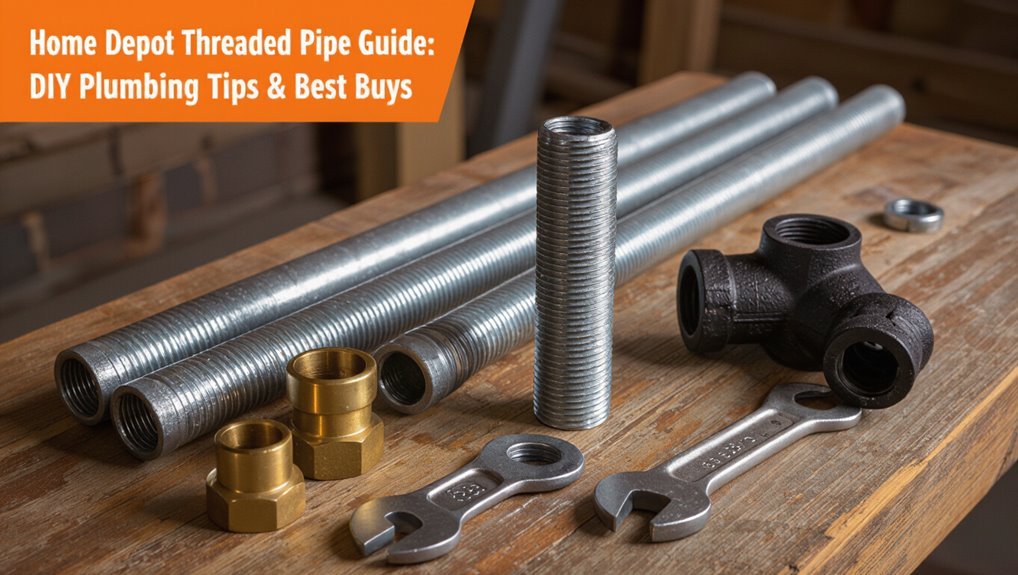
Home Depot Threaded Pipe Guide: DIY Plumbing Tips & Best Buys
Home Depot’s threaded pipe guide is an essential resource for DIYers looking to select compatible materials and sizes for plumbing projects. Key takeaways include:
- Material Options: Explore galvanized, black-iron, stainless steel, copper, and PVC pipes, each with their pros and cons for various applications (indoor, outdoor, gas).
- Thread Types: Understand the differences between NPT and BSP threads to ensure proper fittings.
- Sealing Methods: Learn how to use PTFE tape or pipe dope for secure seals.
- Essential Tools: Familiarize yourself with necessary tools like dies and wrenches for effective installation.
- Cost-Saving Tips: Discover bulk purchasing options and cutting tips to save money.
- Professional Help: Know when it’s best to call in a professional for complex jobs.
This guide provides practical advice tailored to your plumbing needs, ensuring reliable and efficient joins.
What Is Threaded Pipe : When to Buy It at Home Depot
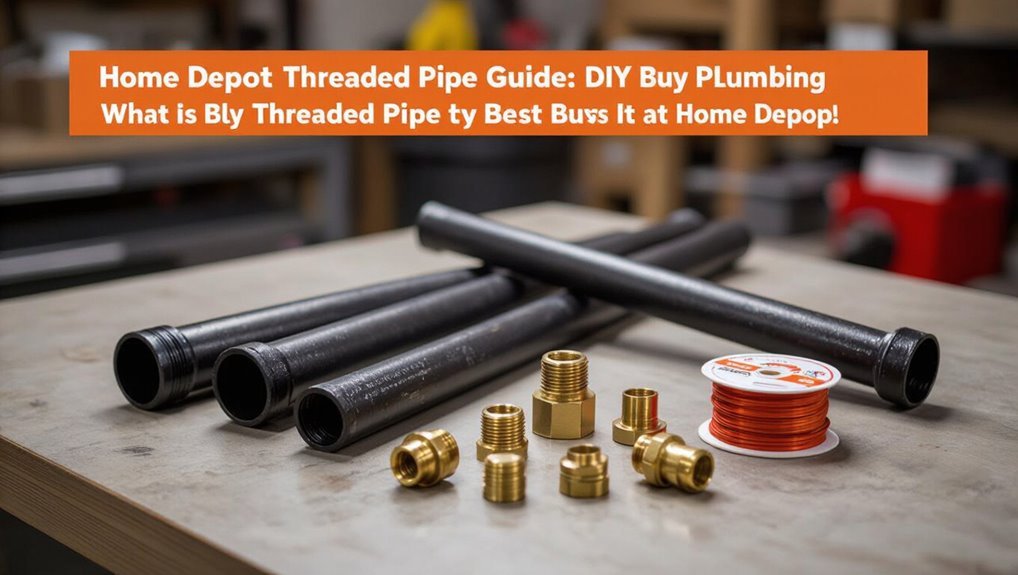
Threaded pipe is a length of metal or plastic tubing with helical grooves cut into its ends so fittings or other pipes can be screwed on for a secure, leak-resistant connection.
It serves repair, extension, and temporary routing needs where rigid joins are acceptable and disassembly may be required.
Home Depot stocking makes it convenient for quick replacements, emergency fixes, and small projects; buy when a threaded joint matches existing plumbing or when adapters and fittings are readily available.
It is chosen for accessibility and compatibility rather than aesthetics.
Customers should confirm thread type and system pressure before purchase to guarantee proper performance.
Threaded Pipe Basics: Materials, Sizes, and Thread Standards
Threaded pipe selection begins with material choice—commonly galvanized steel, black iron, brass, and PVC—each offering different corrosion resistance, pressure ratings, and suitability for potable water or gas.
Equally important are thread types (NPT, BSP, and straight threads) and standard sizes, which determine compatibility between fittings and guarantee a leak-free seal when paired with appropriate tape or sealant.
Understanding both material properties and thread standards helps a DIYer pick the right pipe and fittings for a given application.
Pipe Materials Overview
A clear grasp of threaded pipe basics helps hobbyists and pros choose the right material, size, and thread standard for a given plumbing task. The overview compares common materials—galvanized steel, black iron, brass, copper, and PVC—by durability, corrosion resistance, weight, and typical use. Selection balances longevity, cost, and environment (indoor, outdoor, potable water). Galvanized resists rust but is heavy; brass and copper suit fittings and potable lines; PVC offers light, cheap nonmetallic options. Correct material prevents leaks, contamination, and premature replacement.
| Material | Mood | Strength |
|---|---|---|
| Galvanized | Stoic | High |
| Brass | Warm | Medium |
| PVC | Light | Low |
| Copper | Reliable | Medium |
Thread Types & Sizes
Threads determine how pipes join, seal, and match fittings across systems, so understanding common types—National Pipe Thread (NPT), British Standard Pipe (BSP), straight (parallel) threads, and specialized garden or metric threads—is essential for correct selection.
The guide outlines thread form, taper vs parallel, and size conventions (nominal pipe size vs actual OD). Compatibility prevents leaks and cross-thread damage. Material choice influences thread durability and sealing method (tape, compound, or gasket). Check markings and measure pitch/diameter when uncertain.
- NPT: tapered, seal via thread interference
- BSP: parallel or tapered, common in UK
- Straight: requires gasket or O-ring
- Metric/garden: varied standards and pitches
Threaded Pipe Materials at Home Depot : Pros and Cons
Which materials offer the best balance of cost, durability, and ease of installation for home plumbing projects?
Home Depot stocks several common threaded pipe materials, each with trade-offs.
PVC and CPVC are lightweight, inexpensive, corrosion-resistant, and simple to join with solvent cement, but handle lower temperatures and pressures.
Copper is durable, bacteriostatic, and works well for water lines, yet costs more and requires soldering or press fittings.
Brass fittings provide excellent corrosion resistance and thread durability but are pricier.
PEX offers flexibility and ease of installation via crimp or push-fit fittings, though threaded connections are less common and require adapters.
Galvanized vs. Black-Iron vs. Stainless: Which to Use
After comparing PVC, copper, brass, and PEX for household threaded pipe use, attention turns to ferrous options: galvanized steel, black iron, and stainless.
Each suits different conditions: galvanized resists corrosion in mild environments but can pit; black iron handles gas lines and high temperatures but rusts if wet; stainless offers superior corrosion resistance and longevity at higher cost.
Choice depends on exposure, budget, and required lifespan. Consider maintenance, compatibility with fittings, and local code.
- Galvanized: economical, moderate corrosion resistance
- Black iron: durable for gas, poor for moisture
- Stainless: best corrosion resistance, costlier
- Match use-case, not preference
How to Choose the Right Pipe Size and Thread Standard
How should a homeowner or installer determine the correct pipe size and thread standard for a project? The decision relies on flow requirements, system pressure, and fixture inlet sizes.
Measure inside or nominal pipe diameter and consult manufacturer specifications; larger diameters reduce pressure drop.
Identify thread type—NPT, BSP, or machine threads—matching mating parts to avoid leaks. Use compatible materials and thread sealant appropriate for fluid and temperature.
For retrofit work, verify existing thread form with gauges or test fittings.
When in doubt, reference plumbing codes and product datasheets or consult a qualified plumber to guarantee compliance and safe performance.
Best Home Depot Threaded Pipe for Indoor Plumbing
The section compares common threaded pipe options available at Home Depot — black iron, galvanized steel, copper, and threaded PVC — and their typical indoor uses.
It evaluates material-specific corrosion resistance and suitability for potable water or HVAC systems.
It also outlines sizing conventions, fittings, and connection choices for reliable indoor installations.
Types Of Threaded Pipe
When selecting threaded pipe for indoor plumbing, homeowners must match material, thread type, and diameter to the specific application to guarantee a leak-free, code-compliant installation.
Common types stocked at Home Depot suit varied tasks and fittings. Choice depends on pressure, joint type, and system compatibility.
- Galvanized steel: traditional mains, strong structural support, requires anti-seize threads.
- Black iron: fuel and gas lines, coarse threads, used with pipe dope.
- Brass: fittings for potable water and corrosion-prone spots, machinable threads.
- NPT (tapered): standard for pressure-tight joints, requires thread sealant.
Select accordingly.
Material And Corrosion Resistance
Because threaded pipe will face different water chemistries and environmental exposures, material selection and corrosion resistance determine longevity and safety in indoor plumbing.
Copper, galvanized steel, stainless steel, brass, and CPVC each balance durability and cost differently. Copper and stainless resist corrosion and biofilm, making them preferred for potable lines; brass fittings offer good mating properties and corrosion resistance for valves and connectors.
Galvanized steel resists impact but can rust and trap buildup over time, so its use is declining. CPVC resists chemical corrosion and is lightweight for hot and cold lines.
Compatibility with water chemistry, local code, and designated use guides selection.
Sizing And Connection Options
Picking the correct pipe size and connection type follows naturally from material choice and expected corrosion resistance, since flow capacity, pressure handling, and joint longevity all interact with those properties.
The guide outlines sizing norms (nominal vs. actual), pressure ratings, and common fittings used indoors.
Threaded black iron, galvanized, and brass have different thread standards and sealant requirements; PVC and CPVC use solvent or threaded adapters.
Proper выборка based on fixture demand, runoff velocity, and service pressure; installers match thread type (NPT vs BSP), thread sealant, and connection fittings to avoid leaks and galvanic issues.
- Match nominal diameter to desired flow and head loss
- Verify NPT threads and taper specifications
- Select compatible sealant or tape for material
- Use dielectric fittings where dissimilar metals join
Best Home Depot Threaded Pipe for Outdoor and Irrigation Use
For outdoor and irrigation projects, selecting a threaded pipe from Home Depot requires balancing durability, corrosion resistance, and ease of joining to emitters and valves.
Preferred options include PVC schedule 40 for affordability and chemical resistance, CPVC where higher temperature tolerance is needed, and galvanized steel for heavy-duty, impact-resistant runs.
Brass fittings and nipples provide reliable corrosion resistance at connection points.
For underground or constantly wet locations, consider polyethylene (MDPE) with threaded connector fittings.
Thread sealant choices and compatible adapters matter; choose products rated for potable water when applicable and check UV resistance for exposed runs.
Cutting, Threading, and Deburring Threaded Pipe
When preparing threaded pipe for installation, precision in cutting, threading, and deburring determines fit, seal integrity, and flow performance.
The process begins with accurate measuring and square cuts using a pipe cutter or saw; clean, even ends reduce misalignment.
Threading requires the correct die or tap size matched to pipe material and consistent rotation to form full threads.
Deburring removes internal and external burrs that cause leaks, flow restriction, or sealing issues.
Safety glasses and lubrication protect tools and operators.
- Measure twice, cut once for proper engagement
- Use correct die/tap for pipe material
- Remove all burrs inside and out
- Inspect threads for uniformity
How to Seal Threaded Pipe Joints: Tape, Dope, and Torque Tips
How should threaded pipe joints be sealed to guarantee a leak-free connection?
The guide recommends cleaning threads, inspecting for damage, and choosing the correct sealant: PTFE tape for water and low-pressure gas, pipe dope for metal-to-metal connections and higher temps, or a combined approach where appropriate.
Apply tape clockwise three to five wraps, covering threads but not the first thread. For compound, use an even thin coat on male threads.
Tighten with proper wrenches to specified torque—avoid over-tightening to prevent distortion.
Test under pressure and re-tighten or re-seal if any seepage appears.
Quick DIY Repairs With Home Depot Threaded Pipe Parts
After sealing techniques and torque were covered, attention turns to practical repairs using threaded pipe parts from Home Depot.
The guide outlines straightforward fixes suitable for homeowners: replacing short corroded sections, swapping out faulty nipples, installing compression adapters, and using unions for temporary work.
Emphasis is on correct part selection, matching pipe material and thread type, and ensuring shutoff and pressure relief before work.
Simple tool lists and part codes speed the job. Common small repairs can be completed with minimal downtime when the right components and basic safety steps are observed.
- Replace corroded sections
- Swap faulty nipples
- Install compression adapters
- Use unions for temporary joins
Common Installation Mistakes and How to Avoid Them
Common installation mistakes often stem from incorrect thread engagement, overtightening, and improper use of sealants.
Each error can cause leaks, damaged fittings, or failed joints when pressure is applied.
Identifying correct thread length, using proper torque, and applying the right sealant technique prevents most common failures.
Incorrect Thread Engagement
Incorrect thread engagement occurs when pipe threads are not fully and evenly meshed, producing leaks, cross-threading, or stripped fittings.
The article explains causes, detection, and correction steps in neutral, practical terms without covering overtightening or sealant specifics.
Inspect threads for damage, start fittings by hand, and align components before finalizing connections. When engagement is imperfect, disassemble, clean, and re-evaluate thread condition; replace damaged parts.
- Verify thread profiles match (NPT vs. BSP) to prevent mismatch.
- Use gentle hand-start to confirm smooth meshing.
- Replace fittings with nicks or flattened crests.
- Test assemblies under low pressure before regular use.
Overtightening And Sealant Errors
Many installations show failures caused by overtightening and improper use of sealants, two separate but often linked mistakes that undermine joints and create leaks.
Excess torque strips threads, deforms fittings, and cracks thin-walled nipples; hand-tight plus one to two wrench turns is usually sufficient.
Using too much PTFE tape or applying pipe dope to tapered threads can push material into the line or prevent proper metal-to-metal contact.
Incompatible sealants damage seals and plastics.
Clean threads, apply appropriate tape directionally (two to three wraps), choose the correct compound, and test under pressure.
Replace damaged parts rather than forcing connections.
Tools at Home Depot You’ll Need for Threaded Pipe Jobs
A compact set of tools from Home Depot makes threaded pipe work faster and more reliable: a pipe wrench and adjustable wrench for tightening, a thread-cutting die or die stock for restoring or cutting new threads, Teflon tape and pipe dope for sealing joints, a tubing cutter or hacksaw for clean cuts, and a deburring tool to remove burrs before assembly.
Recommended items focus on accuracy, sealing, and safety:
- Quality wrenches prevent rounding and allow controlled torque.
- A die restores damaged threads, avoiding leaks.
- Sealants complement mechanical fit for longevity.
- Cutting and deburring tools guarantee square, clean joins.
Save on Threaded Pipe: Bulk Buying, Cuts, and Return Tips
When planning a threaded pipe purchase, the homeowner often saves by buying in bulk and estimating footage to minimize cost per foot.
Proper cutting and threading—either with owned tools or a shop service—preserves material and fitting compatibility.
Before buying, checking store return and refund policies helps avoid wasted expense on unused or miscut lengths.
Buy In Bulk
Although upfront costs rise, buying threaded pipe in bulk usually lowers the cost per foot and simplifies sourcing for multiple projects.
The buyer benefits from consistent material, fewer shopping trips, and better negotiation leverage with suppliers. Storage, inventory tracking, and project planning become priorities to avoid waste.
Consider return policies and keep receipts; unused lengths may be refundable if undamaged and within store rules. Balance order size against storage space and project timelines to prevent overbuying.
- Reduced unit price stretches budget
- Consistent grade and finish across projects
- Plan storage to prevent corrosion or damage
- Verify returns and restocking fees beforehand
Cutting And Threading
If pipe will be cut and threaded on-site, planning those operations as part of the bulk-buy decision reduces waste and lowers overall cost per fitting.
Buyers should measure runs precisely, allow extra for threading loss, and choose lengths that minimize cuts. A proper pipe cutter yields square ends; a quality die head or bench threader produces consistent threads and avoids leaks.
Thread sealant compatibility and thread type (NPT) must be verified before cutting. Marking cut locations, deburring, and cleaning threads prevent assembly problems.
Renting threading tools can be economical for occasional jobs; practice on scrap before working on final pieces.
Return And Refunds
Returns and refunds for threaded pipe purchases hinge on clear documentation and timing: buyers should retain receipts, order confirmations, and photos of any defects, and check supplier policies for restocking fees and time limits before committing to bulk orders.
The guide recommends inspecting shipments immediately, confirming cut lengths before purchasing cutting services, and understanding return windows for custom-cut items. Communication should be logged.
When disputes arise, escalation paths and warranty details matter. Practical tips reduce waste and cost.
- Keep original packaging and labels for returns
- Verify SKU and measurements on delivery
- Photograph damage and record dates
- Ask about bulk-order return exceptions
When to Call a Pro vs. DIY for Threaded Pipe Work
When should a homeowner tackle threaded pipe work and when is a professional warranted?
Simple repairs—tightening joints, replacing short sections, or swapping readily accessible fittings—are reasonable DIY tasks for those with basic tools and comfort with pipe sealant and leak testing.
Homeowners should call a pro when work involves hidden supply lines, gas lines, mains, structural modifications, complex threading or cutting, persistent leaks after repairs, permits, or code compliance.
Professionals are also advised for projects demanding pressure testing, soldering or brazing, and when improper repair risks major water damage.
Safety and long-term reliability justify hiring licensed plumbers.
Where to Find Matching Threaded Pipe Fittings and Accessories at Home Depot
Home Depot stocks a broad selection of matching threaded pipe fittings and accessories across several departments, making it straightforward to locate compatible pieces for repairs or projects.
Shoppers find pipes, couplings, adapters, and sealants grouped by material and size; signage and SKU labeling aid matching. Staff in Plumbing and Hardware can verify thread type and suggest thread tape, pipe dope, or replacement nipples.
Online listings include size charts and cross-reference tools; in-store bins hold common sizes and specialty fittings. Shoppers should verify dimensions and thread standards before purchase to avoid returns or mismatches.
- Check material compatibility
- Match thread pitch and size
- Use cross-reference charts
- Ask plumbing department staff
Conclusion
Threaded pipe knowledge equips the weekend plumber with a reliable toolkit: understand materials, thread standards, and correct sizing, and use Home Depot’s selection and tools wisely. Like a well-oiled machine, careful planning and the right fittings keep installations leak-free and durable. For complex systems, professionals remain the safer choice, but many straightforward repairs and projects are perfectly within reach when homeowners pair clear instructions with quality parts and sensible safety practices.