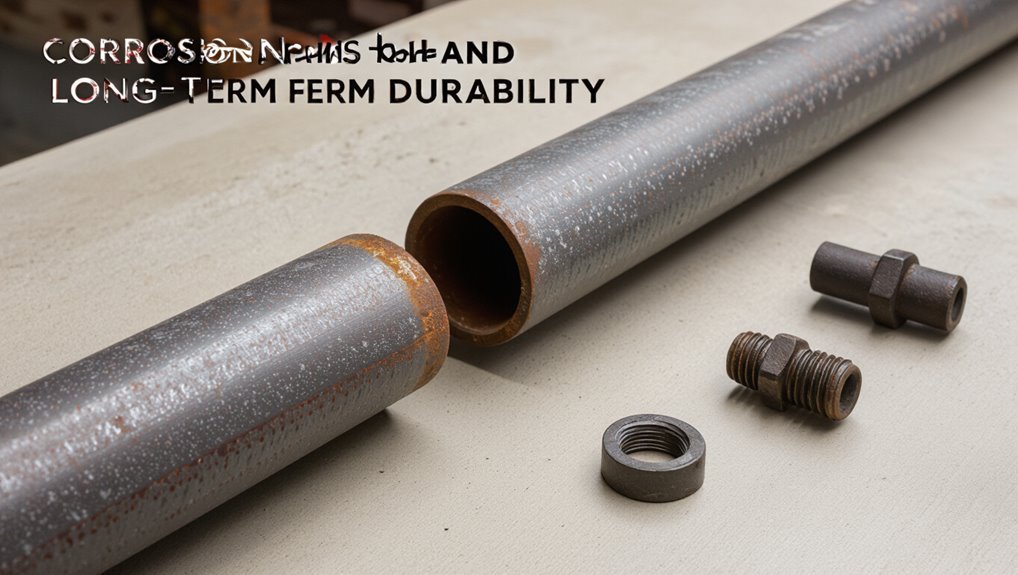
Can You Use Galvanized Pipe for Gas? Pros, Codes & Safety Tips
Galvanized pipe can be used for natural gas and LP lines, but its use is increasingly discouraged due to potential risks. While it resists surface rust, it can corrode internally, leading to flow restrictions and appliance issues as the zinc coating deteriorates. Modern building codes and insurance policies now favor black iron or approved CSST, and inspectors often recommend replacing galvanized pipes if corrosion or leaks are detected.
Key Takeaways:
- Galvanized pipe is acceptable for above-ground gas lines in some areas.
- It can corrode internally, affecting performance and safety.
- Modern standards prefer black iron or CSST.
- Regular inspection and potential replacement are advised for safety.
Search Intent and Best Content Format for This Question
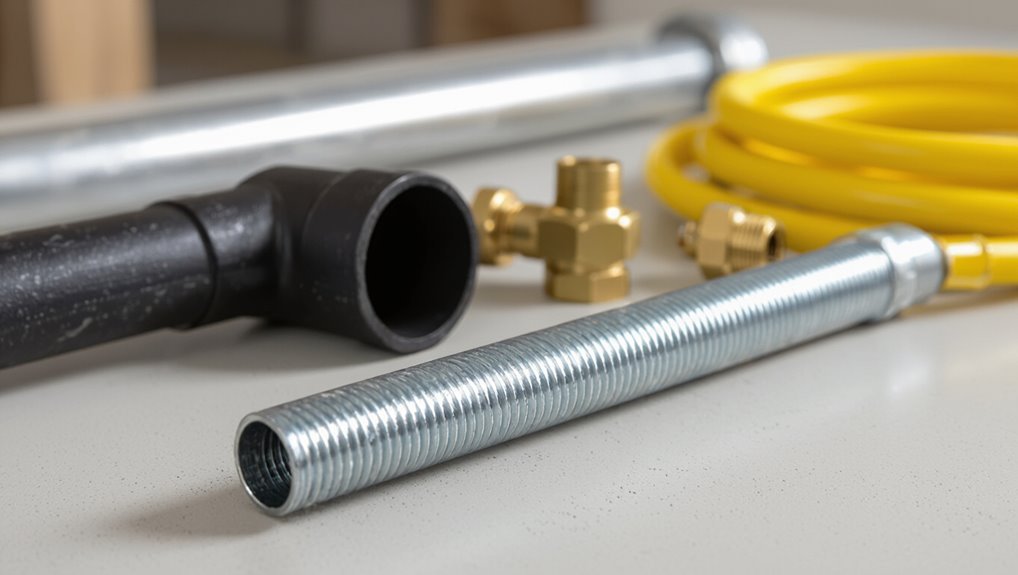
What does a user searching “Galvanized Pipe for Gas” intend to find?
The user seeks clear guidance: whether galvanized pipe is suitable for gas lines, relevant code requirements, safety risks, and practical alternatives.
They expect authoritative sources, concise summaries, and actionable steps—inspection cues, certification terms, and when to consult a licensed professional.
Ideal content mixes a brief verdict, code citations, summarized pros and cons, and a short checklist for homeowners and contractors.
Visual aids (diagrams, comparison table) and linked resources (code texts, safety standards, certified installer directories) improve usefulness and trustworthiness without overwhelming the reader.
Quick Answer: Can You Use Galvanized Pipe for Gas?
Can galvanized pipe be used for gas lines? The short answer: sometimes.
Galvanized steel was historically used for natural gas and LP lines and remains acceptable in some jurisdictions for above-ground applications.
However, concerns include internal corrosion, reduced gas flow from buildup, and potential code restrictions; many modern codes prefer black iron or approved CSST and piping materials.
Compliance with local gas codes, utility company rules, and licensed professional inspection is required.
For any existing galvanized gas piping, verification of condition, fittings, and leak testing by a qualified professional is essential before continued service or modification.
Should You Replace Galvanized Gas Piping Now?
When evaluating whether to replace galvanized gas piping now, the primary considerations are corrosion and the resulting increased leak risk.
The current code compliance status of the existing piping and any local inspection findings will influence urgency.
Homeowners and professionals must weigh replacement cost against the potential safety and liability risks of keeping the old piping.
Corrosion And Leak Risk
Although galvanized steel was once a common choice for gas piping, its zinc coating can deteriorate over decades, leaving the pipe vulnerable to corrosion that increases leak risk. Inspection often reveals pitting, internal scale buildup, or external rust where coatings failed. Corroded joints and hidden sections near soil or moisture sources are highest risk. Replacement decisions weigh remaining wall thickness, leak history, and appliance sensitivity. Interim measures include targeted repairs and monitoring while planning replacement. The table summarizes typical findings and implications.
| Condition found | Implication |
|---|---|
| Pitting | Local weakness, potential leak |
| Scale buildup | Flow restriction, detection difficulty |
| External rust | Accelerated deterioration |
| Joint corrosion | Immediate leak risk |
Code Compliance Status
Many jurisdictions now treat aged galvanized steel gas piping as noncompliant or conditional, prompting owners to contemplate replacement to meet current codes and insurer requirements.
Authorities often reference modern standards favoring black iron, CSST, or approved flexible piping; local amendments and inspection findings influence enforcement.
Inspectors may require evaluation when renovations occur, when corrosion is evident, or when leaks are suspected.
Insurance policies sometimes mandate updates to maintain coverage.
Compliance options include documented inspection, targeted repairs, or full replacement to approved materials.
Property owners should consult local code officials and certified gas contractors to determine required actions and timelines.
Replacement Cost vs. Risk
Following code assessments and possible enforcement actions, property owners must weigh the financial burden of replacing galvanized gas piping against the safety, liability, and insurance risks of leaving it in service.
Decisions hinge on pipe condition, age, local code interpretations, and documented corrosion or leaks. Immediate replacement is prudent when inspections reveal pitting, internal scale that restricts flow, or active failures.
Deferred replacement may be acceptable with frequent professional monitoring, pressure testing, and clear disclosure to buyers or insurers.
Cost estimates should include material, labor, permit and restoration costs versus potential expenses from leaks, claims, regulatory penalties, and lost occupancy.
What Is Galvanized Steel Pipe and How It’s Made
Galvanized steel pipe is produced by forming steel tubing and applying a protective zinc layer to the surface.
The zinc coating is typically applied through hot-dip galvanizing or electroplating, methods that bond zinc to the steel to inhibit oxidation.
These coatings provide corrosion resistance that extends service life in gas piping applications, though performance varies with coating thickness and environmental exposure.
Manufacturing Process Overview
A typical galvanized steel pipe begins as a carbon-steel tube that undergoes cleaning, surface preparation, and zinc coating to provide long-term corrosion resistance.
Manufacturing progresses through forming, welding, heat treatment, sizing, and inspection. Steel strip or billet is rolled and seam-welded or cast and pierced, then straightened and cut to length.
Welds are flash-removed and pipes are mechanically tested for integrity. Heat treatment relieves stresses and refines microstructure.
Dimensional finishing guarantees consistent wall thickness and diameter. Final quality control includes pressure testing, nondestructive examination, and marking before packaging for distribution and installation.
Zinc Coating Application
Several controlled steps apply the zinc layer that protects steel pipe from corrosion: surface cleaning to remove mill scale, oil, and oxides; fluxing or activation to promote metallurgical bonding; immersion in molten zinc (hot-dip galvanizing) or electroplating for thinner, more uniform films; and post-coating treatments such as cooling, passivation, and inspection.
The process emphasizes consistent temperature, dwell time, and handling to guarantee adhesion and coverage. Quality checks measure coating thickness, adhesion, and surface finish. Visual and destructive tests may be used to verify metallurgical continuity. Typical installations follow specifications to achieve predictable, durable coatings.
- Cleaned, bright surface
- Fluxed, active steel
- Molten zinc bath
- Cooled, inspected pipe
Corrosion Resistance Properties
Because a continuous zinc layer sacrificially protects the underlying steel, galvanized pipe resists common forms of corrosion far longer than bare carbon steel in similar environments.
Galvanization provides both barrier and cathodic protection: the zinc film blocks moisture and oxygen while corroding preferentially if breached.
Performance varies with coating thickness, environmental aggressiveness, and exposure to chlorides, sulfides, or acidic condensates often found in industrial or coastal settings.
Over time the zinc weathers to form stable zinc carbonate, slowing degradation.
Regular inspection, appropriate coating specifications, and consideration of operating conditions determine service life and suitability for gas distribution applications.
How Galvanization Changes Corrosion Behavior in Gas Service
Galvanization alters the corrosion behavior of steel piping in gas service by providing a continuous zinc barrier that slows electrochemical attack and by introducing galvanic protection where the zinc preferentially corrodes instead of the underlying steel.
Over time the zinc forms compact corrosion products that seal microdefects, reducing localized pitting from trace moisture and contaminants common in gas lines. When breaches occur, sacrificial action confines corrosion to the coating rather than the steel substrate.
Mechanical damage, hydrogen embrittlement potential, and differential aeration cells remain considerations; coating integrity and inspection frequency govern long-term performance.
- Shiny zinc layer flaking to reveal dull corrosion crust
- Tiny pits halted by dense zinc salts
- Galvanic fronts retreating toward coating edges
- Isolated bare steel zones after prolonged abrasion
How Gas Piping Differs From Water Piping
Gas piping differs from water piping primarily in the properties of the conveyed medium and the resulting design priorities: gas systems emphasize leak tightness, low internal moisture, and resistance to pressure pulsations, whereas water systems prioritize continuous flow, corrosion control from dissolved salts and oxygen, and contamination prevention.
Gas lines use fittings and joints rated for sealing under low viscosity and compressibility, rely on pressure regulation and ventilation, and tolerate thinner internal films without biological growth.
Water systems require material choices and coatings to limit galvanic and uniform corrosion, accommodate higher sustained pressures, and prevent microbial contamination and scale that impede flow and safety.
When Galvanized Pipe Was Commonly Used for Gas
Having outlined the functional differences between gas and water piping, the historical use of galvanized pipe for gas service can be examined.
From the late 19th century through mid-20th century, builders and utilities often selected galvanized steel because it resisted visible rust, was widely manufactured, and fit existing threading practices.
Galvanized lines appear in older homes, apartment buildings, and some early commercial installations.
- Narrow streets with exposed pipe runs along brick facades.
- Basements cluttered with threaded joints and valves.
- Utility maps noting mains of iron or galvanized steel.
- Mechanical rooms with mixed-era equipment and legacy piping.
Why Homeowners and Inspectors Question Galvanized Pipe for Gas
Homeowners and inspectors raise concerns about galvanized pipe for gas primarily because corrosion and internal scaling can create leaks and compromise combustion appliance performance, posing direct health and safety risks.
They also question its use when current building codes and gas industry standards increasingly favor materials with proven long-term reliability and clear certification.
These combined safety and compliance worries often prompt further inspection or replacement recommendations.
Health And Safety Concerns
Because galvanized pipe can corrode and accumulate scale over time, inspectors and homeowners often view it with caution when it’s used for natural gas lines.
Concerns center on leak risk, reduced flow, and contamination that can compromise appliances and indoor air quality. Attention focuses on visible corrosion, joint integrity, and signs of past repairs.
Mitigation relies on inspection, monitoring, and prompt replacement when deterioration appears.
- Flaking interior scale narrowing passages like clogged arteries.
- External rust at fittings hinting at weakened seals.
- Hairline leaks producing faint sulfurous or rotten-egg odors.
- Appliance malfunction from inconsistent gas pressure.
Code Compliance Issues
While galvanized pipe was once commonly installed for fuel gas, evolving codes and standards have increasingly restricted its use for gas service, prompting scrutiny from inspectors and owners alike.
Authorities cite corrosion, thread integrity, and potential zinc flake debris as reasons to prefer listed gas piping like CSST or black iron. Many jurisdictions prohibit new galvanized gas runs; others allow existing installations if proven leak-free and properly supported.
Inspectors examine labeling, joint condition, and recent modifications against current fuel gas codes (NFPA 54/IRC) and local amendments. Noncompliant findings can require repair, replacement, or documented variance to satisfy safety and insurance requirements.
Risks of Using Galvanized Pipe With Natural Gas
Several key risks accompany the use of galvanized pipe for natural gas systems, primarily stemming from internal corrosion, scale buildup, and compromised joint integrity.
Galvanic corrosion can produce irregular flaking that restricts flow and hides leaks. Scale reduces bore diameter and impedes meter accuracy. Zinc and corrosion byproducts may foul appliances and burners, increasing maintenance and carbon-monoxide risk.
Threaded zinc-coated joints can seize or crack under thermal cycling, creating leak paths. Inspection and replacement are often costlier than initial savings, and many authorities discourage galvanized pipe for natural-gas distribution in occupied structures.
- Narrowed flow from internal scale buildup
- Hidden leaks from flaking corrosion
- Appliance fouling and burner inefficiency
- Seized or weakened threaded joints
Risks of Using Galvanized Pipe With Propane/LP Gas
When used for propane/LP gas, galvanized pipe poses specific hazards distinct from those with natural gas: internal corrosion and zinc flaking can constrict flow and obscure leaks. Dislodged particles may clog regulators and burner jets, and threaded, zinc-coated connections are prone to seizing or cracking under thermal cycling, increasing the likelihood of concealed leaks and appliance malfunction.
Propane’s higher operating pressures and denser vapors amplify mechanical stress and leak consequences. Chemical reactions between propane contaminants and zinc can accelerate coating degradation.
Inspection difficulty rises where fumes settle in low spots. These factors make galvanized pipe an unsuitable choice in many propane installations.
How Internal Zinc Buildup Affects Gas Flow and Regulators
Zinc can flake from the interior of galvanized pipe and accumulate as particulate deposits that restrict gas flow and alter pressure dynamics.
Over time these deposits may reach regulators, where they can clog or abrade seats and diaphragms, impairing regulator response.
The combined effects of reduced bore and regulator corrosion increase the risk of pressure loss and unpredictable gas delivery.
Zinc Accumulation In Lines
Internal buildup of zinc oxides and corrosion products inside galvanized gas piping can constrict flow passages, increase pressure drop, and interfere with regulator sensing, leading to reduced appliance performance and possible regulator hunting.
Over time, particulate accumulation narrows internal diameters, creating turbulence and uneven pressure downstream. Small flakes can lodge at fittings or orifices, causing intermittent flow loss.
Visualizing deposits helps assess risk:
- Narrowed tunnel: pipe bore coated with layered scale.
- Gravel-like flakes: loose particles migrating downstream.
- Choked orifice: deposits at appliance inlet.
- Sluggish regulator: sensing line partially blocked, causing oscillation.
Regulator Corrosion Effects
Corrosion-driven deposits within galvanized gas lines degrade regulator performance by altering pressure signals and restricting sensing passages.
Internal zinc flakes and particulate accumulate at diaphragms, pilot orifices, and vent tubes, causing inaccurate downstream pressure readings and unstable regulation.
Flow is reduced as deposits narrow internal passages, increasing velocity and turbulence that can trip safety shutoffs.
Regulators exposed to variable blockage may oscillate, hunt, or fail to maintain setpoints, risking appliance malfunction or overpressure.
Maintenance intervals shorten; inspection may reveal metallic sludge.
Mitigation requires filtration, periodic flushing, or replacement with compliant materials to prevent repeated regulator fouling.
How Threaded Galvanized Fittings Perform Under Gas Pressure
When subjected to typical residential and light commercial gas pressures, threaded galvanized fittings generally provide reliable sealing and structural integrity. However, performance depends on thread quality, proper joint assembly, and ongoing maintenance. Poorly cut threads, inadequate thread sealant, or mechanical damage can lead to leaks or premature failure.
Thread engagement depth, concentricity, and correct taper guarantee metal-to-metal contact and backing by pipe dope or PTFE tape. Periodic inspection for corrosion at joints and torque verification preserves integrity. Installation by qualified personnel minimizes cross-threading and over-tightening.
- Close-up of clean, well-tapered threads
- Properly applied thread sealant
- Correct torque using a wrench
- Regular inspection of joint areas
Common Failure Modes of Old Galvanized Gas Pipe
Many aging galvanized gas pipes fail from a predictable set of mechanisms tied to material degradation, installation flaws, and external damage.
Internal corrosion and pitting occur as zinc coating erodes, exposing steel to rust and creating leaks or reduced wall thickness.
Threaded joints loosen or gall, leading to seepage at fittings.
Mechanical damage—dents, impact, or vibration—induces stress fractures.
Galvanic corrosion arises where dissimilar metals contact, accelerating decay.
Sediment and scale build-up restrict flow and hide defects.
Freeze-thaw cycles and thermal expansion fatigue joints and bends.
Cumulative small failures often precede sudden leaks, posing safety and serviceability concerns.
How to Visually Inspect Galvanized Gas Pipe Safely
Before any hands-on work begins, a visual inspection of galvanized gas pipe should be performed from a safe distance and with an awareness of obvious hazards.
This initial survey focuses on identifying signs of leaks, severe corrosion, loose fittings, mechanical damage, and improper modifications without touching the system.
The inspector notes discoloration, flaking, misalignment, and added adapters or T‑joins that look amateurish.
Documenting locations and photographing issues for a qualified technician is advised. Signs that merit immediate professional attention are prioritized.
- Flaking zinc and deep pitting
- White powdery deposits at joints
- Bent or crushed runs
- Nonstandard fittings and threads
When to Use a Leak Detector on Galvanized Gas Lines
When visible corrosion, pitting, or other physical damage appears on galvanized gas pipe, a leak detector should be used to verify containment.
Similarly, the appearance of a rotten-egg odor or the sound of hissing or bubbling warrants immediate use of a detector.
Prompt testing helps determine whether professional repair or shutoff is required.
Visible Corrosion Or Damage
Visible corrosion, pitting, flaking, or any obvious mechanical damage on galvanized gas piping are clear indicators that a leak detector should be used immediately.
The presence of visible deterioration suggests coating failure, crevice exposure, or stress points that compromise integrity. Inspectors should prioritize affected runs, joints, and low spots where moisture collects.
Use a calibrated detector and follow safe shutdown and ventilation procedures if readings rise. Document findings and isolate the section until professional repair or replacement occurs.
Prompt detection limits risk and informs repair strategy.
- Rusted elbow with flaking zinc
- Deep pitting along a straight run
- Dent with torn coating
- Corroded threaded joint
Unusual Odor Or Sound
A distinct rotten-egg smell, hissing, or a faint rushing sound near fittings or along runs indicates a potential gas leak and warrants immediate use of a calibrated leak detector. The inspector or homeowner should scan joints, valves, and threaded connections on galvanized lines, following manufacturer sensitivity settings. If detector confirms elevated readings, evacuate, shut off the supply, and contact the gas utility and a qualified technician. Periodic checks after disturbances, renovations, or unusual odors guarantee early detection. Never rely solely on scent; instruments quantify risk and guide repairs.
| Location | Action |
|---|---|
| Fittings | Scan closely |
| Valves | Test while closed |
| Runs | Sweep lengthwise |
| After work | Recheck |
How to Pressure-Test Galvanized Gas Lines Safely
Before applying pressure, the technician isolates the galvanized gas line from appliances and vents, secures all caps and test fittings, and verifies that valves controlling gas flow are in the closed position.
The technician connects a calibrated gauge and a hand pump, pressurizes slowly to the required test pressure, and monitors for steady readings.
Soap solution checks joints for bubbles; any change prompts depressurization and repair.
After the hold period, pressure is released, fittings are removed, and the system is restored to service.
Documentation of pressure, duration, and observations is completed.
- Tight wrench turning a cap
- Gauge needle steadied
- Soap bubbles forming
- Technician noting readings
Gas Codes That Mention Galvanized Gas Pipe
Several model codes and national standards reference galvanized steel pipe in gas applications, specifying permissible uses, installation practices, and material limitations.
Applicable documents include the International Fuel Gas Code (IFGC), various plumbing and mechanical codes, ASTM specifications for steel pipe and coatings, and ANSI standards addressing fittings and joints.
These codes often restrict galvanized pipe for specific fuel types, pressure ratings, and buried or concealed use, and they require compatible fittings and proper sealing techniques.
Jurisdictional amendments influence acceptance; consequently, installers must consult local code editions, referenced standards, and authority having jurisdiction rulings before selecting galvanized pipe for gas systems.
NFPA 54 (National Fuel Gas Code) Guidance for Galvanized Pipe
When referenced in NFPA 54, the National Fuel Gas Code provides specific guidance on the use of galvanized steel pipe in fuel gas systems, clarifying material acceptability, joint methods, and restrictions for particular fuel types and service conditions.
The code permits galvanized pipe for some natural gas applications but warns about corrosion, compound compatibility, and prohibited use with certain fuels or appliances.
Installers must follow listed fittings, approved joining methods, and sealing practices. Inspection and testing requirements are emphasized to guarantee integrity and detect leaks before service.
- Exterior run with protective coatings
- Indoor low-pressure supply lines
- Connections near condensate sources
- Prohibited appliance interfaces
International Fuel Gas Code Guidance on Galvanized Pipe
Following the NFPA 54 guidance, the International Fuel Gas Code (IFGC) addresses galvanized steel pipe with its own set of acceptability criteria, joint methods, and limitations tailored to building and plumbing code contexts.
The IFGC permits galvanized steel where listed for gas service, specifying threaded or welded joints per manufacturer and material standards. It emphasizes compatibility with fittings, prohibits use where corrosion or internal coating interference is likely, and requires installation per listed pressure ratings.
Inspectors must verify pipe sizing, support, and sealing meet IFGC provisions. Marking and documentation demonstrating compliance with referenced standards are required for acceptance.
How Local Codes and AHJs Treat Galvanized Gas Pipe
Local adoption of fuel gas provisions leads to variation in permit requirements and acceptable materials for galvanized pipe.
Authorities having jurisdiction often issue differing interpretations of national standards, affecting whether galvanized pipe is permitted for specific gas services.
Inspection practices and enforcement priorities then determine how those interpretations are applied in the field.
Permit And Code Variations
Although national model codes provide a baseline, permit requirements and authority having jurisdiction (AHJ) interpretations vary greatly across jurisdictions, affecting whether galvanized pipe is accepted for gas service.
Local amendments, inspection practices, and historical precedent shape permit outcomes. Applicants often face differing documentation, testing, or material substitution demands.
Common permit and code variations include:
- Inspectors requiring removal of visible galvanization at joints before approval.
- Jurisdictions banning galvanized pipe outright for interior gas runs.
- Permits demanding corrosion mitigation or dielectric fittings in mixed-metal systems.
- Local codes specifying testing frequency, pressure tests, or labeling different from national models.
Local Authority Interpretations
Variations in permitting and code enforcement naturally lead to differing interpretations by authorities having jurisdiction (AHJs) about the acceptability of galvanized pipe for gas service.
Local AHJs interpret model codes, historical incidents, and local practices differently: some permit galvanized black iron only for exterior or temporary use, others prohibit it where corrosion or hydrogen embrittlement concerns arise.
Decisions often reference listed fittings, joint types, and evidence of past failures.
Installers encountering ambiguity should seek written rulings, reference specific code sections, and document material specifications.
Consistent communication with plan reviewers and inspectors reduces surprises and guarantees installations meet the AHJ’s expectations.
Inspection And Enforcement Practices
When jurisdictions enforce gas-piping regulations, inspections focus on material identification, joint integrity, and evidence of corrosion or coating damage that could compromise safety. Inspectors document markings, verify approved materials, and test fittings for leaks.
Authorities Having Jurisdiction (AHJs) may allow existing galvanized runs if sound, or require replacement where pitting, flaking, or internal scale threatens flow or sealing. Permits and recorded findings guide corrective orders.
Enforcement balances safety risk with practicality; inspectors cite codes, mandate repairs, or require full replacement when compliance cannot be achieved.
- Visual corrosion mapping along runs
- Threaded joint torque and seal checks
- Leak testing with calibrated detectors
- Code citation and remedial timelines
When Inspectors Require Replacing Galvanized Runs
If corrosion, leaks, or inadequate capacity are evident on a galvanized gas run, an inspector will typically order replacement to protect safety and code compliance.
Replacement is required when threads are heavily corroded, pitting compromises wall thickness, or leaks cannot be reliably repaired.
Changes in occupancy, fuel type, or altered load calculations may trigger mandatory upgrades.
Visible internal scaling causing flow restriction and failed pressure tests also prompt replacement orders.
Inspectors issue written notices with timeframes and may require licensed contractors to perform work per code, using acceptable materials and documented pressure testing before the system is returned to service.
How Gas Utilities View Galvanized Pipe at the Meter
Gas utilities evaluate galvanized pipe at the meter primarily by checking whether the meter connection meets current acceptance standards.
Company policies vary, with some utilities allowing existing galvanized meter connections if they pass inspection and others requiring replacement or testing.
A meter-to-service inspection typically documents thread condition, evidence of corrosion, and any need for immediate mitigation or scheduled replacement.
Meter Connection Acceptance
Meter connections are a frequent focal point for utilities evaluating the acceptability of galvanized pipe because the meter is where responsibility shifts and safety standards converge.
Utilities assess corrosion risk, mechanical integrity, leak potential, and ease of inspection at that junction. Acceptance often depends on visible condition, evidence of internal scaling, and compatibility with approved fittings.
Inspectors may require isolation with approved materials or replacement to steel or approved alloys. Documentation of past performance and test results can influence decisions.
- Corrosion at the coupling visualized as pitting and flaking
- Thread condition revealing wear or mismatch
- Meter fitting compatibility and sealing surfaces
- Accessibility for leak detection and maintenance
Utility Company Policies
After evaluating visible corrosion, thread wear, and fitting compatibility at the meter connection, utilities formalize how galvanized pipe is handled through written policies and field guidance.
Policies specify acceptable conditions, required replacement triggers, and approved connector types. They reference codes and incorporate inspector discretion for safety risk.
Field crews receive procedural checklists, training on identifying internal pitting and iron oxide buildup, and directives for tagging or isolating suspect lines.
Some utilities prohibit galvanized interior piping outright; others allow short, certified connector alternatives.
Documentation mandates photo evidence and work orders for replacements to guarantee regulatory compliance and traceability of corrective actions.
Meter-to-Service Inspection
Many utilities treat the meter-to-service connection as a critical inspection point where the presence and condition of galvanized pipe are evaluated against safety and compliance criteria.
Inspectors look for pitting, corrosion, paint indicating concealment, and improper joints that could compromise seals. If galvanized piping is found, utilities may require testing, replacement, or an approved conversion to steel or approved CSST with bonding.
Documentation and visible labeling ease approval. Refusal or delays occur when risk is unclear.
- corroded threads and pits
- mismatched fittings and adapters
- concealed or painted sections
- improper bonding or grounding
Interior vs Exterior Code Differences for Galvanized Piping
When evaluating galvanized piping for gas, code requirements diverge considerably between interior and exterior installations due to differences in exposure, corrosion risk, and accessibility for inspection and maintenance.
Interior use often faces stricter rules about fittings, unsupported joints, and concealed runs because moisture, chemical vapors, and confined spaces can accelerate coating failure and complicate leak detection.
Exterior applications emphasize UV, weather, and soil contact considerations, requiring protective measures where galvanizing may degrade. Authorities typically mandate different inspection intervals, labeling, and alteration materials at building penetrations.
Installers must consult jurisdictional codes to determine permitted locations, protective requirements, and approved connection methods.
When Galvanized Is Allowed for Low-Pressure Gas Systems
Code allowances for galvanized pipe in low-pressure gas systems depend on material properties, system design, and local regulations that were outlined for interior and exterior differences.
When permitted, galvanized is typically allowed where corrosion risk is low, fittings remain compatible, and the system pressure stays within approved limits. Inspectors may require testing, labeling, and isolation from dissimilar metals to prevent galvanic action.
Use is often conditional, temporary, or specific to certain utility types. Visualize common permitted scenarios:
- Short exterior runs above grade with minimal moisture exposure.
- Indoor branch lines in dry, ventilated spaces.
- Low-pressure service to appliances within strict pressure ratings.
- Temporary service during construction with documented approval.
Alternatives: Black Steel Pipe for Gas
Black steel pipe is presented as a common alternative for gas lines due to its strength, cost-effectiveness, and compatibility with threaded fittings.
Discussion should cover installation best practices such as proper threading, joint sealing, support spacing, and adherence to local codes.
Corrosion prevention methods, including protective coatings, joint compound selection, and cathodic or barrier strategies, merit specific attention.
Black Steel Advantages
Many installers prefer black steel pipe for gas because it combines high strength with cost-effectiveness and proven long-term performance.
It resists the abrasion and handling stresses of construction, offers predictable pressure ratings, and mates readily with common fittings.
Its dark mill scale provides temporary corrosion resistance until protective coatings or burial measures are applied.
Inspectors often accept black steel where codes require malleable iron or steel, and contractors value its availability and compatibility with gas appliances.
- Heavy wall, durable under mechanical stress
- Economical compared to stainless alternatives
- Wide fitting and sizing availability
- Familiar to inspectors and tradespeople
Installation Best Practices
Having noted black steel’s strength and widespread use, installers should also consider specific installation practices that optimize performance and safety when selecting alternative materials like galvanized pipe.
Installers must verify local code acceptance, use appropriate fittings rated for gas, and avoid mixing incompatible metals without dielectric unions. Threads should be cleaned, sealed with approved pipe dope or PTFE tape, and tightened to manufacturer torque recommendations.
Runs require proper support spacing, secure anchoring, and allowance for thermal movement. Penetrations need approved firestopping and gas-rated seals.
Pressure testing with inert gas or air per code precedes service activation to confirm integrity.
Corrosion Prevention Methods
Although galvanized pipe offers inherent zinc-based protection, corrosion prevention for gas systems requires a holistic strategy that compares such coatings to black steel and other alternatives.
Protective measures prioritize material choice, environmental assessment, and maintenance. Black steel remains common where code and environment permit, but alternatives like coated steel, polyethylene encasement, and corrosion inhibitors are viable.
Selection weighs cost, expected lifespan, and leak-risk reduction. Routine inspections and cathodic protection extend service life in aggressive soils or coastal settings. Documentation and adherence to local codes guarantee safety.
- Choose appropriate material and coatings.
- Apply external wraps or polyethylene sleeves.
- Use cathodic protection where indicated.
- Schedule inspections and replace compromised sections.
Alternatives: CSST-Pros, Cons, and Code Notes
Corrugated stainless steel tubing (CSST) has emerged as a common alternative to traditional galvanized pipe for gas distribution, offering flexibility and faster installation, but it also raises distinct safety, compatibility, and code compliance considerations that designers and installers must weigh. CSST pros include reduced fittings and labor; cons include lightning vulnerability where bonding and grounding are required. Local codes often mandate manufacturer-approved bonding and inspection. Consideration of appliance connections, fitting types, and retrofit challenges informs selection.
| Pros | Cons |
|---|---|
| Flexible routing | Lightning risk |
| Fewer joints | Requires bonding |
| Faster install | Retrofit complexity |
Alternatives: Copper for Gas-Where Permitted
Copper tubing can be used for natural gas and propane in some jurisdictions due to its corrosion resistance and ease of installation.
However, many codes restrict copper for gas service because of concerns about strength, joint integrity, and reaction with certain gases or contaminants.
Readers should check local building and fuel-gas codes to confirm where and how copper is permitted for gas piping.
Copper Gas Suitability
In certain jurisdictions and specific applications, copper tubing is accepted for natural gas and propane distribution when it meets local code and is installed with approved fittings and supports.
Copper offers corrosion resistance, smooth interior surfaces for steady flow, and relative ease of routing in tight spaces. It requires correct flare or compression joints, proper brazing where allowed, and protection where exposed to corrosive soils or mechanical damage.
Inspectors focus on material grade, joint method, and exposure conditions. Typical uses include short runs to appliances and retrofit situations where steel is impractical.
- Shiny copper pipe snaking behind a furnace
- Tight bends around framing
- Brass flare fittings gleaming
- Sleeve protection at floor penetration
Code Limitations
Why are some jurisdictions restrictive about copper for gas service?
Codes limit copper use based on leak risk, compatibility with fuel types, and historical corrosion data. Regulatory bodies cite potential hydrogen embrittlement, acid formation from combustion byproducts, and damage from external soil chemistry.
Approved materials lists, pipe sizing, and joint methods are specified in model codes and local amendments. Inspectors require certified fittings and testing procedures where copper is allowed.
Installers must consult applicable gas codes, utility company rules, and permit conditions before choosing copper. Noncompliance can trigger rework, fines, or safety liabilities.
Alternatives: Flexible Stainless Steel Options and Approvals
When modern installations require a corrosion-resistant, pressure-rated alternative to galvanized pipe, flexible stainless steel corrugated tubing (CSST) and stainless-steel braided connectors are commonly specified for gas service.
These products combine improved flexibility for routing and vibration resistance with manufacturers’ pressure and temperature ratings that must be matched to the application. Approval depends on listed product standards (ANSI, ASTM, or CSA), local code acceptance, and certified fittings.
Installers must follow bonding/grounding, connector length limits, and clearances.
Typical imagery includes:
- A yellow-jacketed CSST snaking around obstacles.
- A braided connector flexing behind a furnace.
- A labeled compliance tag on tubing.
- A bonded termination lug on pipe.
Cost to Replace Galvanized With Modern Gas Piping
Replacing galvanized pipe with modern gas piping typically ranges from a few hundred to several thousand dollars depending on pipe type, length, labor rates, and access complexity.
Costs vary by material—CSST and black iron differ in unit price and fittings—plus permit fees, pressure testing, and possible appliance reconnections.
Accessibility impacts labor: exposed runs are cheaper than walls or slab work that may require cutting, restoration, or trenching.
Licensed plumber or qualified gas fitter rates and local code requirements affect totals.
Homeowners should obtain multiple estimates, verify included inspections and warranties, and budget for contingencies such as hidden corrosion or unexpected routing challenges.
How Long Galvanized Gas Piping Typically Lasts
Galvanized gas piping often provides several decades of service under ideal conditions, with many installations lasting 40–60 years before replacement becomes likely.
Corrosion, poor installation, exposure to moisture or aggressive soils, and mechanical damage can greatly shorten that lifespan.
Visible rust, reduced gas pressure, leaking fittings, or deteriorating joints are common signs indicating impending failure and the need for inspection or replacement.
Expected Service Life
Lifespan estimates for galvanized gas piping typically range from 40 to 70 years under normal conditions, though actual service life depends on installation quality, local soil and water chemistry (for buried sections), exposure to moisture, and maintenance history.
Observed longevity often aligns with conservative use and routine inspection; replacement timing is guided by visible corrosion, thread integrity, and leak history. Owners should plan for mid-life assessment and document condition.
Typical scenarios evoke clear visual cues:
- A clean interior with minimal pitting and intact galvanizing.
- Light surface rust confined to external threads.
- Discolored fittings but sound connections.
- Even patina with no active leaks.
Factors That Reduce Lifespan
When exposed to aggressive environments or improper installation practices, galvanized gas piping will deteriorate faster than under ideal conditions.
Corrosive soils, high humidity, salt exposure, or acidic condensates accelerate zinc loss and pitting. Mechanical damage during handling or tight bends can crack the coating, exposing bare steel.
Electrical stray currents or dissimilar-metal contact promote galvanic corrosion. Poor drainage, trapped water, or prolonged wetting magnify degradation.
Incorrect threaded joints, over-tightening, or incompatible sealants compromise the protective layer. Frequent thermal cycling and vibration loosen fittings and cause fatigue.
Combined factors shorten overall service life, often well below expected decades under best conditions.
Signs Of Impending Failure
Those environmental and installation stresses often precede visible or measurable warning signs that a system is nearing failure.
Corrosion, thinning walls and joint degradation typically produce subtle clues before leaks occur. Aging galvanized gas piping often lasts decades, but variability is high; inspection finds rust flakes, reduced pressure, or odors early.
- Flaking inner zinc deposits restricting flow and rattling when tapped.
- Visible external rust concentrated at fittings and low spots.
- Gradual drops in outlet pressure during high demand.
- Occasional sulfur or rotten-egg odor indicating small persistent leaks and microbial activity.
Prompt evaluation and replacement prevent sudden failure.
Signs You Should Replace Galvanized Gas Piping Now
How can a homeowner tell if galvanized gas piping needs immediate replacement? Visible heavy corrosion, active leaks (hissing or odor), severe pitting or flaking, and repeated appliance malfunctions indicate urgent replacement. Immediate action prevents hazards.
| Observable Sign | What it Means |
|---|---|
| Heavy external rust | Protective zinc failed; structural weakening |
| Gas odor or hiss | Active leak; immediate danger |
| Flaking or scale buildup | Internal corrosion; flow restriction |
| Frequent appliance issues | Pressure loss or contamination |
If any of these appear, stop using affected appliances and arrange professional inspection and replacement promptly.
DIY vs Professional Replacement: Risks and Rules
After identifying signs that galvanized gas piping requires immediate attention, homeowners must weigh the options between attempting a DIY replacement and hiring a licensed professional.
DIY work may save money but risks improper joints, undetected leaks, code violations, and voided insurance.
Professionals bring permits, pressure testing, and compliance knowledge but cost more.
Local regulations often prohibit unlicensed gas work; failure to follow them can lead to fines and hazards.
Decisions should consider skill level, legal requirements, and occupancy risk.
- Frayed fittings and amateur thread sealant
- Rusted elbows and stubborn corrosion
- Unchecked leak odor at joints
- Permit paperwork on a clipboard
How a Licensed Plumber Replaces Galvanized Gas Pipe
A licensed plumber begins by evaluating the existing galvanized system, identifying active lines, corrosion points, and any code or access issues, then isolates and depressurizes the gas supply before cutting into pipe runs. The plumber removes affected sections, cleans threads or uses couplings, and installs approved black iron or CSST with proper fittings, supports, and sediment traps. After work, joints are pressure-tested, inspected, and documented; any required permits and utility notifications are completed. Final steps include restoration of finishes and providing the owner with compliance records and maintenance advice.
| Task | Material | Verification |
|---|---|---|
| Remove | Galvanized | Visual |
| Replace | Black iron | Pressure test |
How to Safely Isolate and Cap a Galvanized Gas Line
Begin by identifying the specific galvanized run to be isolated, confirming it is not supplying active appliances, and notifying the utility or gas provider if required.
The technician drains remaining gas, vents outdoors, and uses a gas sniffer to verify zero concentration.
Threads are cleaned; compatible fittings or a certified mechanical cap are installed.
The sealed segment is pressure-tested to required psi and monitored for a hold period.
Finally, the isolation is tagged, documented, and visible to inspectors.
- Wrench gripping a dull gray pipe
- Hand-held gas detector beeping
- Threaded cap tightened with torque wrench
- Bright inspection tag fluttering
Permit Checklist for Gas Pipe Replacement
When an isolated segment of galvanized gas line is to be replaced, the technician must secure the appropriate permits and verify code compliance before any cutting or reconnection occurs.
The checklist should include permit type referencing local gas/mechanical codes, contractor license verification, scope of work, approved materials (e.g., approved pipe types and fittings), pressure test requirements, leak testing method, required inspections and hold points, notification procedures, and disposal of removed materials.
Documentation of manufacturer approvals and corrosion mitigation measures is required.
Confirm jobsite safety plan, evidence of utility locates, and final inspection signoff are listed to close the permit.
How to Document Replacement for Resale and Permits
Proper documentation guarantees that permit and inspection records, detailed replacement work documentation, and required buyer disclosure forms are available for resale and regulatory review.
The homeowner or contractor should collect permits, final inspection sign-offs, photos of the work, materials lists, and receipts to establish a clear chain of compliance.
These records streamline future transactions and demonstrate that the galvanized pipe replacement met code and inspection requirements.
Permit And Inspection Records
Although galvanized pipe replacement can seem purely practical, accurate permit and inspection records are essential for legal compliance and future resale value.
The owner should retain copies of permits, inspection certificates, contractor licenses, and any correspondence. Records verify work met local codes, show authorized inspectors signed off, and clarify dates of replacement for appraisers and buyers.
Photographs of approved installations and stamped documents reduce disputes. Centralized, dated files — digital and physical — streamline disclosure during sale.
Maintain contact details for the issuing authority and contractor to facilitate follow‑up questions or additional inspections.
- Permit copy, stamped
- Inspection certificate
- Contractor license
- Date‑stamped photos
Replacement Work Documentation
Having organized permits, inspections, and photographic records, the owner should assemble a structured replacement work file that meets both resale disclosure needs and permitting requirements.
Include contractor invoices, scope-of-work descriptions, material specifications (pipe type, fittings, joints), permit closure documents, and final inspection reports.
Timestamped photos before, during, and after replacement should be labeled and cross-referenced to work stages.
Retain manufacturer data sheets and any testing results, such as leak and pressure tests.
Store originals and digital copies, noting locations and contact information for contractors and inspectors.
Maintain an index and summary page for quick review by authorities or prospective buyers.
Buyer Disclosure Forms
Buyer disclosure forms should clearly and concisely record that galvanized gas piping was removed and replaced, specifying dates, contractor information, materials used, and permit and inspection identifiers so potential buyers and permitting authorities can verify compliance.
The document should cite code references, attach copies of permits and inspection reports, note any deviations or repairs, and state warranty or lien status. Accurate, legible records reduce liability and streamline resale or transfer.
Retain originals and provide certified copies to buyer and local building department. Standardized language and signatures from seller and licensed contractor affirm authenticity and awareness.
- Before photos
- After photos
- Permit number
- Inspector name
How to Choose a Contractor for Gas Piping Work
How should one select a contractor for gas piping work to guarantee safety and code compliance?
A qualified contractor holds proper licenses, insurance, and certifications for local gas installations. Verification of experience with gas systems, relevant references, and documented code knowledge is essential.
Preference goes to contractors who provide written estimates, clear scope of work, and permits procurement. The contractor should demonstrate use of approved materials and testing procedures, prompt communication, and a safety-oriented record.
Confirming local permit filings and ability to coordinate inspections guarantees compliance. Selecting on credentials and documented practices reduces risk and promotes reliable, code-compliant gas work.
Questions to Ask Before Hiring for Gas Pipe Replacement
Which specific questions should be asked before hiring someone to replace gas piping? A homeowner should verify credentials, insurance, experience with gas systems, and familiarity with local codes.
Clear, focused questions guarantee safety and accountability.
- Is the contractor licensed and insured for gas work, and can they provide references?
- What is their experience replacing or converting gas piping, and are permits required?
- Which materials and methods will be used, and how will code compliance be demonstrated?
- What warranty, timeline, cost estimate, and post‑work testing (pressure/leak) procedures are included?
Answers should be documented in writing before work begins.
Common Mistakes When Converting Galvanized Gas Lines
Common errors during conversion of galvanized gas lines include incorrect thread sealing, which can cause leaks at joints.
Improper pipe sizing may restrict flow or create unsafe pressures.
Failing to isolate lines before work risks cross-contamination and endangers both workers and occupants.
Incorrect Thread Sealing
Incorrect thread sealing is a frequent source of leaks when converting galvanized gas lines, arising from improper use or omission of sealants and from mismatched tape or compound types.
Technicians may use plumbing Teflon instead of gas-rated PTFE, apply too little compound, or wrap tape in the wrong direction. Threads contaminated with oil, paint, or old sealant prevent proper seating. The consequence is slow leaks at fittings, difficult detection, and unsafe systems.
Proper practice requires cleaning threads, selecting gas-approved sealant, and applying consistent coverage before tightening to specified torque.
- Frayed tape leaving gaps
- Cross-threaded joint weeping
- Excessive compound squeezed out
- Incomplete thread coverage
Improper Pipe Sizing
Pipe diameter is a critical factor in gas-system performance and is often underestimated during conversions of galvanized lines. Incorrect sizing—too small or unnecessarily large—causes pressure loss, inadequate appliance operation, and increased noise.
Conversions require calculating demand (BTU or cubic feet per hour), run length, and fittings to determine proper nominal pipe size. Relying on old galvanized runs without verification can mask restrictions from corrosion or previous modifications.
Installing undersized pipe may necessitate costly rework; oversized pipe can complicate flow control and increase cost without benefit. Accurate sizing guarantees safety, efficiency, and code compliance during any conversion.
Failing To Isolate Lines
After confirming correct sizing, attention must turn to isolating sections during conversion to prevent inadvertent gas flow to appliances or into occupied spaces.
Failure to isolate can allow live gas to reach disconnected fittings, cause cross-contamination between old and new systems, or permit migration into finished rooms.
Technicians should cap, tag, and pressure-test isolated segments before cutting or removing pipe.
Visual confirmation and a written shutdown plan reduce risk.
Common oversights include relying on adjacent valves, neglecting appliance shutoffs, using temporary plugs long-term, and omitting purge procedures.
Isolation guarantees safety, testing integrity, and code compliance.
- Opened valve feeding dormant branch
- Uncapped tee exposing live flow
- Shared manifold left pressurized
- Appliance shutoff assumed closed
Why Temporary Fixes on Galvanized Lines Often Fail
Because galvanized gas lines carry both pressure and corrosion-prone metal, temporary repairs that ignore underlying degradation rarely hold.
Technicians patch visible leaks or apply wraps without addressing internal pitting, weakened threads, or hidden seam failures. Continued pressure cycles expose flaws; corrosion undermines mechanical bonds and sealing compounds.
Mismatched materials or improper fittings introduce stress concentrators and galvanic action, accelerating failure. Temporary measures can obscure progressive deterioration, delaying thorough inspection and replacement.
Codes and best practices favor permanent, code-compliant remedies because they restore integrity throughout the run rather than superficially masking defects that will predictably reappear under operational conditions.
Do Coatings or Inhibitors Make Galvanized Gas Pipe Safe?
Can coatings or corrosion inhibitors reliably render aged galvanized gas lines safe? Evidence is limited.
Surface coatings may slow external rust but cannot reverse inner tuberculation, internal corrosion, or compromised threads. Inhibitors can reduce electrochemical activity but require controlled dosing, monitoring, and compatibility with gas service—rarely practical for existing household lines.
Codes and inspectors typically reject coatings as a substitute for replacement when functional integrity is doubtful. Risk remains where hidden pitting or galvanic cells persist.
Visualizing failure modes helps assess limitations:
- Flaking internal scale exposing steel
- Narrowed bore from tubercles
- Seized fittings beneath coating
- Undetected pitting behind inhibitor film
How to Maintain Existing Galvanized Gas Pipe If You Keep It
Preserve functionality and safety by adopting a focused, routine maintenance regimen tailored to existing galvanized gas piping: inspect visible runs and accessible fittings every 6–12 months for corrosion, leakage, loose unions, and signs of internal flow restriction (reduced appliance performance or soot).
Keep uninsulated piping dry and free of debris, guarantee bonding and grounding remain intact, exercise shutoff valves periodically to prevent seizure, document findings and any changes, and promptly consult a licensed gas professional for any suspected leak, significant corrosion, or when alterations are planned.
Monitor meter and regulator areas, replace severely pitted sections, use proper pipe dope or thread sealant rated for gas, and retain records of professional service and parts replaced for future reference.
Insurance and Liability Issues With Galvanized Gas Pipe
Homeowners, landlords, and contractors should be aware that the presence of galvanized gas piping can affect insurance coverage, underwriting decisions, and liability exposure.
Insurers may require inspection, documentation, or replacement when corrosion, leaks, or outdated materials increase claim risk. Liability can rise if a leak causes injury, property damage, or code violations; responsibility often falls to the property owner or party who altered the system.
Clear records of inspections and professional work reduce disputes. Legal defenses hinge on compliance, notice, and mitigation steps taken after discovery.
- Rusted fittings dripping in a basement
- A visible seam with white powder
- Corroded joints behind drywall
- An inspector’s red-tag notice
Cost-Benefit Framework: Replace or Retain Galvanized Piping
When evaluating whether to replace or retain galvanized gas piping, the decision should rest on a clear cost-benefit framework that weighs safety, regulatory compliance, and long-term expense against upfront replacement cost and disruption.
The framework prioritizes risk assessment: age, corrosion evidence, threaded fittings, and compatibility with appliances influence failure likelihood.
It factors inspection, testing, permit and labor costs versus potential repair, outage, or liability expenses.
Code requirements and insurer positions can mandate replacement, altering economics.
Expected service life and resale considerations affect net benefit.
The outcome favors replacement when safety, compliance, or future costs exceed remaining usable value of the piping.
Real Homeowner Cases: Replacing Galvanized Gas Lines
A series of real homeowner cases illustrates why many choose to replace galvanized gas lines: examples include an older bungalow with visible rust at threaded joints, a mid-century duplex requiring downstream appliance conversions, and a renovated kitchen where a new meter location made existing pipe impractical.
Inspectors documented pressure drops, corrosion pitting, and difficult unions. Contractors recommended modern black iron or CSST replacements routed for accessibility and future service.
Costs, disruption, and permit timelines varied, but outcomes prioritized leak-free operation and code compliance.
- Threaded fittings with red rust flakes.
- Tight crawlspace runs obstructing access.
- Reconfigured appliance layout needing new risers.
- Meter relocation forcing full-service reroute.
Practical Safety Checklist Before Modifying Galvanized Gas Lines
Before any work begins, confirm that a qualified gas professional has inspected the system and provided written approval for modifications; this guarantees compliance with local codes, identifies hidden corrosion or pressure issues, and establishes whether permits and utility notifications are required. A concise checklist reduces risk: verify permits, confirm shutoff procedures, test for leaks, plan material compatibility, document locations. Verify ventilation, have proper fittings, isolate appliances, and schedule utility coordination. Record photos and inspection reports. Use only approved replacement materials and certified installers. Follow all local code and utility requirements without exception.
| Item | Action |
|---|---|
| Permit | Obtain required permits |
| Inspection | Written approval from professional |
| Isolation | Shutoff and lockout plan |
| Materials | Confirm compatibility and approvals |
| Testing | Post-work leak and pressure tests |
Conclusion
Coincidentally, the pipe that once shielded many homes now divides opinions: galvanized steel can carry gas but often clashes with modern codes and insurer preferences. Homeowners discovering rust or leaks might unexpectedly face costly replacements or liability. Professionals frequently recommend updating to approved materials to avoid surprises. Informed decisions weigh safety, code compliance, and long-term costs—so when a homeowner finds an old galvanized line, that discovery commonly triggers prompt evaluation and action.