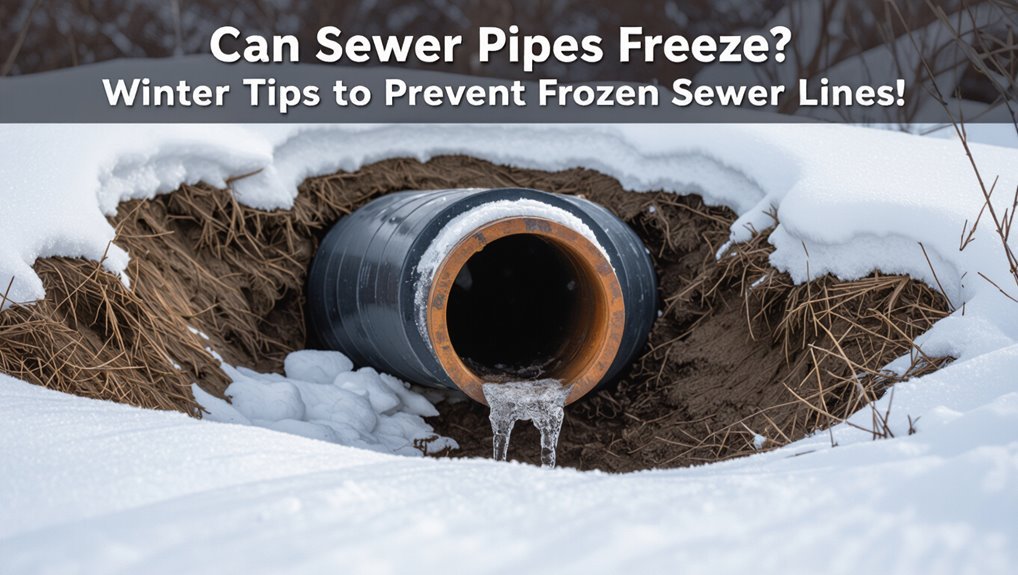
Can Sewer Pipes Freeze? Winter Tips to Prevent Frozen Sewer Lines
Yes, sewer pipes can freeze, particularly those that are shallow or located outside the heated areas of your home.
Key Takeaways:
- Risk Factors: Cold, wet soil, low water flow, and inadequate insulation increase the likelihood of freezing.
- Signs of Freezing: Look for multiple slow drains, gurgling toilets, sewer odors, and frost near cleanouts.
- Immediate Actions: Stop using water, open accessible cleanouts, and call a plumber.
- Preventive Measures: Consider deeper burial of pipes, adding insulation, using heat trace cables, and maintaining routine water flow.
For additional information on thawing techniques and winter-proofing tips, continue reading.
Quick Answer: Is My Sewer Line Frozen? And What To Do Now
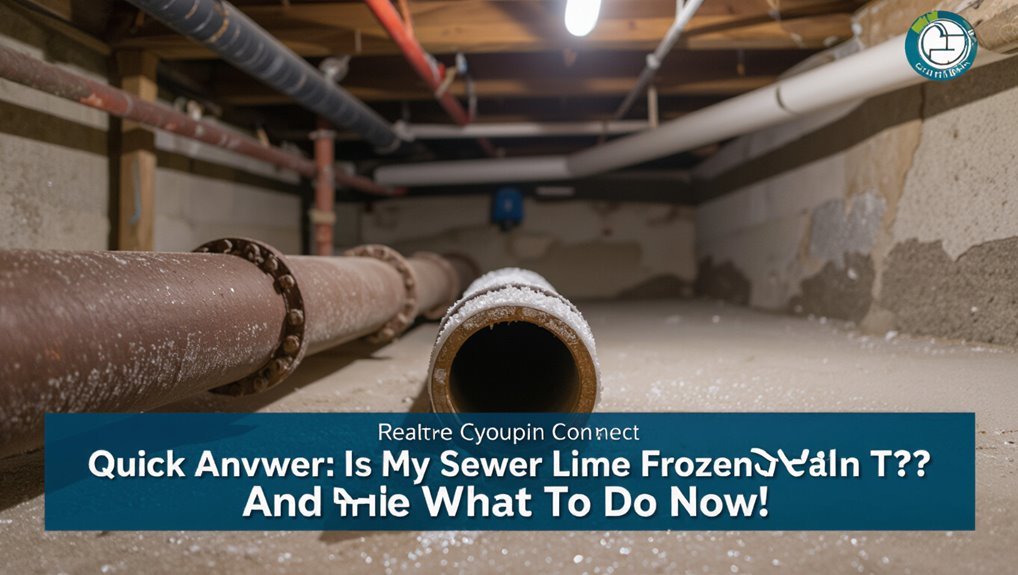
How can a homeowner tell if a sewer line is frozen? Signs include multiple drains backing up simultaneously, gurgling toilets, slow sinks, or sewage odors near plumbing fixtures.
Exterior cleanouts with frost or ice around the cap suggest blockage. If only one fixture is affected, the problem likely lies further downstream.
Avoid running untreated water into a suspected freeze; instead, shut off nonessential water and minimize use.
Contact a licensed plumber promptly for inspection and safe thawing; they may use rooter machines, heated cables, or camera diagnostics.
Immediate professional action reduces pipe damage and health hazards.
What Causes Sewer Lines To Freeze In Winter?
Several factors combine to make sewer lines vulnerable to freezing in winter: shallow burial depth, prolonged subfreezing temperatures, poor soil insulation, and cold air infiltration through gaps at cleanouts or joints.
Water remaining in low spots or horizontal runs can stagnate and freeze more readily. Reduced groundwater warmth during extended cold snaps lowers surrounding temperatures.
Surface runoff and compacted or sandy soils transmit cold faster than loamy or snow-covered ground. Aging or damaged pipe insulation and external frost heave that alters pitch create areas where ice forms.
Limited indoor heat transfer to exterior service lines also increases freeze risk.
Which Sewer Pipes Are Most At Risk Of Freezing?
Exterior sewer lines and shallow lateral connections are most vulnerable because they run near cold soil and are often less insulated.
Branches with infrequent or low wastewater flow, such as guest bathrooms or seasonal sheds, are also at higher risk since standing water can freeze.
Identifying these exterior and low-flow segments helps prioritize insulation and preventive measures.
Exterior Line Vulnerability
Because they run where temperatures and insulation vary most, sewer pipes located outside the heated envelope—yard laterals, driveway drains, and any exposed segments beneath porches or crawlspaces—are the likeliest to freeze.
Risk concentrates where cold reaches pipe crowns, flow is intermittent, or burial depth is shallow. Material, age, and slope affect susceptibility; shallow PVC or clay lines and flat runs hold cold water longer.
Seasonal ground frost and wind-driven chill increase exposure.
- Shallow yard laterals that lack frost protection.
- Exposed runs under unheated porches or crawlspaces.
- Drain segments crossing driveways or shallow backfills.
Low-Flow Branches
When flow through a branch is intermittent or minimal, that segment becomes a prime candidate for freezing since standing wastewater cools to ambient temperature and loses the insulating movement of flowing water.
Low-use branches feeding seldom-used fixtures—guest bathrooms, seasonal laundry rooms, detached garages, or outdoor drains—are especially vulnerable.
Narrow-diameter pipes and shallow runs amplify risk by exposing water column to cold soil and air.
Detection relies on inspection, history of slow drains, and thermal imaging.
Preventive measures include occasional flushing, insulating exposed branch lines, sealing drafts near pipe runs, and installing trace heating where practical to maintain minimal flow or temperature.
Symptoms That Indicate A Frozen Sewer Line
How can a homeowner recognize that a sewer line has frozen? Indicators are often subtle at first but distinct: backups, slow drains, and unpleasant odors. Observing these signs promptly helps identify a potential freeze without jumping to remedies.
- Persistent slow drains: Multiple fixtures drain sluggishly despite recent use, suggesting blockage farther down the line.
- Sewage backups: Water or waste returns through toilets, tubs, or floor drains, indicating flow obstruction within the main sewer.
- Foul sewer smell: Strong, lingering odors in basements or near drain exits denote trapped waste and interrupted ventilation caused by freezing.
Immediate Steps To Take If You Suspect A Frozen Sewer Line
Noticing slow drains, backups, or sewer odors should prompt immediate action to limit damage and protect health. The person should stop water use, avoid flushing, and evacuate unsafe areas. Contacting the utility or a licensed plumber for inspection is essential. Documenting signs and locations helps technicians. Avoid DIY core repairs that risk contamination or pipe damage; electrical or excavation work must wait for professionals. Follow any operator instructions and keep others clear of affected drains until cleared. Insurance notification may be prudent if flooding or property damage is suspected.
| Action | Purpose |
|---|---|
| Stop water use | Prevent pressure and overflow |
| Call plumber/utility | Professional diagnosis |
| Document issue | Aid assessment and claims |
| Restrict access | Protect occupants |
Quick Temporary Fixes You Can Try Right Now
Begin by shutting off indoor water sources and minimizing all usage to reduce pressure on the system; this creates a safer environment for temporary measures.
Then assess accessible cleanouts and drains without attempting invasive thawing. If sewage remains static and frost is suspected, try simple, low-risk interventions:
- Open an exterior cleanout cap slightly to relieve trapped air, listening for drainage or gurgling.
- Place additional insulation or blankets around exposed fittings and above-ground pipe sections to retain ambient heat.
- Use warm (not boiling) water poured slowly into accessible drain openings to encourage gradual flow.
Monitor conditions and contact a professional if unsure.
Safe DIY Thawing Methods For Homeowners
When a sewer line is frozen and temporary measures have not restored flow, a homeowner can attempt careful DIY thawing using low-risk methods and basic tools, provided safety guidelines are followed and the freeze is accessible. Recommended steps include locating the freeze, opening nearby cleanouts, applying heat externally with a hair dryer or heat gun at low setting, and insulating thawed sections. Monitor for leaks and odors. Avoid open flames and chemical additives.
| Tool | Use |
|---|---|
| Hair dryer | Gentle external heat |
| Heat gun (low) | Targeted thawing |
| Pipe insulation | Prevent refreeze |
| Shop vacuum | Clear standing water |
When To Stop DIY And Call A Plumber
How should a homeowner decide to stop DIY thawing and call a plumber? A homeowner should recognize warning signs, failed attempts, and safety limits.
If warming efforts don’t restore flow within a short, reasonable time, professional help is prudent. Visible pipe damage, persistent leaks, sewage odors, or backups indicate risk beyond basic DIY.
Electrical or gas heating attempts, or unsafe locations (crawlspaces, frozen ground), demand a licensed technician. When uncertainty about causes or methods exists, a plumber prevents costly mistakes.
Timely escalation limits property damage and health hazards.
- No improvement after safe DIY steps
- Leaks, odors, or backups
- Unsafe conditions or uncertainty
Professional Thawing Options Plumbers Use
Plumbing professionals employ several targeted thawing methods depending on pipe location and severity.
Common options include heated cable applications for localized ice, truck-mounted electrical or hot-water thawing for larger or buried lines, and hydro-jet or steam systems that use pressure and heat to clear and sanitize pipes.
Each technique carries specific risks and suitability considerations that professionals assess before proceeding.
Heated Cable Applications
Although often overlooked by homeowners, heated cable systems are a reliable professional option for thawing and preventing frozen sewer lines.
Plumbers use self-regulating or constant-wattage cables applied along vulnerable runs, inside access points, or around exposed fittings to deliver controlled heat. Installation requires proper routing, thermal insulation, and connection to a ground-fault-protected power source.
Benefits include targeted thawing, reduced freeze cycles, and lower energy use compared with whole-system heating. Limitations include need for professional sizing, potential pipe material restrictions, and periodic inspection.
Typical considerations include:
- Cable type selection and placement
- Insulation and electrical protection
- Maintenance and monitoring schedule
Truck-Mounted Thawing
Truck-mounted thawing brings industrial-grade heat and flow capability to frozen sewer lines using vehicles outfitted with high-pressure steam or hot-water generators and powerful pumps. Technicians position hoses at access points; controlled heat and flow melt ice, restore flow, and limit pipe stress. This method suits long runs, deep lines, and commercial systems where handheld tools fail. Safety protocols, monitoring of pipe conditions, and experienced operators reduce risk of damage. Response is rapid compared with manual methods, and downtime is minimal when performed correctly. Costs and access constraints determine suitability; inspection afterward verifies full clearance and pipe integrity.
| Benefit | Typical Use | Limitation |
|---|---|---|
| Rapid thaw | Long runs | Vehicle access |
| High capacity | Commercial lines | Higher cost |
| Controlled application | Deep pipes | Requires trained crew |
Hydro-Jet And Steam
After truck-mounted units handle large or deep freezes, technicians often turn to hydro-jet and steam systems for targeted thawing and final clearance.
Hydro-jetting uses high-pressure water to cut ice and flush debris, restoring flow without chemicals.
Steam applies heat directly to frozen sections, effective for localized blockages and sensitive pipes when controlled carefully.
Both require trained operators, proper equipment, and assessment of pipe material to avoid damage.
Post-thaw inspection guarantees integrity and removes remnants that could refreeze.
Selection depends on freeze location, pipe access, and surrounding conditions; often a combined approach yields the best outcome.
- Hydro-jet advantages
- Steam precision
- Assessment and inspection
How Freezing Temperatures Lead To Sewer Blockages
When temperatures fall below freezing for sustained periods, water within sewer lines and lateral connections can freeze, forming ice obstructions that restrict flow and trap solids. Ice accumulates at low spots, joints, and bends, reducing capacity and causing backups. Repeated freeze–thaw cycles fragment debris, creating lodgment points. Ground heave can misalign pipes, promoting pockets where water ponds and freezes. Reduced bacterial activity slows breakdown of organics, increasing clog potential. Early detection and mitigation preserve flow and prevent costly repairs.
| Cause | Effect |
|---|---|
| Ice buildup | Flow restriction |
| Freeze–thaw | Debris aggregation |
| Pipe misalignment | Ponding and refreeze |
How Frozen Sewer Lines Differ From Frozen Water Pipes
Although both contain water, frozen sewer lines present different risks and behaviors than frozen potable water pipes: sewage carries solids and gases that can form dense, irregular ice masses and trap debris.
Sewer systems are typically larger-diameter and sloped which changes where ice forms, and odors and health hazards from backups make thawing and repairs more urgent and specialized.
- Ice composition: Sewage ice is heterogeneous; solids create blockages that resist simple thawing, unlike clear pipe ice.
- Flow dynamics: Slopes and larger diameters cause ice to lodge in bends and low spots rather than uniformly freeze.
- Response needs: Repairs require protective equipment, containment, and often professional diagnostics.
How Soil Type, Frost Depth, And Climate Affect Sewer Freezing Risk
Because ground conditions and climate determine how deeply and frequently soils freeze, they are primary factors in sewer-freezing risk: sandy, well-drained soils transmit cold more quickly and allow deeper frost penetration than clay-rich or organic soils, while shallow frost depths in temperate climates reduce the likelihood of ice formation inside buried pipes.
Regional climate dictates freeze duration and recurrence; prolonged subfreezing periods raise accumulation risk. Soil moisture increases thermal conductivity, promoting deeper freezing. Frost heave can expose or strain lines, altering cover depth.
Local topography, vegetation, and snow cover modify ground thermal regimes, creating variable, site-specific vulnerabilities.
How Pipe Material, Size, And Age Change Freeze Vulnerability
Pipe composition and wall thickness influence heat transfer and susceptibility to cracking under freeze conditions, with metal, PVC, and clay each behaving differently.
Larger-diameter pipes retain heat longer but can trap stagnant sections where ice forms, while smaller pipes freeze through more quickly.
Older pipes often have corrosion, joint deterioration, or reduced insulation that increase freeze vulnerability compared with newer installations.
Pipe Material Differences
Material choice, diameter, and service life all influence a sewer line’s susceptibility to freezing by affecting thermal conductivity, flow retention, and structural integrity.
Different piping materials conduct heat and respond to cold differently: metal pipes transfer cold rapidly, while plastic and PVC offer some insulation.
Joints and bedding compatibility vary by material, affecting intrusion risk and surface exposure. Corrosion-prone materials can roughen interiors, slowing flow and increasing freeze risk.
Manufacturers’ specifications and installation quality determine real-world performance; selecting materials suited to local frost depth and soil conditions reduces freezing incidents.
- Metal (cast iron, steel): high conductivity, faster cooling
- Plastic (PVC, HDPE): lower conductivity, better insulation
- Composite/coated: corrosion-resistant, balanced thermal behavior
Size And Age Effects
Diameter and age together shape a sewer line’s vulnerability to freezing by changing flow persistence, heat retention, and structural soundness.
Narrower pipes cool and freeze faster because reduced volume limits residual warm water and encourages blockages; larger diameters sustain flow and store heat longer.
Older lines often suffer corrosion, deposits, and joint gaps that restrict flow and create cold spots where ice initiates.
Materials degrade differently with time, altering thermal conductivity and roughness.
Aging infrastructure also lowers slope accuracy, promoting standing water.
Evaluating diameter and condition guides preventive choices—insulation, heating cables, increased flow, or timely replacement—to minimize freeze risk effectively.
How Pipe Slope, Standing Water, And Low Flow Increase Freeze Chances
An unfavorable slope, pooled water, and prolonged low flow each raise the likelihood of sewer line freezing by reducing internal movement and increasing contact time with cold pipe walls.
Reduced gradient slows drainage, allowing water to linger and lose heat. Standing water fills sections, creating continuous cold columns that freeze more readily than flowing streams.
Low household use in winter removes the regular flushing that helps maintain temperatures above freezing. Together these factors extend exposure to subfreezing conditions, especially in marginally insulated runs, and make thawing more difficult once ice forms.
- Reduced slope slows flow, increasing residence time.
- Pooled water forms continuous freeze-prone columns.
- Low flow eliminates warming flushing action.
Where Outdoor Sewer Lines And Cleanouts Are Most Exposed
Where are outdoor sewer lines and cleanouts most vulnerable?
Exposed sections near property edges, shallow trenches, and spots where lines cross driveways or sidewalks face higher risk due to limited soil insulation and increased airflow.
Cleanouts located outside foundations, adjacent to crawlspace vents, or mounted above grade are susceptible when insulation and snow cover are absent.
Areas with sparse landscaping, eroded soil, or compacted ground transmit cold more readily.
Utility easements and meter pits often lack protective backfill.
Identification of these locations helps prioritize insulation, backfilling, and temporary heat measures to reduce freezing risk.
Foundation Drains, Cleanouts, And Traps: How They Freeze And How To Protect Them
Although usually buried and out of sight, foundation drains, outdoor cleanouts, and traps are particularly prone to freezing where they sit near exterior walls, lack sufficient soil cover, or connect to poorly insulated risers.
When cold infiltrates these vulnerable junctions it can block flow, damage fittings, and create backup risks. Inspection and targeted insulation reduce exposure.
Raised cleanouts, insulated riser wraps, and protected trap covers limit air contact. Proper slope and heat tracing prevent standing water from freezing in low spots.
Seasonal maintenance and timely repairs reduce failure risk without major excavation.
- Insulate risers and exposed traps
- Install raised, sealed cleanouts
- Use heat tape or thermal wrap
Simple Homeowner Checks To Spot Vulnerable Sewer Lines
A quick inspection can help a homeowner identify sewer lines at risk of freezing by checking pipe burial depth against local frost lines.
They should also note low spots in the yard where water and cold air collect and could expose or stress pipes.
Nearby vegetation, especially shallow-rooted or frost-heaving plants, should be monitored because roots and repeated freeze-thaw can shift or damage lines.
Check Pipe Burial Depth
One simple step homeowners can take is confirming how deeply sewer pipes are buried, since shallow lines freeze far more easily than those set below the frost line.
A brief check of property records, utility maps or the original building plans often reveals burial depth. If records are unavailable, a licensed plumber can locate and measure pipe depth without damage.
Knowing depth helps prioritize insulation or pipe replacement and guides winter preparations.
Consider these quick actions:
- Request property/utility records to find installed depths.
- Hire a plumber to locate and measure exposure.
- Mark vulnerable shallow runs for insulating or future reroute.
Inspect Yard Low Spots
Low spots in a yard, such as depressions near foundation lines or beside driveways, tend to collect water and, during cold weather, become prime locations for sewer line exposure and freezing. The homeowner should map low areas, note standing water after storms, and check for soft ground that indicates pipe proximity. Marking these spots helps prioritize insulation, regrading, or drainage fixes before freeze events. Documenting locations also aids professionals diagnosing shallow runs. Simple observations reduce surprise freezes and costly repairs.
| Issue | Action |
|---|---|
| Depression | Mark and monitor |
| Standing water | Improve drainage |
| Soft soil | Probe depth |
| Recurrent pooling | Regrade |
| Close to structure | Prioritize repair |
Monitor Nearby Vegetation
After identifying yard low spots, attention should shift to nearby vegetation, since roots and dense plantings can compromise or expose shallow sewer runs.
A detached visual survey notes tree species, root collars, and overly thick beds near known pipe routes. Homeowners should mark suspicious areas and compare with utility maps or past repair sites.
If roots penetrate or soil is bare, the risk of pipe damage and heat loss rises. Seasonal trimming, relocating deep-rooted plantings, or adding mulch to insulate soil are practical steps.
Professional inspection is advised when roots or exposed lines are evident.
- Check tree distance and species
- Look for root heave or soil cracks
- Note bare or compacted soil near lines
How Heat Tape, Trace Cable, And Insulation Work On Sewer Pipes
Several complementary methods—heat tape, self-regulating trace cable, and targeted insulation—are commonly used to prevent sewer pipes from freezing by maintaining pipe temperature, reducing heat loss, and responding to ambient conditions. Heat tape supplies fixed wattage warmth along exposed sections; it requires careful installation and thermostat control. Self-regulating trace cable adjusts output with temperature, lowering energy use and reducing overheating risk. Insulation minimizes conductive and convective losses around pipes and fittings. Combined, they preserve flow and reduce freeze incidents when applied properly, following manufacturer specifications and local electrical codes to guarantee safety and effectiveness.
| Method | Purpose |
|---|---|
| Heat tape | Direct warming |
| Trace cable | Variable heat output |
| Pipe insulation | Retain warmth |
| Fittings insulation | Protect joints |
Proper Burial Depth, Backfill, And Regrading To Prevent Freezing
Alongside active measures like heat tape and trace cable, passive installation strategies — proper burial depth, correct backfill materials, and thoughtful regrading — form a long‑lasting defense against frozen sewer lines.
Pipes should be installed below local frost line depths and insulated where depths are constrained. Backfill with clean, compacted granular material to eliminate air pockets that accelerate freezing.
Grade the surface to direct runoff away from pipe trenches and prevent pooling or erosion that exposes pipes. Regular inspection after settlement guarantees cover remains sufficient.
Together these measures reduce thermal loss and physical exposure, lowering the risk of blockages from frozen sewer lines.
- Guarantee frost‑line burial
- Use granular, compacted backfill
- Regrade for drainage
Protecting Exposed Cleanouts, Roof Vents, And Yard Traps
Exposed cleanouts, roof vents, and yard traps present common weak points for freeze damage and require targeted protection.
Strategies include weatherproof covers for outdoor cleanouts and specific insulation or heat-tape applications for vents and traps.
Properly selected and installed protections reduce the risk of blockages and costly repairs.
Protecting Outdoor Cleanouts
When temperatures drop, outdoor cleanouts, roof vents, and yard traps become vulnerable points where cold can infiltrate the drain system and cause blockages; protecting these components is essential to prevent costly freezing and backups.
Outdoor cleanouts should receive simple, weatherproof covers and tight seals to stop drafts and moisture. Regular inspection guarantees caps remain secure and gaskets intact. Temporary insulation wraps can be used during extreme cold, but permanent measures are preferable.
Keep the area clear of snow and debris to allow visual checks and prevent ice dams. Professional assessment can identify weak spots before a freeze.
- Install weatherproof caps
- Inspect seals routinely
- Clear surrounding snow
Insulating Vents & Traps
If outdoor cleanouts, roof vents, and yard traps are left uninsulated, they become prime entry points for freezing air that can block drains and cause backups; insulating these components reduces heat loss and preserves flow.
Attention to vent stacks, exposed trap arms, and aboveground cleanouts prevents localized freezing. Use foam covers, insulated jackets, or UV-resistant wrap rated for plumbing applications.
Ascertain snug seals around penetration points to stop drafts. Maintain accessibility for maintenance with removable enclosures.
In frozen conditions, add gentle heat sources such as heat tape where allowed. Regular inspections verify insulation integrity and reveal damage before a freeze causes blockage.
Winterize Vacant Or Seasonal Properties To Prevent Frozen Sewer Lines
Many vacant or seasonal properties face a high risk of frozen sewer lines during prolonged cold spells, so owners and managers should winterize plumbing systems before temperatures drop.
Steps focus on preventing standing water, insulating exposed piping, and ensuring minimal flow to avoid ice blockages. Target roof vents, exterior cleanouts, and low-use fixtures.
Consider professional winterization for complex systems or remote monitoring to detect drops in temperature or flow.
- Drain and blow out water from lines, traps, and irrigation connections.
- Insulate and seal exposed pipes and vent terminations.
- Maintain slow, controlled flow or add non-damaging antifreeze in traps.
Routine Winter Maintenance Schedule For Sewer Health
Because consistent checks reduce the chance of freeze-related blockages, a clear, repeatable winter maintenance schedule is essential for sewer health. Monthly inspections of cleanouts, visible pipe runs, and yard drains identify early issues. Weekly simple actions—running water through seldom-used fixtures, checking for slow drains, and clearing surface ice—help prevent freezing. After storms, inspect manholes and exposed lines for damage or debris. Keep records of findings and actions to spot patterns and schedule professional camera inspections midseason if warranted.
| Frequency | Task | Notes |
|---|---|---|
| Weekly | Run water, clear ice | Prevents standing cold pockets |
| Monthly | Inspect cleanouts | Look for cracks or backup |
| After storm | Check exposed lines | Remove debris promptly |
| Midseason | Professional camera check | Detect hidden blockages |
Long-Term Fixes: Rerouting, Replacement, And Upgrades
When aging alignments, repeated freeze events, or persistent access problems compromise a sewer run, long-term fixes—rerouting, full replacement, or targeted upgrades—become the most reliable solution to prevent future freezes and service failures.
- Rerouting: Redirecting lines away from exposed corridors or shallow trenches reduces cold exposure; planning considers grade, access, and future utility conflicts.
- Replacement: Installing deeper, insulated, or more durable pipe materials eliminates chronic weak points; trenchless methods minimize disturbance.
- Upgrades: Adding insulation, heat tracing, improved bedding, or frost-resistant fittings addresses localized vulnerabilities while extending system lifespan and reducing emergency interventions.
Common Mistakes That Make Sewer Freezing Worse
Homeowners and maintenance crews sometimes make avoidable choices that increase the risk of sewer freezing.
Leaving outdoor faucets on, selecting inadequate or improperly installed insulation, and ignoring slow drains each contribute to ice formation and blockages.
Addressing these mistakes early reduces emergency repairs and long-term damage.
Leaving Outdoor Faucets On
Leaving outdoor faucets on during freezing weather may seem harmless, but it considerably increases the risk of sewer and lateral line ice formation by continuously supplying water that can freeze in exposed or marginally insulated sections.
Continuous drip or open flow keeps lines wet, promoting ice bridges that block drainage and shift pipe joints. Water pooling near exterior connections freezes faster, transmitting cold into the system.
To reduce risk, avoid leaving faucets on and guarantee shutoffs are used properly. Consider temporary measures only when supervised.
- Turn exterior valves fully off and drain lines.
- Use short, monitored drips if necessary.
- Inspect hose bibs for leaks.
Poor Insulation Choices
Although insulation is a key defense against frozen sewer lines, choosing the wrong type, thickness, or installation method can create a false sense of security and actually worsen freezing risk.
Using indoor-grade foam outdoors, compressing batt insulation, or leaving gaps around pipe joints reduces R‑value and allows cold bridges. Overreliance on thin wrap material or improperly sealed seams invites moisture, which degrades insulation and promotes ice formation.
Failing to insulate bends, exposed fittings, and vent stacks leaves vulnerable points. Likewise, burying insulated pipes too shallow without adequate cover negates benefits.
Proper material selection, full coverage, and moisture-resistant installation preserve thermal protection.
Ignoring Slow Drains
Even with proper insulation in place, slow-draining fixtures and partial blockages create standing water that freezes more readily than flowing sewage.
Ignoring slow drains lets ice form in low spots, expanding and stressing pipe joints. Regular maintenance and prompt clearing reduce freeze risk and prevent small clogs from becoming icier hazards.
Professional inspection can locate recessed sections prone to pooling and recommend slope corrections or targeted heat tracing. Homeowners who delay addressing sluggish drains increase winter vulnerability and potential costly repairs.
- Clear hair and debris from traps.
- Use enzyme cleaners monthly.
- Schedule professional camera inspection annually.
Costs And Budget Range For Freeze-Prevention Upgrades
Estimating costs for freeze-prevention upgrades requires accounting for system size, required measures, and local labor rates. A typical residential project ranges from a few hundred dollars for simple pipe insulation and heat tape to several thousand for heated enclosures or rerouting.
Commercial or multi-unit buildings can see costs climb into the tens of thousands depending on complexity and code upgrades. Itemized budgets commonly include materials (insulation, heat cable, enclosures), labor, permits, and contingency.
Homeowners should obtain multiple quotes, prioritize inexpensive fixes first, and compare lifetime energy and maintenance costs when weighing higher upfront investments versus recurring expenses.
Insurance For Frozen Sewer Lines: What Homeowners Should Know
Insurance considerations for frozen sewer lines center on what specific policy terms cover—such as sudden pipe bursts versus gradual damage—and any exclusions or required maintenance documentation.
Homeowners should also understand deductibles, limits, and whether sewer backup or freeze damage requires separate endorsements.
Clear guidance on the claims process, necessary evidence, and time frames for reporting helps prevent denied or reduced payouts.
Policy Coverage Details
When frozen sewer lines cause backups or structural damage, homeowners should examine their policy details to determine whether repairs, cleanup, and related living-expense costs are covered.
Coverage varies: some policies include sudden sewer backups or pipe bursts, while others require endorsements for sewer, sump, or water backup.
Deductibles, sublimits, and exclusions (neglect, lack of maintenance, or freezing due to inadequate heat) affect payouts.
Documentation and photos strengthen coverage decisions.
Policyholders should note timelines for reporting and any required mitigation steps to preserve eligibility.
- Check endorsements and limits
- Confirm deductible and sublimits
- Note exclusions and mitigation duties
Filing And Claims Process
Begin the claims process promptly after discovering a frozen sewer line to preserve coverage and speed repairs.
The homeowner documents damage with photos, notes dates and symptoms, and contacts the insurer to report the loss. An adjuster may inspect; retain receipts for emergency repairs, diagnostics, and plumber visits.
Review the policy’s deductible, exclusions, and required mitigation steps to avoid denied claims. If coverage is unclear, request written explanations and keep copies of all correspondence.
When disputes arise, consider an independent plumber’s report or appraisal and, if necessary, escalate to state insurance regulators or seek legal advice for unresolved denials.
Quick Checklist: How To Prevent Frozen Sewer Lines This Winter
A concise checklist helps homeowners take immediate, effective steps to prevent sewer line freezes: insulate exposed pipes, keep a slow trickle of water running during extreme cold, seal gaps where cold air can reach the line, maintain consistent indoor temperatures, and know where the outdoor cleanout is located for quick access.
The following checklist summarizes practical, prioritized actions for winter readiness and rapid response in freezing conditions.
- Inspect and insulate: wrap exposed lines, add heat tape to vulnerable sections, protect outdoor fixtures.
- Maintain flow and warmth: drip taps, set thermostats above 55°F during deep freezes.
- Seal and mark: close gaps, label the cleanout for emergency access.
Conclusion
Cold, brittle pipes sing winter’s warning; yet vigilance is a warm hand that steadies the song. By knowing where frost creeps, watching early signs, and acting with prompt, sensible measures, homeowners can turn fragile risk into quiet resilience. Small investments, routine checks, and smart insulation stitch a protective cloak around sewer lines, keeping flow steady through the thaw and frost alike—so winter’s hush need not become a costly, frozen surprise.