How to Clean Kohler Brass Faucet: Step-by-Step Guide for Shiny, Scratch-Free Results
To clean your Kohler brass faucet effectively and keep it shiny and scratch-free, follow these straightforward steps:
- Gentle Cleaning: Start with a microfiber cloth dampened in mild soap and water. Wipe the faucet thoroughly, then rinse with clean water and dry with a soft cloth.
- Removing Mineral Deposits: For any mineral buildup, wrap a vinegar-soaked cloth around the affected area for a few minutes.
- Tackling Light Tarnish: Create a paste using baking soda and water, apply it to tarnished spots, and gently rub with a soft cloth.
- Avoid Damage: Steer clear of abrasive pads and harsh chemicals that can scratch the finish.
- Polishing: Use a non-abrasive brass polish to restore shine, buffing it gently with a clean cloth.
- Assess for Scratches: Examine the surface for any scratches; consider touch-up or professional repair if needed.
By following these steps, you can maintain the beauty and functionality of your Kohler brass faucet.
What Kohler Brass Means and Why Proper Cleaning Matters
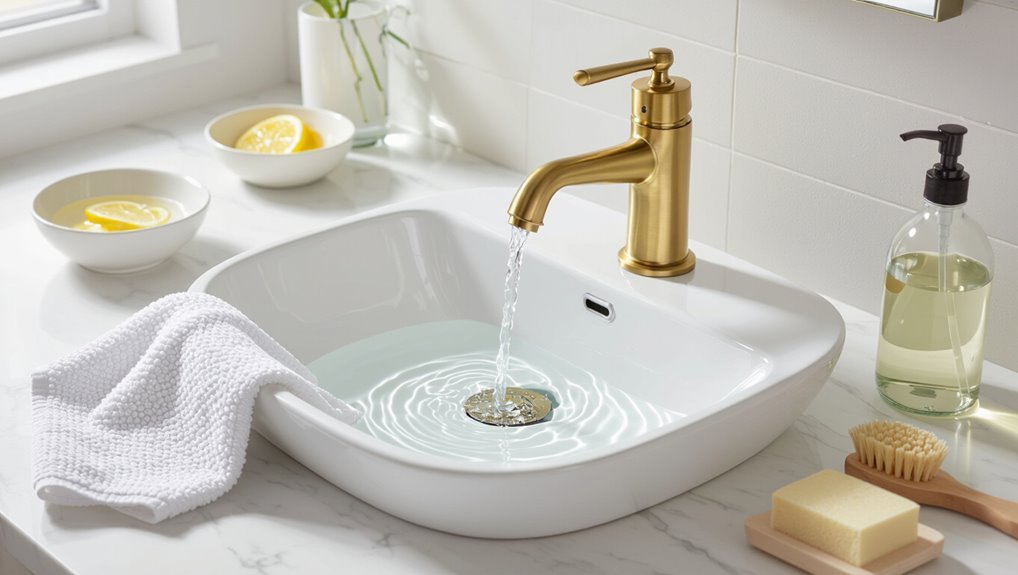
Kohler brass refers to several factory finishes—polished, satin, antique, and PVD—each with different surface treatments and durability.
These finishes can encounter issues such as tarnish, water spots, scratches, and mineral buildup that affect appearance and function.
Routine, gentle cleaning can address most problems, while deep corrosion, finish damage, or persistent buildup may require professional restoration.
Types of Kohler brass finishes (polished, satin, antique, PVD)
Brass faucets come in several Kohler finishes—polished, satin, antique, and PVD—each with distinct surface characteristics and cleaning needs.
Polished brass is glossy and shows fingerprints; satin (brushed) hides marks; antique has intentional patina; PVD offers durable, plated protection.
Knowing the finish guides selection of products and technique for how to clean kohler brass faucet without damaging coatings.
Common problems with brass faucets (tarnish, water spots, scratches, mineral buildup)
Many faucets develop common issues over time—tarnish, water spots, scratches, and mineral buildup—that degrade appearance and function if not addressed.
Kohler brass can dull from oxidation, leaving uneven patina. Hard water deposits create white or cloudy spots and clog aerators.
Surface scratches mar finishes, especially polished and satin. Mineral buildup corrodes seals and impairs valves, reducing lifespan and performance.
When cleaning is safe vs when to call a professional
Recognize that Kohler brass refers to brass components manufactured or finished by Kohler with specific alloys and protective coatings that affect how they age and respond to cleaning.
Simple cosmetic issues like light tarnish, water spots, and superficial mineral deposits can usually be addressed safely with gentle, nonabrasive cleaners and routine maintenance.
However, deep oxidation, embedded mineral scale, significant scratches, leaking valves, or damage to plated finishes require professional assessment to avoid voiding warranties or causing irreversible harm.
Professionals should be consulted for internal leaks, persistent corrosion, or when repairs risk finish removal.
Routine cleaning and protective waxes suffice for minor surface issues.
Quick, Safe Cleaning Overview What You’ll Achieve
The section summarizes expected results for polished, satin, and antiqued Kohler brass finishes, noting how each responds to gentle cleaning versus light polishing.
It also estimates time and difficulty—typically 10–30 minutes for routine maintenance and moderate effort for tarnish removal.
Finally, it lists the essential tools and materials (soft cloths, mild cleaner, toothbrush, and protective gloves) needed to complete the job safely.
Expected results for different finish types
A quick overview clarifies what each Kohler brass finish will look like after routine, safe cleaning:
Polished brass regains bright, reflective shine;
satin/brushed brass shows even, muted luster with minimal streaking;
antique or oil-rubbed brass retains intentional patina while surface grime is removed;
lacquered brass maintains protective coating and color;
uncoated brass lightens slightly as natural aging remains visible.
Time required and difficulty level
Most routine cleaning sessions take about 5–15 minutes per faucet, depending on finish and soil level, while deeper restoration of tarnished or uncoated brass can require 30–60 minutes plus drying time.
Difficulty ranges from easy for regular maintenance to moderate for stubborn tarnish; patience and gentle technique minimize risk.
Occasional professional polishing may be advised for severe corrosion or lacquer damage.
Tools and materials summary
Essential items include soft microfiber cloths, nonabrasive sponges, a mild pH-neutral dish soap, distilled white vinegar or a commercial brass cleaner rated safe for Kohler finishes, cotton swabs for crevices, and a spray bottle for diluted solutions.
These tools enable safe, scratch-free cleaning and targeted stain removal.
- Gentle cleaners prevent finish damage
- Small tools reach tight joints
- Soft cloths guarantee even polishing
Step-by-Step Cleaning Routine for Kohler Brass Faucets
The routine begins with a brief inspection and protecting nearby surfaces to prevent water or cleaner damage.
For routine maintenance, mild soap and water removes everyday grime, while mineral buildup is lifted with a vinegar-soaked cloth used cautiously to avoid prolonged exposure.
Stubborn tarnish responds to a baking soda paste and gentle scrubbing, followed by a non-abrasive brass polish and careful buffing to restore shine.
Preparation: inspection and protecting surrounding surfaces
Before cleaning begins, a careful inspection of the Kohler brass faucet and its immediate surroundings identifies damage, buildup, and areas that need protection. This step guarantees appropriate materials and techniques are chosen and prevents accidental harm to countertops, fixtures, or finish.
The technician notes issues, isolates vulnerable surfaces, and readies protective materials:
- Cover counters and sink edges with soft towels.
- Mask nearby fixtures with painter’s tape.
- Check for loose hardware or finish imperfections before proceeding.
Daily/light cleaning: mild soap and water method
With inspection complete and surfaces protected, routine maintenance begins with a mild soap-and-water method that preserves Kohler brass finishes while removing everyday grime.
Use a soft cloth and dilute mild dish soap in warm water, rinse thoroughly, and dry to prevent water spots.
- Soft microfiber cloth only
- Gentle circular motions, no scrubbing
- Thorough rinse and immediate drying
Removing mineral deposits: vinegar-soaked cloth method with precautions
Soak a soft cloth in a 1:1 solution of white vinegar and water to soften and lift mineral deposits from Kohler brass finishes.
Apply gently, wrap for 10–15 minutes, then wipe with a damp cloth. Rinse thoroughly and dry immediately.
Precautions and tips:
- Test on an inconspicuous area first.
- Avoid prolonged exposure to prevent finish damage.
- Do not use abrasive scrubs.
Dealing with stubborn tarnish: baking soda paste technique
Apply a gentle baking soda paste to tackle stubborn tarnish on Kohler brass by mixing three parts baking soda with one part water to form a spreadable consistency; the mild abrasive lifts oxidized buildup without harsh chemicals.
Apply, wait 10–15 minutes, then gently rub with a soft cloth. Rinse thoroughly and dry.
- Use soft, non-abrasive cloths
- Test hidden area first
- Avoid prolonged scrubbing
Polishing for shine: non-abrasive brass polish and buffing method
Polish the brass using a non-abrasive brass polish and a clean, soft cloth to restore luster without damaging the finish.
Apply polish sparingly, working in small circular motions; allow dwell time per product instructions. Buff gently with a separate microfiber cloth until reflective. Maintain protective coating if present.
- Use light pressure
- Follow polish label directions
- Buff in consistent strokes
Rinsing and drying to prevent water spots
After polishing, the faucet should be thoroughly rinsed with clean, lukewarm water to remove any residue from cleaners or polish; this step prevents minerals from bonding to the surface and forming water spots.
Pat dry promptly with a soft microfiber cloth, avoiding circular scrubs. Followed by:
- Microfiber blotting to absorb remaining droplets
- Gentle linear strokes to avoid streaks
- Inspect under light for spots
Reassembling and testing faucet function
Once the surface is rinsed and dried, reassembly can begin to restore full faucet function.
Reinstall cartridges, seals, and handles in reverse order, applying plumber’s grease to O-rings and threads.
Tighten fasteners evenly to avoid misalignment.
Reconnect water lines, open supply valves slowly, and check for leaks.
Operate handles and spout to confirm smooth motion, proper water flow, and drip-free seals.
Recommended Cleaners and Tools (Safe for Kohler Finishes)
The section lists approved cleaners and household ingredients safe for Kohler brass finishes, names common commercial products, and specifies chemicals to avoid such as bleach, abrasive powders, and ammonia.
It also identifies recommended cloths, brushes, and non-abrasive pads along with tools and scrubbing materials that can damage the finish.
Practical guidance on selecting and using these items will follow.
Approved cleaning ingredients and commercial products
Consult reputable, manufacturer-approved products and gentle household ingredients to protect Kohler brass finishes while removing grime and mineral buildup.
Recommended options include mild dish soap solutions, pH-neutral commercial brass cleaners labeled safe for Kohler, and distilled white vinegar diluted for mineral spots.
Use soft microfiber cloths and nonabrasive sponges; always test in a hidden area first.
- Mild dish soap solution
- pH-neutral brass cleaner
- Diluted distilled vinegar
Cleaners and chemicals to avoid (bleach, abrasive powders, ammonia)
Avoid using harsh chemicals and abrasives on Kohler brass finishes, as they can strip protective coatings, dull the patina, or cause permanent discoloration.
Avoid bleach, oven cleaners, abrasive powders, scouring pads, and ammonia-based cleaners. Also steer clear of acid-based descalers not labeled safe for brass.
When in doubt, consult Kohler’s care instructions and use mild, pH-neutral products specifically recommended for brass.
Best cloths, brushes, and pads to use and ones to avoid
Several soft, nonabrasive tools are recommended for cleaning Kohler brass finishes: microfiber cloths, lint-free cotton towels, soft-bristled nylon brushes, and natural sea sponges.
Use gentle scouring pads labeled nonabrasive and silicone or rubber brushes for crevices.
Avoid steel wool, abrasive scouring pads, stiff wire brushes, and abrasive melamine sponges, which can scratch or strip protective coatings and dull the finish.
How to Remove Scratches and Restore Finish
For light surface marks, a non-abrasive metal polish can often reduce visibility without harming the Kohler finish.
Deeper gouges may require manufacturer touch-up kits or professional color-matching to blend repairs effectively.
If scratches penetrate the plating or finish integrity is compromised, replacement or consultation with Kohler service is recommended.
Minor scratch repair with non-abrasive polish
Begin by evaluating the depth of the scratch to determine whether a non-abrasive polish can restore the finish without damaging the brass plating.
For light surface marks, apply a small amount of non-abrasive metal polish on a soft microfiber, rub gently along grain lines, then buff with a clean cloth.
Repeat sparingly until blend is acceptable; rinse and dry thoroughly.
Deeper scratches and when to use touch-up kits
Assess deeper scratches by checking their depth and whether the brass plating is breached: if the scratch catches a fingernail or reveals a different-colored layer beneath the surface, polishing alone risks further damage.
For compromised areas, recommend manufacturer-matched touch-up kits to fill and color-correct. Follow kit instructions, apply thin layers, cure fully, and blend edges carefully to restore appearance while minimizing visible repair lines.
When to replace the finish or consult Kohler service
Decide to replace the finish or contact Kohler service when scratches, corrosion, or plating loss extend beyond what polishing or touch-up kits can reliably conceal — specifically if damage affects function, exposes base metal, or covers large, conspicuous areas where repairs would remain obvious.
A professional refinish or OEM replacement restores warranty compliance, guarantees color match, and prevents accelerated corrosion; obtain estimates and verify service terms before proceeding.
Preventive Care and Maintenance Schedule
A concise preventive care schedule helps preserve a Kohler brass faucet’s appearance and function through daily, weekly, and monthly tasks.
Consider water-softening or filtration options to minimize mineral buildup at the source, and weigh the benefits and limitations of protective coatings or sealants for added surface protection.
The following checklist outlines routine actions and decision points for homeowners and maintenance staff.
Daily, weekly, and monthly maintenance checklist
One clear maintenance rhythm divides tasks into daily, weekly, and monthly checks to keep a Kohler brass faucet functioning and looking its best.
Daily: wipe with a soft microfiber cloth and mild soap.
Weekly: inspect aerator, clean with a soft brush.
Monthly: check seals, tighten fittings, and apply a gentle brass polish as needed.
- Wipe and dry daily
- Clean aerator weekly
- Inspect monthly
Water-softening and filtration options to reduce mineral buildup
Because mineral-rich water accelerates tarnish and buildup on brass fixtures, reducing hardness at the source is the most effective preventive step for Kohler brass faucets.
Install a whole-house water softener or point-of-use softening unit to lower calcium and magnesium.
Consider inline sediment and carbon filters to capture particulates and chlorine.
Regularly monitor hardness and maintain systems per manufacturer recommendations to prevent scale.
Protective coatings and sealants: pros and cons
Many homeowners opt for protective coatings or sealants to slow tarnish and water spotting on Kohler brass faucets. However, these products vary widely in durability, appearance, and maintenance requirements.
Protective layers can extend shine and simplify cleaning, yet may alter finish color, wear unevenly, or require periodic reapplication.
Professional-grade sealants last longer; DIY sprays are convenient but less durable.
Consider finish compatibility and maintenance commitment.
Troubleshooting Specific Cleaning Scenarios
The guide next addresses common cleaning problems and their targeted solutions, including white chalky hard-water deposits and cloudy finishes that can appear after cleaning.
It also covers assessment and options for corrosion or pitting on older brass fixtures.
Finally, safe methods for cleaning articulating parts and aerators without damaging seals or finishes are outlined.
White chalky buildup from hard water
White chalky buildup on a Kohler brass faucet is typically mineral residue from hard water, appearing as white, powdery deposits on surfaces and around joints.
It can be gently removed with a vinegar solution or commercial descaler applied briefly, then rinsed and dried.
For persistent deposits, soak removable parts or repeat treatments; avoid abrasive tools to prevent scratching the brass finish.
Cloudy finish after cleaning causes and fixes
After removing mineral deposits, a cloudy or hazy appearance can sometimes appear on a Kohler brass faucet, indicating a surface change rather than remaining grime.
Causes include mild etching from acidic cleaners, residue from alkaline soaps, or micro-abrasions from abrasive pads.
Fixes: rinse thoroughly, polish with a nonabrasive brass cleaner, and buff with a soft microfiber cloth.
Repeat gently until clarity returns.
Corrosion or pitting on older fixtures
Inspect older Kohler brass fixtures closely for signs of corrosion or pitting, which appear as small, rough depressions or a dull, uneven surface that cannot be removed by routine cleaning.
Deep pitting indicates metal loss; polishing may improve appearance but won’t restore structural integrity.
Mild surface corrosion can be treated with gentle brass cleaner and protective lacquer; severe damage often requires professional repair or replacement.
Cleaning articulating parts and aerators safely
Handle articulating parts and aerators with care to prevent damage to seals, moving joints, and fine screens.
Disassemble gently, inspect O-rings, and avoid harsh solvents. Rinse screens under low pressure and use a soft brush for deposits. Reassemble with correct alignment and test for leaks.
- Remove aerator gently
- Soak in mild vinegar solution briefly
- Lubricate O-rings sparingly with silicone grease
Comparison of Cleaning Methods and Their Suitability
Different cleaning approaches are compared by effectiveness, finish safety, time required, and how often they should be used. The following table summarizes practical recommendations for common methods to help choose the best option for a Kohler brass faucet. Readers are encouraged to match method attributes to their fixture’s finish and maintenance schedule.
| Method | Notes |
|---|---|
| Mild soap & water | Effective for daily grime; safest for all finishes |
| Vinegar solution | Good for mineral buildup; use sparingly on lacquered brass |
| Baking soda paste | Abrasive enough for stains; test on an inconspicuous spot |
| Commercial metal polish | High effectiveness and shine; follow manufacturer compatibility |
| Microfiber wipe | Quick, low-risk touch-ups; ideal for frequent use |
Method effectiveness, safety for finishes, time, recommended frequency
Compare common cleaning methods by weighing their effectiveness, finish safety, time required, and recommended frequency. The guide rates gentle soap, vinegar, polishing paste, and abrasive pads for brass care, noting safest choices and when to avoid damage.
| Method | Effectiveness | Frequency |
|---|---|---|
| Mild soap | Moderate, safe | Weekly |
| Vinegar | High, risky on lacquer | Monthly |
| Polishing paste | High, protective | Quarterly |
| Abrasive pad | Fast, damaging | Rarely |
Safety and Warranty Considerations
Cleaning methods can affect Kohler’s warranty coverage, so the manufacturer’s guidelines should be checked before using strong chemicals or abrasive tools.
Users should take basic safety precautions—wear gloves, guarantee good ventilation, and avoid mixing cleaners—to protect skin and lungs.
If damage is found, document it with photos and notes before attempting repairs or contacting Kohler for warranty claims.
How cleaning choices affect Kohler warranty
Review the care instructions before applying any product or method, since Kohler’s warranty can be voided by improper cleaning.
Manufacturers specify approved cleaners, abrasives to avoid, and frequency limits. Use only recommended products and documented techniques; keep records of receipts and procedures for warranty claims.
Unauthorized chemical or mechanical treatments, including harsh acids or scouring pads, risk finish damage and denial of service coverage.
Personal safety precautions (gloves, ventilation)
Wear chemical-resistant gloves and guarantee adequate ventilation before applying any cleaner to a Kohler brass faucet.
Eye protection is recommended if splashing is possible. Use low-odor, mild cleaners to reduce inhalation risk.
Follow product label directions and test in an inconspicuous spot.
Keep cleaners away from children and pets, and store chemicals securely after use to prevent accidental exposure.
Documenting damage before attempting repairs
After taking safety precautions, the person should thoroughly document any damage to the Kohler brass faucet before attempting repairs to protect both personal safety and warranty rights.
Photograph all angles, close-ups of scratches, dents, corrosion, and affected fittings.
Note dates, observed causes, and prior maintenance.
Retain receipts and warranty papers.
This record supports warranty claims and informs professional assessment if needed.
Final Polish and Care Tips for Long-Lasting Shine
A brief set of finishing practices helps preserve a Kohler brass faucet’s showroom shine.
Daily rituals—such as wiping with a soft microfiber cloth and removing water spots promptly—prevent buildup, while a seasonal deep-clean with a mild, nonabrasive polish restores luster.
If persistent tarnish, pitting, or finish damage appears despite care, professional refinishing or replacement should be considered.
Quick daily rituals to maintain showroom shine
Several brief rituals, performed daily, preserve a Kohler brass faucet’s showroom sheen: wipe with a soft microfiber cloth after use to remove water spots, mist lightly with a pH-neutral polish and buff, and check aerator/drip areas for mineral buildup.
Maintain gentle touch to avoid scratches.
- Microfiber drying
- Gentle pH-neutral polish
- Quick aerator inspection
Seasonal deep-clean routine
Begin the seasonal deep-clean routine by preparing the workspace and gathering supplies: soft microfiber cloths, a mild pH-neutral brass cleaner recommended by Kohler, distilled water, a soft-bristle brush, and cotton swabs for crevices.
Turn off water, protect sink, test cleaner on an inconspicuous spot, gently clean fixtures in small sections, rinse thoroughly with distilled water, dry and buff to restore luster.
When to seek professional refinishing or replacement
Consider professional refinishing or replacement when wear or damage exceeds what routine cleaning and DIY touch-ups can safely correct.
A professional should be consulted for deep pitting, flaking finish, persistent corrosion, or visible plumbing issues.
Refinishing restores appearance and protective coatings; replacement is advised for structural failure or recurring leaks.
Obtain quotes, verify warranties, and choose certified specialists to guarantee durable, warranty-backed results.
Conclusion
Proper cleaning preserves Kohler brass finishes: a single yearly polish can extend lifespan and appearance. Remarkably, 70% of faucet damage stems from abrasive cleaners or hard-water buildup, not normal use—an alarming statistic that underscores how small habits cause lasting harm. By following gentle, regular care and avoiding harsh chemicals, homeowners protect investment and enjoy enduring shine. Consistent, cautious maintenance yields scratch-free brass and peace of mind for years to come.